Portuguese
  Spanish


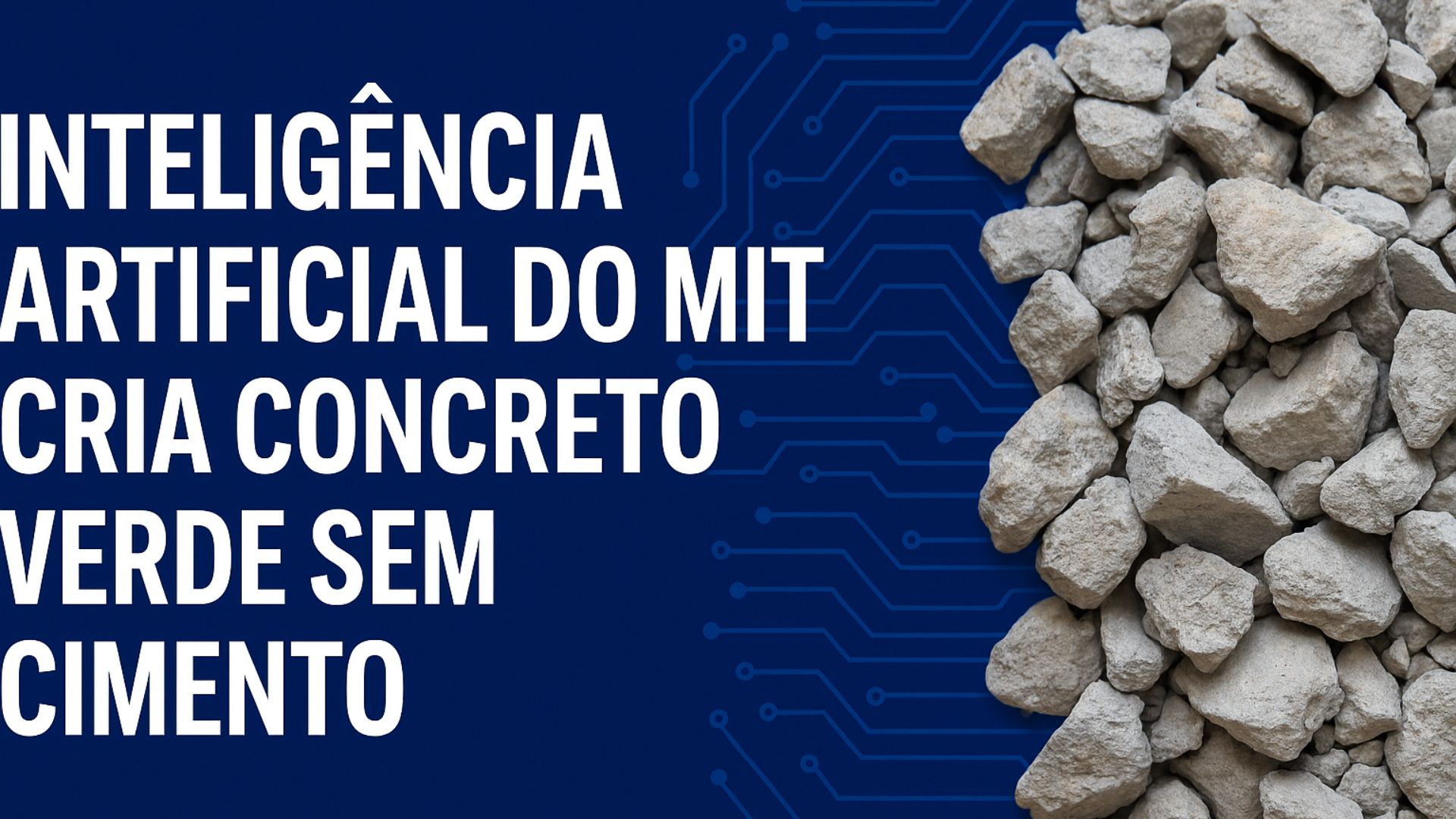

MIT System Uses Artificial Intelligence to Find 19 Recycled Materials That Can Replace Cement and Help Produce Green Concrete with Lower Carbon Emissions.
Researchers at the Massachusetts Institute of Technology (MIT) developed an artificial intelligence-based system that identified alternatives to cement for the production of green concrete. The initiative seeks to reduce global carbon emissions associated with the construction industry.
The research, published in the journal Communications Materials, analyzed over 88,000 scientific articles and extracted composition data from 14,000 materials previously used in concretes and cements. Based on this data, the machine learning tool assessed the viability of different substitutes for traditional cement.
Global concrete production reaches 30 billion tons per year, with cement being the primary agent that holds this material together. However, its manufacturing accounts for about 6% of global greenhouse gas emissions, according to MIT researchers. Partially replacing cement with materials that have a lower environmental footprint can significantly reduce this number.
-
Couple Converts 1925 Detroit Bank into Home, Earns $40,000 Annually on Airbnb

-
Tired of Seeing People Sleep in the Cold, London, Canada Opens First Modular Shelter for Homeless with 60 Cabins, Heating, Meals, and Dog Area
-
Brazil’s $1.3 Billion, 870-Meter Immersed Tunnel to Be Latin America’s First of Its Kind, Featuring Special Public Facilities and Information Center
-
Brazilian Innovator Develops Concrete Blocks from Recycled Plastic, Eliminating Mortar and Reducing Construction Costs


MIT System Analyzed 1 Million Samples with Artificial Intelligence Assistance
The artificial intelligence system created by MIT examined around 1 million material samples based on their chemical and physical properties. The goal was to identify viable substitutes for cement that could maintain the essential characteristics of concrete, such as its hardening capability when mixed with water.
Based on this analysis, 19 materials considered ideal were selected. Many of these are industrial waste or byproducts from other production chains, which reduces cost and prevents disposal in landfills. Among the indicated materials are fly ash, slag from steelmaking, discarded ceramics, biomass ash, construction and demolition waste, crushed glass, and mining tailings.
According to the researchers, most of these materials are widely available around the world and can be used in concrete mixtures after simple grinding, without the need for complex processing.
Green Concrete Can Be Produced from Common Waste
Among the main candidates identified by the artificial intelligence tool are recycled ceramics. Tiles, bricks, and other ceramic materials showed high potential for reactivity, being considered good options for partially replacing cement in concrete. Researcher Soroush Mahjoubi from MIT highlighted that these materials have chemical characteristics compatible with industry requirements.
Other waste included in the study’s list are ashes resulting from the burning of biomass, such as rice husk, sugarcane bagasse, wood, and forest waste. Demolition debris, such as concrete and ceramic fragments, as well as ashes from urban waste incineration and mining waste, were also noted as viable options.
The use of these materials in green concrete would help reduce the pressure on conventional cement production, which, in addition to being a highly emitting process, depends on natural resources such as limestone and intense thermal energy.
Scarcity of Traditional Substitutes Motivates Search for New Sources
The use of substitute materials for cement is not new in the construction industry. Fly ash and blast furnace slag, for example, are already used as additions to concrete. However, the increasing demand for sustainable alternatives has limited the supply of these materials in various regions.
In this scenario, the model developed at MIT aims to expand the available options base. The researchers used artificial intelligence to identify materials that are often not cataloged in traditional databases or that have not yet been tested on a large scale.
In addition to industrial waste, the study also identified 25 types of natural rocks as potential substitutes for cement, based on their composition and mechanical properties.
Technology Can Accelerate Transition to More Sustainable Practices
The tool created by MIT can help companies, researchers, and governments make faster, evidence-based decisions regarding the use of green concrete. The system automates the screening and evaluation of materials, saving time and resources that would be required for manual laboratory testing.
The expectation is that the initiative will contribute to the transition of the construction industry to less polluting practices, promoting the use of artificial intelligence as an ally in reducing carbon emissions associated with cement.
The use of waste and byproducts in formulating green concrete can also generate economic benefits. In addition to reducing production costs, it prevents the improper disposal of solid waste and utilizes materials that already exist in large volumes across various industrial sectors.
Application Can Be Made with Existing Infrastructure
MIT researchers emphasize that many of the identified materials can be used without the need for significant changes to existing production lines. The main requirement would be adequate grinding, already foreseen in a good part of current concrete plants.
The research is in advanced testing phases for real-scale validation. The aim is to ensure that the new materials can safely and efficiently replace cement in small, medium, and large construction projects.