Portuguese
  Spanish



Country Reacts After Recent Studies Indicate Critical Slowdown Of The Currents That Warm The North Atlantic And Support Its Environmental Stability
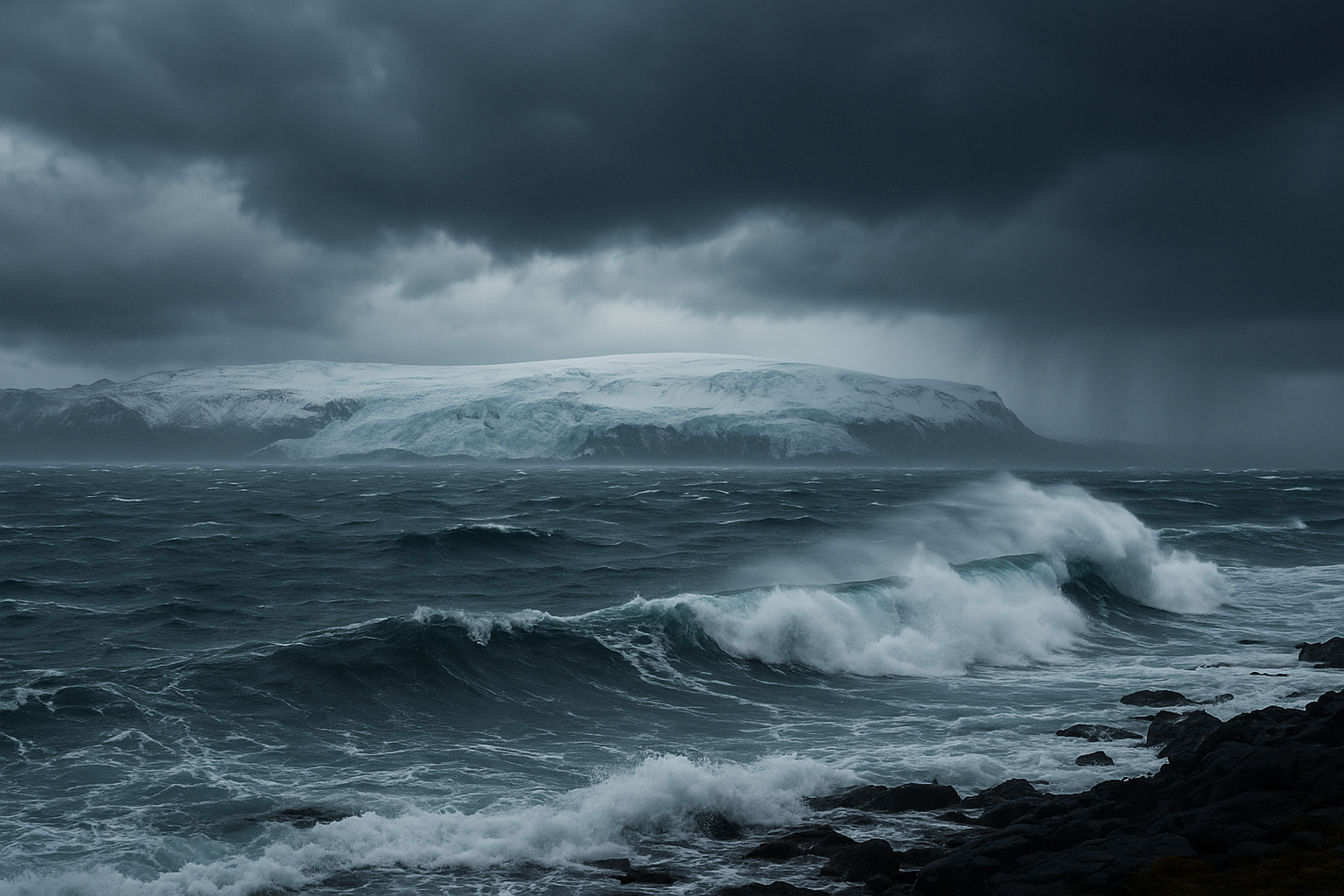
The possible collapse of the Atlantic Meridional Overturning Circulation (AMOC) has led Iceland to adopt unprecedented measures to deal with a threat considered, for the first time, a national security issue, because the mild climate of the island is entirely dependent on these currents. The warning, presented by Minister Jóhann Páll Jóhannsson, responsible for Environment, Energy and Climate, emphasizes that “our climate, our economy, and our security are deeply linked to the stability of the currents”, therefore the country considers that the risk has ceased to be theoretical and has become strategic.
How The Risk Has Evolved And Why It Concerns Scientists
The discussion gained traction after an international survey published in August raised “serious concerns” about the AMOC. Shortly after, in September, the National Security Council officially classified the possible collapse as a risk to the country’s security. The AMOC functions as a “conveyor belt” that transports heat from the Southern Hemisphere to the Northern Hemisphere; however, its slowdown worries researchers such as Stefan Rahmstorf from the University of Potsdam, because the process results from the imbalance between heat and salinity caused by global warming. According to Rahmstorf, “the collapse can no longer be treated as a low-probability risk”, since some studies project a rupture within this century. Furthermore, science indicates that the currents already show consistent signs of slowdown, leading Icelandic authorities to consider more severe scenarios.
What’s At Stake For Iceland And The World
The possible failure of the AMOC would cause accentuated cooling in the North Atlantic, according to Rahmstorf; rising sea levels in parts of Europe and the United States; destabilization of monsoons in Asia and Africa; expansion of sea ice to areas near the United Kingdom; and direct impacts on Iceland, such as coastal ice, damage to infrastructure, and logistical difficulties. Consequently, Jóhannsson states that Iceland would be “at the center of severe regional cooling“, which would threaten vital sectors, especially fishing, transportation, and energy.
-
Scientists Discover Antidepressants in Hammerhead Sharks, Revealing Hidden Path of Pharmaceuticals to Brazilian Waters

-
Warm water hidden deep in the ocean has been moving towards Antarctica for 20 years, potentially accelerating glacier melting from below.
-
U.S. Offers Nearly $200,000 to Combat Invasive Mussels Threatening Waterways and Hydroelectric Plants
-
Cigarette Butts Pollute Brazilian Beaches, Sparking Debate on Coastal Environmental Protection Measures


How The Government Plans To Respond To The Risk
After the unprecedented classification made in September, the government initiated a coordinated response among ministries to fully understand the threat, map critical vulnerabilities, plan adaptation actions, assess risks to the economy and essential infrastructures, and minimize potential damage to the fishing sector, which sustains much of the country. According to Jóhannsson, “the designation ensures that the issue receives the attention it deserves”, because abrupt changes may exceed the country’s capacity to adapt.
What Scientists Are Saying And Why The Debate Should Grow
Experts emphasize that Iceland’s decision could set a global precedent, because the impact of the AMOC tends to affect various continents; thus, Rahmstorf states that it is crucial for other countries to take a similar stance, especially as research already indicates risks such as crop destruction and severe flooding. Finally, Jóhannsson summarizes the scenario by stating that “this is not just a scientific concern; it is a matter of survival and national security”, while studies released in August and September continue to generate concern among authorities and researchers.