Portuguese
  Spanish


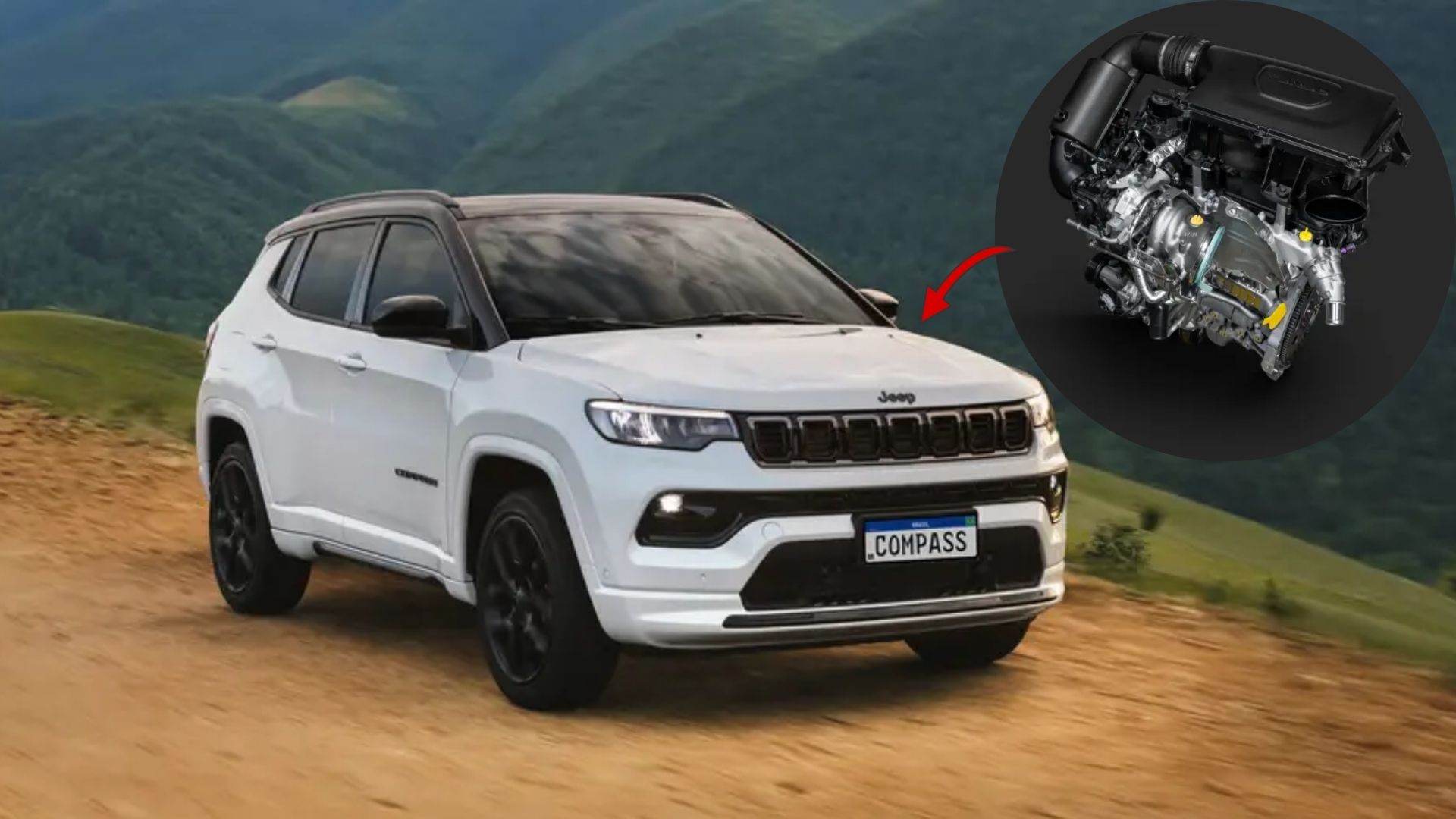


New Line of the Medium SUV Launches High-Performance Flex Engine, Maintains Sporty Acceleration, Broadens Flexibility with Ethanol and Preserves the Technology and Safety Package of the Most Powerful Version of the Compass
The Jeep Compass Blackhawk 2026 arrives in the Brazilian market inaugurating one of the main technical changes in the line: the adoption of the new Hurricane Flex engine, which now accepts both gasoline and ethanol without compromising performance, acceleration figures, or top speed. This novelty marks an important evolution in Jeep’s strategy for Brazil, aligning high performance with greater energy flexibility, something increasingly valued in the national market.
The information was disclosed by the brand itself, according to a technical statement and official materials presented to the specialized press, detailing the mechanical changes, engineering adjustments, and maintenance of the main attributes that made the Compass Blackhawk the most sporty version of the range.
Since the launch of the previous line, the Compass Blackhawk had already stood out for its robust mechanical set. Now, with the arrival of the flex engine, the medium SUV broadens its appeal without altering its sporty identity, maintaining impressive numbers both in urban use and on the road.
-
Sales of Brazil’s Cheapest Electric Car Halted Before First Deliveries: E-Motors Suspends Emova Easy Due to Import Tax Increase and Rising Freight Costs

-
Nissan Discontinues Qashqai SUV Amid Cost-Cutting, Chinese Competition, and Product Line Review

-
BYD Patents Revolutionary System Using Computer Vision to Detect Animals Under Cars Before Starting, Preventing Tragedies

-
Study Reveals Why Cars Are More Expensive to Produce and Buy in Brazil Compared to Mexico, Highlighting Taxes, Logistics, and Industrial Costs as Key Factors.



Hurricane Flex Engine Maintains Sporty Performance and Notable Acceleration
At the center of attention is the 2.0 Hurricane Flex engine, a four-cylinder turbo delivering 272 hp of power and 40.8 kgfm of torque, exactly the same figures as the previous gasoline configuration. Until the 2025 lineup, the Compass Blackhawk was restricted exclusively to gasoline; with the update, it now accepts ethanol, expanding its versatility in Brazil.
Despite the change in fuel, the performance figures remain unchanged. The Compass Blackhawk 2026 accelerates from 0 to 100 km/h in 6.3 seconds, whether fueled by gasoline or ethanol. The top speed remains electronically limited to 228 km/h, maintaining the standard of the previous generation.
According to Jeep, to enable the adoption of flex fuel without losses, the mechanical set received new fuel pumps, spark plugs, and injectors, in addition to modifications to the intake system and turbo. Specific work was also done for engine and transmission calibration, ensuring quick responses, smooth gear changes, and the expected robustness of the model.
These adjustments were fundamental to preserving the sporty proposition of the Blackhawk version, which positions itself as the most powerful and dynamic of the Compass line.
Fuel Consumption Remains Balanced Even with Ethanol Adoption

In terms of energy efficiency, the Jeep Compass Blackhawk 2026 maintains figures very close to the previous line. In the urban cycle, consumption is 8.5 km/l with gasoline and 6 km/l with ethanol. On the highway, the numbers improved slightly, reaching 11 km/l with gasoline and 7.6 km/l with ethanol, according to official data from the PBEV (Brazilian Vehicle Labeling Program).
This performance demonstrates that, even with a focus on power and acceleration, the model manages to maintain competitive consumption within the segment of high-performance medium SUVs. The option to choose between gasoline and ethanol also allows consumers to adapt the vehicle’s use to the price and availability of fuel in different regions of the country.
Thus, the Compass Blackhawk 2026 reinforces its proposal to unite performance, versatility, and everyday use, something increasingly rare in SUVs with this level of power.
Technology, Safety, and Level 2 ADAS Remain Highlights

In addition to the mechanical set, the Jeep Compass Blackhawk 2026 maintains a robust technological package, especially in terms of safety. The model is equipped with seven airbags and a wide range of advanced driving assistance systems (ADAS level 2).
Among the main features are adaptive cruise control, lane departure warning, active lane keeping assist, automatic high beams, and other systems that assist in both urban driving and long trips.
This package places the Compass Blackhawk among the most comprehensive SUVs in the segment when it comes to active safety, reinforcing the positioning of the version not just as sporty but also technologically advanced.
With this, Jeep maintains the strategy of offering a product that combines high performance, embedded technology, and top-level safety, without sacrificing the comfort and versatility that have characterized the Compass since its launch.
What do you think of the arrival of the Hurricane flex engine in the Compass Blackhawk 2026: is it a real evolution for daily life or just a technical change that few will feel in practice?