Portuguese
  Spanish


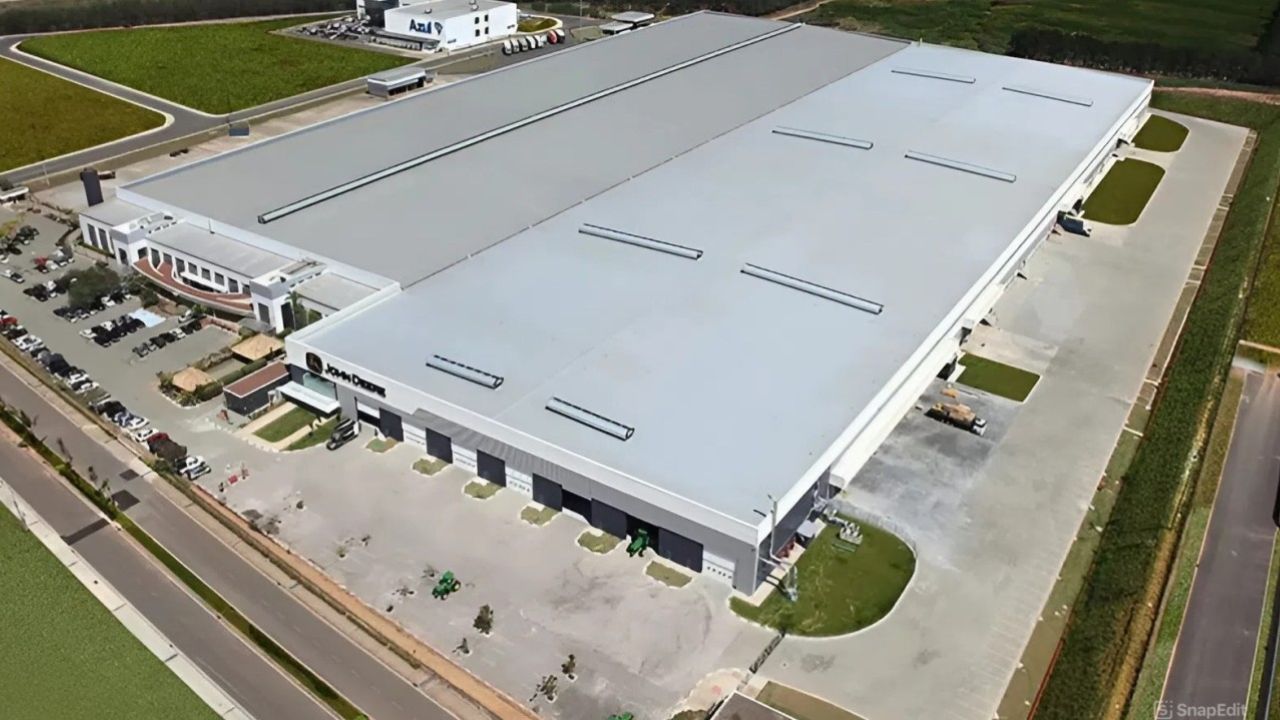

John Deere Opens A New Factory In Canoas (RS), With An Investment Of R$ 42 Million, Focused On Technology And The New Sprayer 1025E.
John Deere has started operations at a new factory in Canoas, Rio Grande do Sul, as part of its industrial expansion strategy in Brazil. The facility was created to produce the 1025E sprayer, with manufacturing expected to begin in August of this year.
The investment aims to strengthen the company’s agricultural portfolio, increase national production capacity, and keep pace with the growth of Brazilian agribusiness.
John Deere Bets On New Factory To Strengthen National Production
The decision to establish the new factory in Canoas continues John Deere’s industrial plan in the country. Until now, sprayers sold in Brazil were produced exclusively in Catalão, Goiás.
-
Flower strips in Brazilian farms become pest control strategy, attracting predator insects and reducing the need for chemical pesticides.

-
Yara acquires Texas ammonia plant for $1.3 billion, boosting global fertilizer competition with 1.3 million tons annual capacity

-
At 35, Lawyer Leaves Corporate Career to Turn 1-Hectare Farm into Organic Supplier for Schools in Southern Brazil

-
Solar-powered agricultural robots operate 24/7, remove weeds with 8mm precision, and aim to cut herbicide use without fuel consumption in the fields.


With the new unit, the company expands its presence in the South and decentralizes production. Additionally, the choice of the city takes into account logistics, skilled labor, and proximity to important agricultural regions.
Since the project announcement, John Deere has invested approximately R$ 42 million in the structure of the new factory. The plant features 12,000 square meters of covered area, situated on a 39,000 square meter lot.
The space has been designed to exclusively house industrial operations focused on sprayer manufacturing. Thus, the company ensures production scale and flexibility for future expansions.
Advanced Technology Characterizes The New John Deere Factory
The new factory has been designed with a focus on intelligent processes. The industrial model integrates technologies such as artificial intelligence, robotics, and the Internet of Things, a system that connects machines and data in real-time.
This integration between the physical and digital environments enables greater control over production stages. As a result, the plant achieves high levels of operational efficiency and quality.
Sprayer 1025E Expands John Deere’s Portfolio In Brazil
The 1025E sprayer arrives to complement John Deere‘s portfolio in the Brazilian market. The equipment has been developed as a simple and versatile solution, catering to crops such as soybeans, corn, sugarcane, cassava, and potatoes.
Even on steep or uneven terrain, the model ensures precision and uniformity in spraying. Additionally, it offers operational comfort, with real-time data available to support more accurate decision-making in the field.
Production Begins In August And Debuts At Agricultural Fairs
Production of the 1025E at the new factory is scheduled to begin in August. Before that, the equipment will be presented to customers during agricultural fairs held throughout the year.
According to the company, the launch reinforces its commitment to practical and efficient solutions for producers of different profiles.
With the arrival of the new sprayer, John Deere will begin the gradual replacement of the PLA brand sprayer line, which will be discontinued in Brazil. However, existing customers will continue to be served as usual.
The company guarantees the maintenance of warranties, supply of spare parts, and technical support through its after-sales network. Therefore, the new factory solidifies Brazil’s strategic role in global food production and the future of agriculture.