Portuguese
  Spanish



Official Rules Combat Misinformation And Reinforce The Importance Of Child Safety During Trips And Daily Commutes
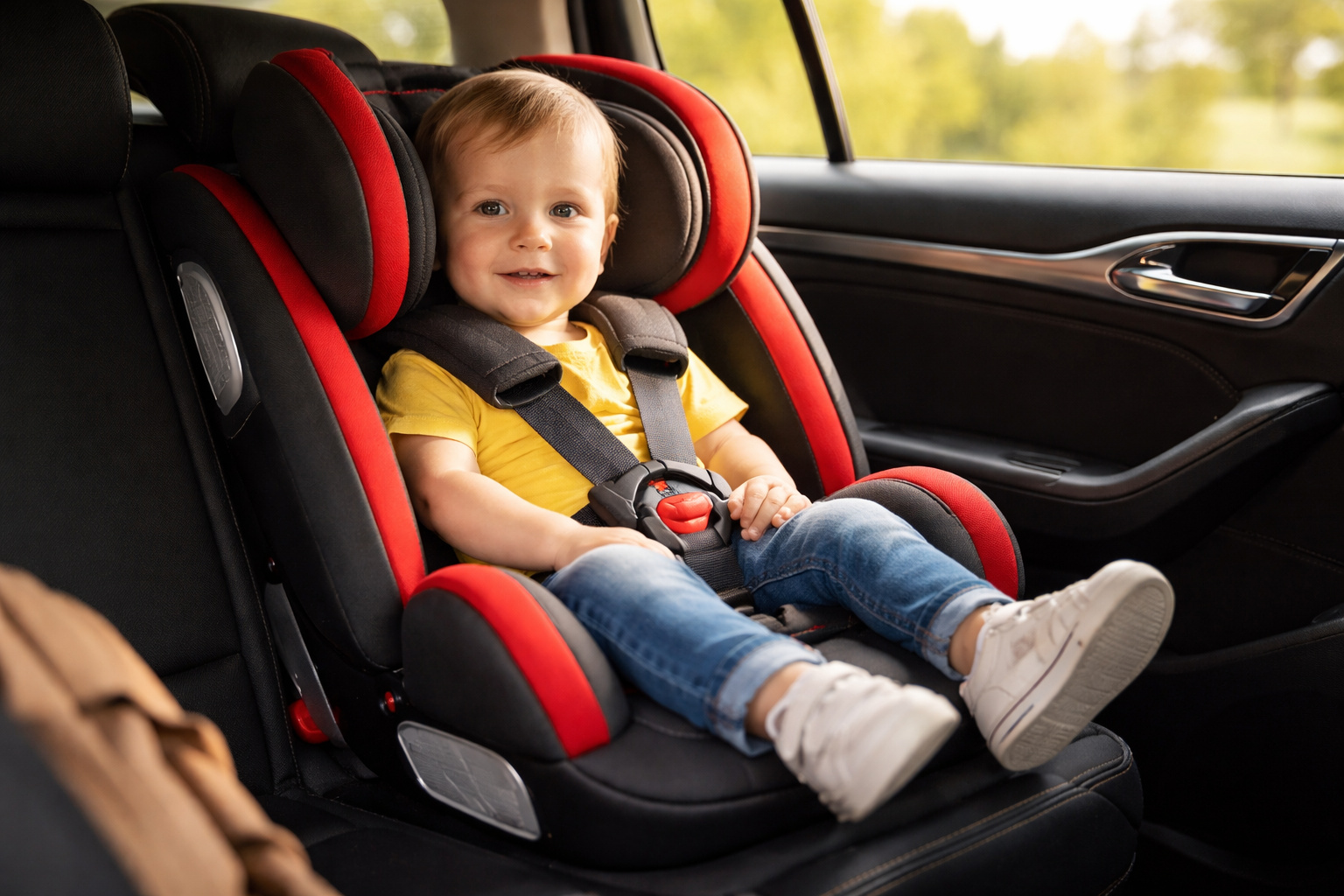
With the arrival of school holidays, the correct use of child car seats is once again gaining prominence, especially due to the increase in road trips. In this context, the Municipal Department of Transportation and Transit of Maceió (DMTT) has intensified preventive guidance. Additionally, the agency reinforced that the rules remain unchanged, according to official clarifications.
At the same time, false information about supposed changes in car seat law circulated recently, generating doubts among drivers. However, according to the National Traffic Secretariat (Senatran), the last amendment to the Brazilian Traffic Code occurred in 2021, with regulation from the National Traffic Council (Contran) in the same year. Since then, no new updates have been published.
Current Rules Define Clear Criteria For Child Transportation
Currently, the legislation sets objective parameters for age, weight, and height, ensuring greater safety for children. Thus, according to the CTB and the 2021 Contran Resolution, the infant car seat must be used until 1 year or 13 kg. Then, the child car seat accommodates children from 1 to 4 years, between 9 kg and 18 kg.
-
São Paulo to Revamp 174 Roundabouts on State Highways with $7.7 Million Investment to Improve Safety

-
New Helmet Rule in Brazil Requires Inmetro Digital Seal and QR Code from July 1, 2026, But Existing Helmets Are Exempt — Here’s What Changes and How to Verify Authenticity

-
Bus Strike in Rio Disrupts Public Transport, but Court Ruling Ensures 50% of Fleet Remains Operational
-
Driver who “holds” the left lane can receive a hefty fine and 4 points on their driver’s license even if they think they are going at the correct speed for the road.


Subsequently, a booster seat becomes mandatory between 4 and 7 and a half years, for children between 15 kg and 36 kg, or until reaching 1.45 meters in height. From this point, the seatbelt in the back seat becomes permitted, as long as the child is over 7 years old. Finally, the front seat is only authorized from 10 years old, always with the correct use of the seatbelt.
Proper Use Significantly Reduces Serious Injuries
According to Anne Carla Brasil, an enforcement agent from DMTT, the proper use of restraint devices drastically reduces the risk of serious injuries in traffic accidents. Additionally, she emphasizes that the car seat is an act of protection, not just compliance with the law.
Still, many caregivers relax safety measures on short trips, which increases risks. Therefore, the guidance emphasizes that every trip demands attention, regardless of the distance traveled.
Proper Installation Directly Influences Safety
In addition to proper use, the correct installation of the car seat is essential to ensure real protection. In this regard, DMTT advises parents to strictly follow the manufacturer’s manual, as poorly installed seats lose effectiveness.
Currently, the Isofix system gains prominence by reducing installation errors, as it connects the car seat directly to the vehicle’s structure. Thus, the fixation becomes firmer, especially when coupled with the Top Tether, increasing stability during collisions.
Seat Position And Exceptions Provided By Law
Although the Brazilian Traffic Code does not specify a certain seat, experts recommend the central back seat, as it reduces risks in side collisions. Alternatively, the right back seat is also indicated, as it facilitates boarding and alighting from the sidewalk.
Furthermore, the infant car seat must always face backward, as this position better protects the head, neck, and spine. Use in the front seat is only allowed in exceptional situations, with mandatory deactivation of the airbag.
Penalties Reinforce The Preventive Nature Of The Regulation
Improper transportation of children constitutes a serious violation, according to the CTB. Thus, the driver receives seven points on their license, in addition to a fine of R$ 293.47 and the retention of the vehicle. Therefore, the regulation aims to prevent accidents, not just punish.
In light of the increased flow on the roads during the holidays, DMTT reinforces the review of the vehicle, attention while driving, and the correct use of the car seat, reminding that rules in effect since 2021 continue to save lives. In this context, do you believe that driver awareness has been sufficient to protect children on Brazilian roads?