






 Portuguese
  Spanish
  5 min of reading
  2 comments


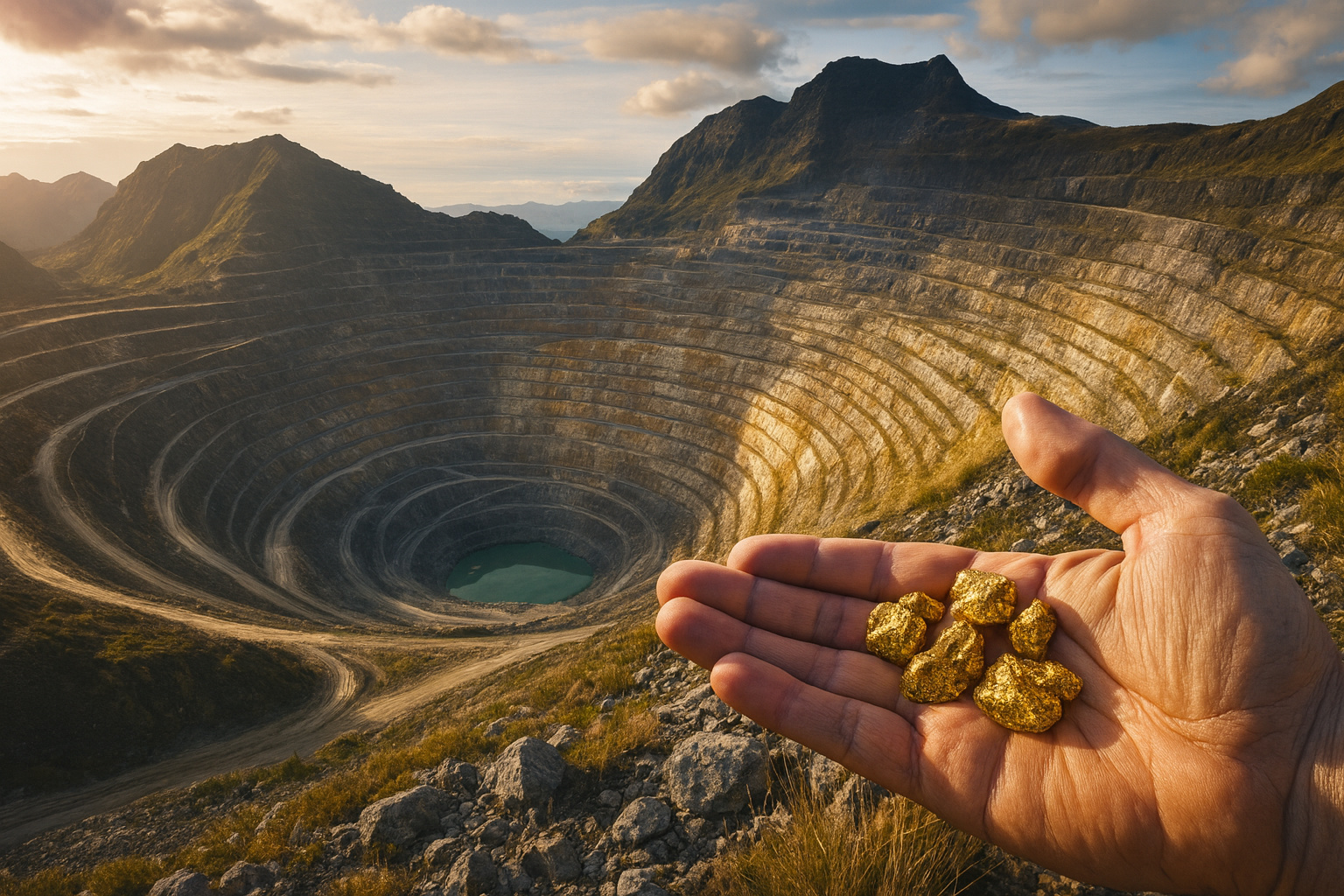


Located more than 4 thousand meters above sea level, the largest gold mine in the world covers 10 thousand hectares, moves US$ 40 billion, and functions like an underground city in the middle of the mountain.
Set amid steep mountains and snow-covered peaks, the largest gold mine in the world is a monument of modern engineering and human ambition. With more than 10 thousand hectares and mineral reserves exceeding US$ 40 billion, the Grasberg Mine is the heart of one of the planet’s most lucrative and complex operations.
The extreme altitude, above 4 thousand meters, makes each workday a struggle against the cold, thin air, and time. What was once just an isolated landscape of rocks and ice has turned into an underground city that pulses 24 hours a day in search of the Earth’s most coveted metal.
An Industrial Colossus Operating Above the Clouds
The structure is so monumental that, from above, the open craters and underground accesses look like wounds in the mountain. Underground, the Grasberg mine houses tunnels and ramps that extend for dozens of kilometers, forming a true inverted urban network.
-
Japan called him a fool for using clover and straw instead of fertilizer, but 40 years later Masanobu Fukuoka’s fields equaled the most productive farms in the country, and his book was translated into more than 25 languages.

-
Bored at home, a 13-year-old teenager discovered tutorials on building studio apartments, raised $1,500, and turned the family’s backyard into a construction site.

-
Few remember, but a woman entered the basement of her own house, dug 9.1 meters underground, installed ventilation, created a mine cart, and became famous on social media before being stopped by authorities.
-
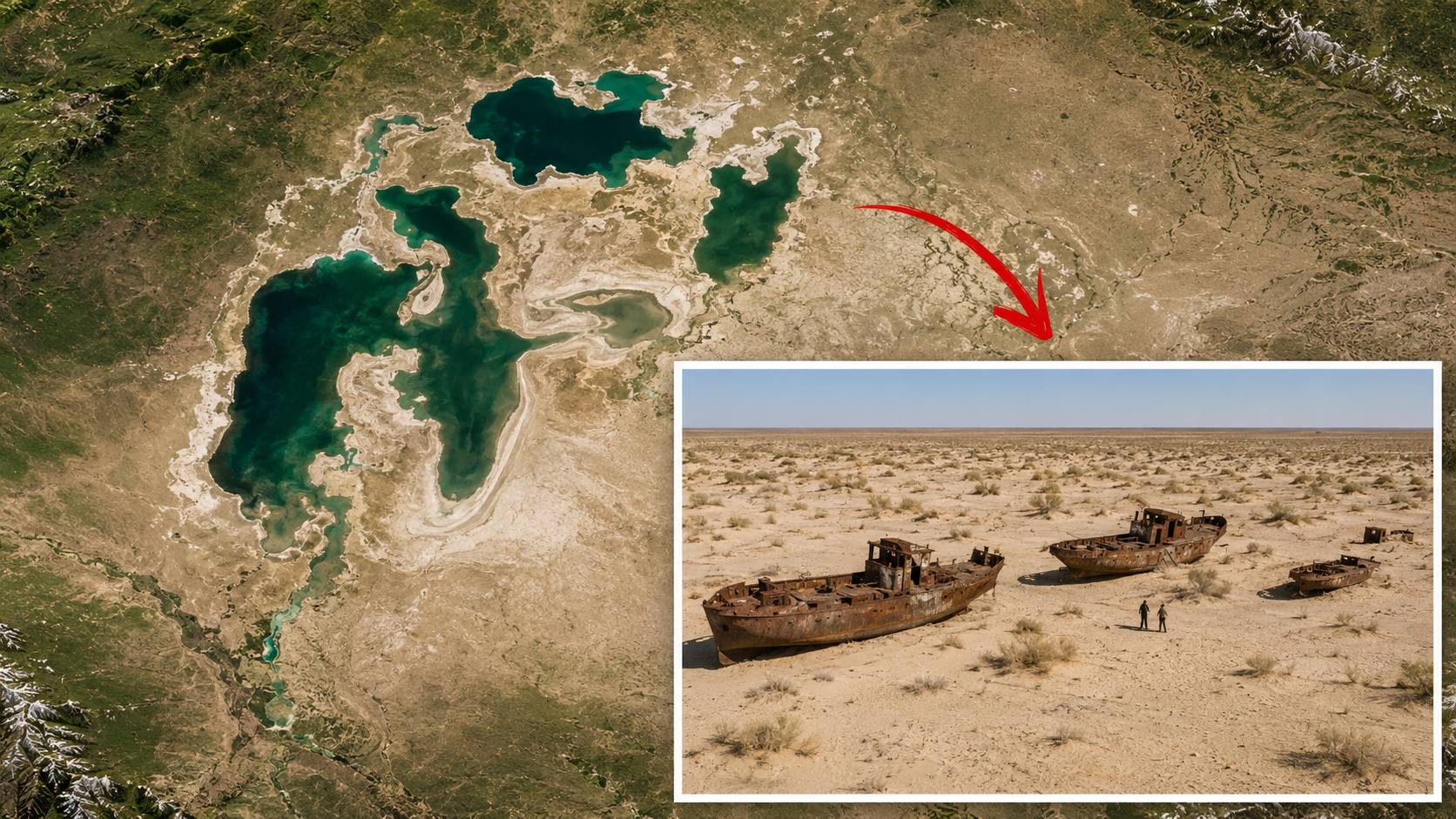
An entire sea disappeared from the map: the Aral Sea, formerly the fourth largest lake on the planet, lost more than 90% of its area in a few decades and left behind a toxic desert where fishing boats rust over 100 km from the water that once supported entire cities.



Hundreds of large mining vehicles circulate continuously, while high-powered excavators and drills extract rock impregnated with gold and copper. Every day, thousands of tons of ore are processed, refined, and transported worldwide.


The environment is hostile and unpredictable. The low oxygen concentration, combined with negative temperatures, imposes severe logistical and human challenges. Workers operate in controlled shifts, with supplemental breathing equipment, and rely on ventilation and communication systems similar to those on oil platforms and military bases. Everything is monitored by sensors, radars, and real-time control software, ensuring stability underground and preventing landslides.
The Transition of the Largest Gold Mine in the World to an Underground Model
In recent decades, the complex has undergone a radical transformation. What was once an open-pit operation, with monumental excavations visible for kilometers, has given way to a highly automated underground extraction system. The shift required billions of dollars in investments and one of the largest engineering mobilizations ever seen in the mineral sector. The goal was twofold: to reduce environmental impact and to exploit new layers of ore at depths exceeding 1,500 meters.
This transition has been accompanied by unprecedented modernization. Today, autonomous trucks transport ore between the levels of the mine, and drones perform three-dimensional mapping of the galleries, detecting micro-fissures invisible to the human eye. The partial electrification of the fleet has also helped reduce the emission of toxic gases and the need for additional ventilation — an advance that has made the site a global reference in sustainable high-altitude mining.
A Structure Valued in Billions and Comparable to an Entire City
The economic impact of the largest gold mine in the world is enormous. The operation directly employs more than 15 thousand people and moves a supply chain that includes everything from industrial equipment to maritime transport. It is estimated that over the last four decades, the region has generated revenues exceeding US$ 300 billion in gold, copper, and silver exports.
To sustain continuous production, the Grasberg mine has its own infrastructure: power plants, processing plants, machine shops, hospitals, and independent telecommunications systems. There are underground dormitories, cafeterias, and even small recreational centers for workers who spend entire weeks isolated from the cities.
From a technical standpoint, it is one of the largest self-sufficient operations ever created — a living industrial organism, operating 24 hours a day, 7 days a week, under conditions that few humans could endure for long periods.
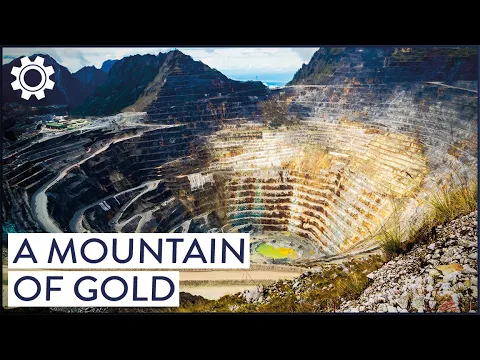
The Human and Technological Challenge Behind Gold Extraction
The extraction process is a combination of brute force and scientific precision. The raw ore is fragmented, crushed, and transported by high-capacity belts to the processing plants, where it undergoes chemical and physical processes that isolate gold from copper and silver. Every gram of gold requires tons of rock, electric power, reagents, and strict control. Nothing is simple when working thousands of meters above sea level in an environment that combines geological instability and extreme weather.
The technical team that keeps the operation running consists of mining engineers, geologists, robotics specialists, ventilation technicians, and safety professionals. The logistics of transportation and supply is as complex as that of a scientific base in Antarctica. Each piece of machinery, every gas cylinder, and every liter of fuel needs to be brought to the top by high-powered convoys or industrial helicopters.
A Symbol of Economic and Geopolitical Power
More than a source of wealth, the largest gold mine in the world is also a symbol of geopolitical power. Control over its reserves defines export strategies, regulates prices, and influences the international precious metals market. The gold extracted from there supplies central banks, electronics industries, and strategic reserves across several continents. Its value lies not only in the metal itself but also in the economic power it represents.
Governments, investors, and companies compete for each new contract, aware that controlling a fraction of that production ensures influence in one of the planet’s most stable and valuable markets. The Grasberg Mine has thus become a strategic asset for the global economy, and its importance transcends the field of engineering — it is a silent pillar of the world’s financial system.
The Mountain That Became a City
The grandeur of the largest gold mine in the world cannot be summarized in numbers. It is a hidden human monument beneath the earth, a colossal structure that transforms the interior of a mountain into an underground metropolis. By day, helicopters cross the sky carrying supplies and teams. At night, artificial lights keep the galleries bright as if it were day. The mine breathes, vibrates, and works non-stop, sustained by a network of systems so complex that it rivals the functioning of a modern capital.
There, every gram of gold extracted from the ground carries the weight of centuries of search, risk, and ingenuity. It is the point where humanity has pushed the boundaries of mining to the limit of what is possible, creating not just a mine but a subterranean world — a supreme symbol of human ambition and technical capability.





Zero informações de onde é a mina!
Ao invés de ficar usando IA, pra colocar adjetivos bombásticos, que tal colocar fatos. Pra começar, onde fica, país, região? Dados técnicos. E não esta baboseira de automação, robôs, frio, etc. Sabemos que repórteres não são engenheiros de minas, mas precisam de ater aos fatos e não tentar se apresentar embasbacado, com algumas supostas modernidades.
Números, companheiro, números.