Portuguese
  Spanish


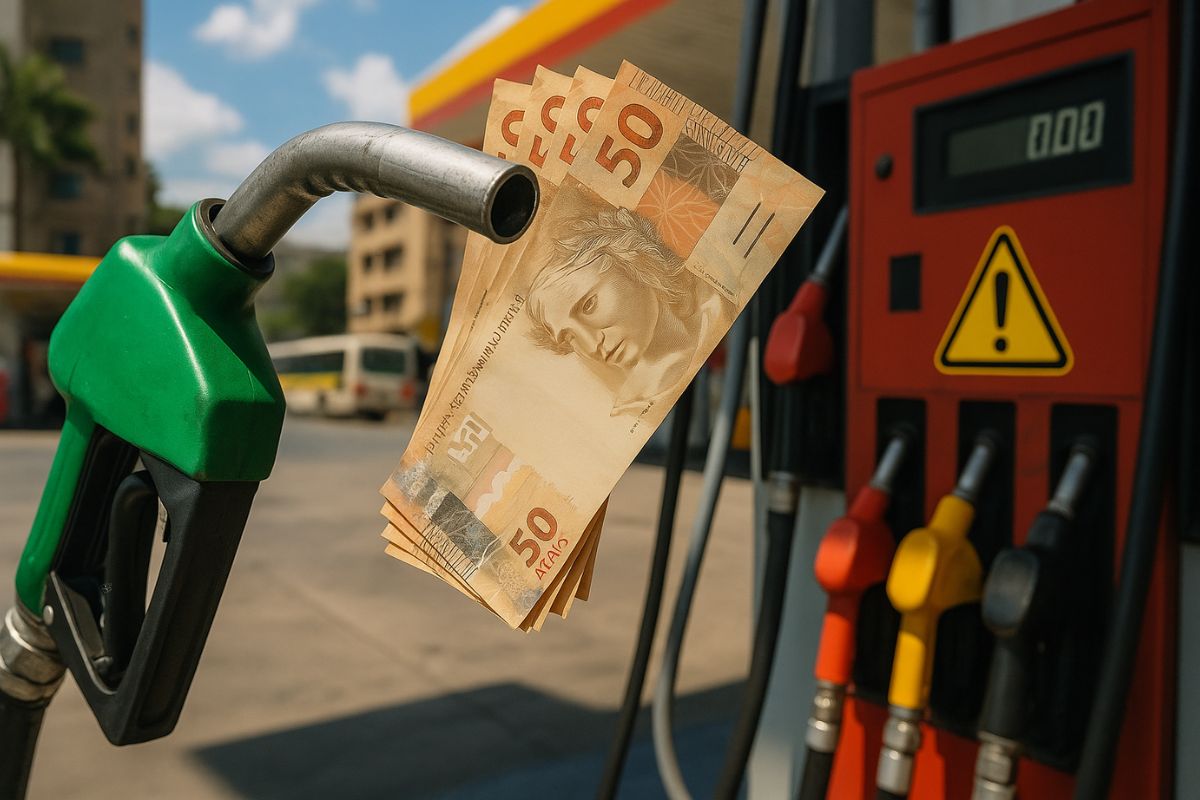


Inspection Identified Fraud in Nearly 50% of Fuel Pumps, Indicating Risk of Drivers Paying More for Less and Putting Gas Stations Under Investigation
A task force conducted between September 15 and 19 revealed that half of the fuel pumps in Pernambuco are irregular, exposing drivers to the risk of paying more than they receive when refueling. Of the 393 pumps inspected at 60 stations, 193 showed problems, representing 49.11% of irregularities.
The operation was carried out by the Institute of Weights and Measures (Ipem) in partnership with Procon, the Public Prosecutor’s Office of Pernambuco (MPPE), and the State Interinstitutional Asset Recovery Committee (CIRA). According to the authorities, the aim was to combat fraud that affects consumers, distorts competition, and generates tax losses.
Where Irregularities Were Found
The inspections took place at gas stations in Greater Recife, Caruaru, and Petrolina, in the Sertão. Caruaru accounted for the majority of irregularities, according to Ipem’s technical director, Antônio Carlos Gonçalves.
-
Suitcase-sized hydrogen engine spins at 25,000 rpm, nearly doubling the efficiency of conventional cars and replacing exhaust smoke with water vapor

-
1983 Chevrolet Runs Over 100,000 km Without Gasoline, Powered by Wood Chips, Reaches 125 km/h in Airport Test

-
Workshop Converts Giant Tractor Tire Tricycle into a Three-Wheel Drive Hybrid with 36,000-Watt Electric Motor Capable of Climbing Hills

-
Sales of Brazil’s Cheapest Electric Car Halted Before First Deliveries: E-Motors Suspends Emova Easy Due to Import Tax Increase and Rising Freight Costs




In many cases, agents found pumps in poor condition, with leaks, measurement failures, and even signs of tampering at sealing points.
These failures compromise the reliability of the refueling system and raise suspicions of deliberate fraud.
According to experts, the impact goes beyond the consumer’s pocket, also affecting tax collection and the economic order of the state.
Complaints That Prompted the Inspection
The investigation originated from complaints submitted by the public.
Technical teams conducted volumetric tests, comparing the amount paid by the driver with the actual volume of fuel delivered.
It was this method that allowed the detection of discrepancies at several stations.
The executive secretary of Procon, Anselmo Araújo, explained that not all failures imply direct losses for the consumer, but still constitute administrative infractions.
Problems such as lack of proper lighting or irregular identification signs were common, but in some more serious cases, the fraud involved adulteration of fuel, such as the addition of more than the permitted amount of ethanol to gasoline.
Fraud and Tax Risks
According to prosecutor João Maria Rodrigues, practices such as charging R$ 100 and delivering only R$ 80 in fuel represent not only a scam to the consumer, but also a form of tax evasion.
He also highlighted that some investigations point to the substitution of gasoline with naphtha and mixing with up to 40% ethanol, when the legal limit is 30%.
These actions not only directly harm the driver but also reduce the tax base collected by the state, affecting the entire economic chain.
Fraud at the pump is not just an individual problem, but an attack on the market and public revenue.
Consequences for Notified Gas Stations
The establishments notified are subject to fines ranging from R$ 100 to R$ 1.5 million, depending on the severity of the infraction.
Some have faced partial closures but continue operating while investigations proceed.
According to delegate Breno Varejão, if it is proven that there was a deliberate intent to defraud consumers, those responsible may face charges of fraud and crimes against the economic order.
In more complex situations involving supply networks, charges may include criminal conspiracy and money laundering.
The operation in Pernambuco revealed a concerning scenario for drivers and the state economy, showing that nearly half of the inspected pumps were irregular.
Trust in refueling has been called into question, and now the authorities’ challenge is to punish those responsible and reinforce inspections.
Do you believe that the fines applied will be sufficient to curb fraud at fuel pumps, or do you think that consumers will continue to be exposed to this risk? Leave your opinion in the comments; we want to hear from those who have experienced this situation firsthand.