






 Portuguese
  Spanish




The Discovery of White Hydrogen in Coal Mines Represents a Significant Advance for the Clean Energy Sector. Find Out Why This Fuel of the Future May Be So Advantageous.
Hydrogen has been globally pointed out as a pillar to achieve a more sustainable economy and for the reduction of carbon emissions, being considered the fuel of the future. However, the commercial production of hydrogen generally requires the electrolysis of water to separate hydrogen from oxygen, a process that consumes a significant amount of energy. If this energy does not come from clean sources, hydrogen production may not be as sustainable as desired.
Understand How White Hydrogen Can ‘Unlock’ the Clean Energy Market

In this scenario, natural hydrogen, also known as white hydrogen due to its purity, is seen as a game changer by scientists, as it is a potential source of clean energy generated continuously by the Earth.
The reservoirs of the fuel of the future form when heated water meets iron-rich rocks. According to the United States Geological Survey, only a small fraction of these deposits could provide enough clean energy for hundreds of years.
-
World’s Largest Engie Solar Plant in Brazil Highlights Billion-Dollar Energy Waste Issue: Company Considers Batteries and Bitcoin Mining to Avoid Wasting Production

-
Air Products Cancels $2.9 Billion Clean Hydrogen Megaproject in Louisiana, Shuts Down Arizona Unit, Highlighting High Costs of U.S. Energy Transition
-
Over 60 Tractors Take to the Streets in Lopera as Solar Parks Compete with Olive Groves, Affecting 13,000 to 100,000 Trees According to Conflicting Reports

-
Green Hydrogen Projects in Northeastern Brazil Stalled for 18 Months Awaiting Government Decree, Delaying Billions in Investments


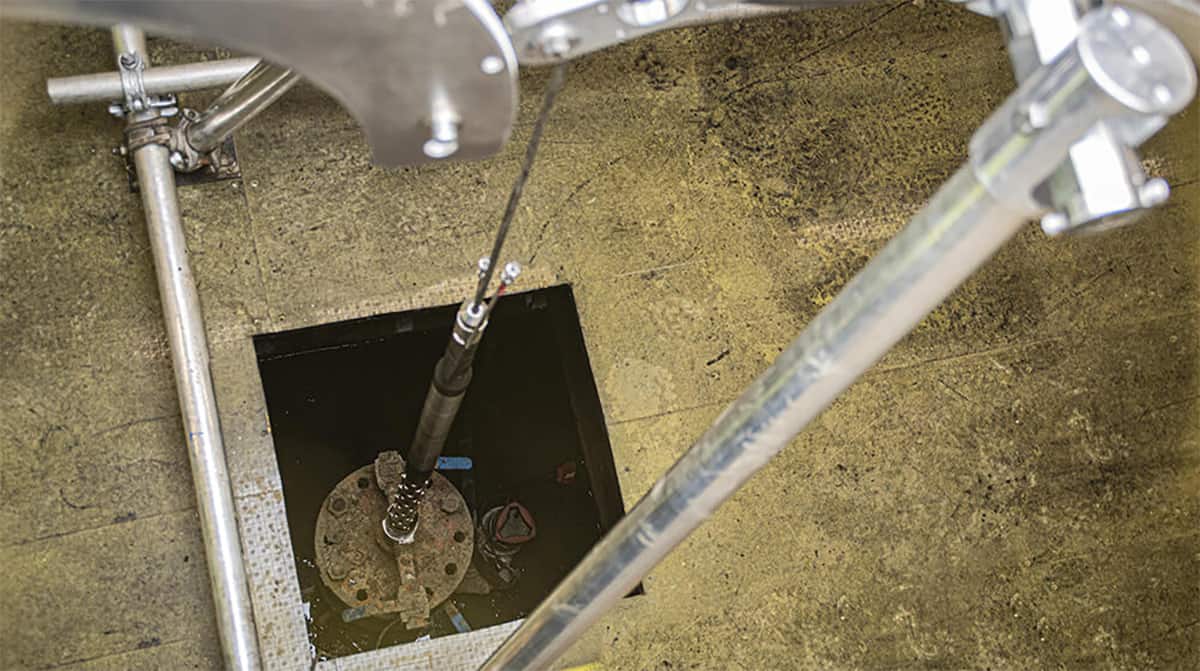
This is why in Lorraine, a region in France, scientists celebrated when, by sending a small probe down an 800-meter well in the Earth’s crust, they found bubbles in the water table that signaled a potentially gigantic hiding place of white hydrogen.
Tests suggested that 46 million to 260 million metric tons of natural hydrogen could be lurking beneath the coal mines, which were abandoned in the 1970s, potentially representing a huge source of clean energy.
The discovery by Jacques Pironon, a senior researcher and professor at the University of Lorraine, and Philippe de Donato, both members of the esteemed French National Centre for Scientific Research, made a significant impact, as the government pledged to become a European leader in white hydrogen.
White Hydrogen Discovered in 1970 Coal Mines May Be the Largest Reservoir in the World
According to Pironon, hydrogen is magical; when you burn it, it releases water, so there are no carbon emissions to warm the planet. The researcher asserts that they may have discovered one of the largest deposits of white hydrogen in the world in the coal mines, capable of generating a lot of clean energy. There are still many questions regarding this discovery of the fuel of the future, including its exact size and the best way to extract the gas.
This discovery adds to a body of evidence around the world, indicating that a true “Holy Grail” of clean energy may be accessible on Earth. According to the U.S. Geological Survey, only a small portion of these deposits would be able to provide clean energy for hundreds of years.
Geoffrey Ellis, a geochemist at the U.S. Geological Survey and a renowned hydrogen expert, commented on the discovery in France, stating that, if confirmed, it would represent an extremely significant milestone, with the potential to profoundly impact society. There are many other regions in the world where similar discoveries may occur, and the scientific community is investigating these possibilities due to their transformative potential.
Fuel of the Future Receives Massive Investments
Governments and companies worldwide have been betting on white hydrogen as a way to fight climate change and generate clean energy.
A multibillion-dollar sector, supported by billions of dollars in subsidies and private investments, has emerged to support hydrogen manufacturing, which, in theory, could replace fossil fuels to power factories, ships, trucks, and airplanes.
This could potentially remove about half of all emissions heating the planet. Harnessing clean energy from wind turbines and solar panels to generate green hydrogen is cleaner, yet more expensive. Thus, the discovery in the coal mines could be a significant advance in the sector.







Estamos diante de um biocombustível do futuro, que agora começa a ser estudado os processos de extração, manutenção e uso comercíal.
A grande vantagem está ser uma energia limpa.
Creio que o processo de extração será barateado com novas tecnologias que serão desenvolvidas rapidamente.
O planeta está necessitando urgentemente desta energia.
Parabéns aos descobridores, aos abnegados que querem deixar um mundo melhor pra se viver para as próximas gerações. Abraços. Edi
Uma pergunta simples: A retirada afetará em quê? Quais serão os danos?
Impactos futuros.? Um
Em isso sendo verdadeiro, será uma oportunidade excelente para melhorar o mundo.
A grande vantagem desse tipo de combustível é a possibilidade de adaptar a infraestrutura e as tecnologias já existentes para a extração de gás natural.