






 Portuguese
  Spanish


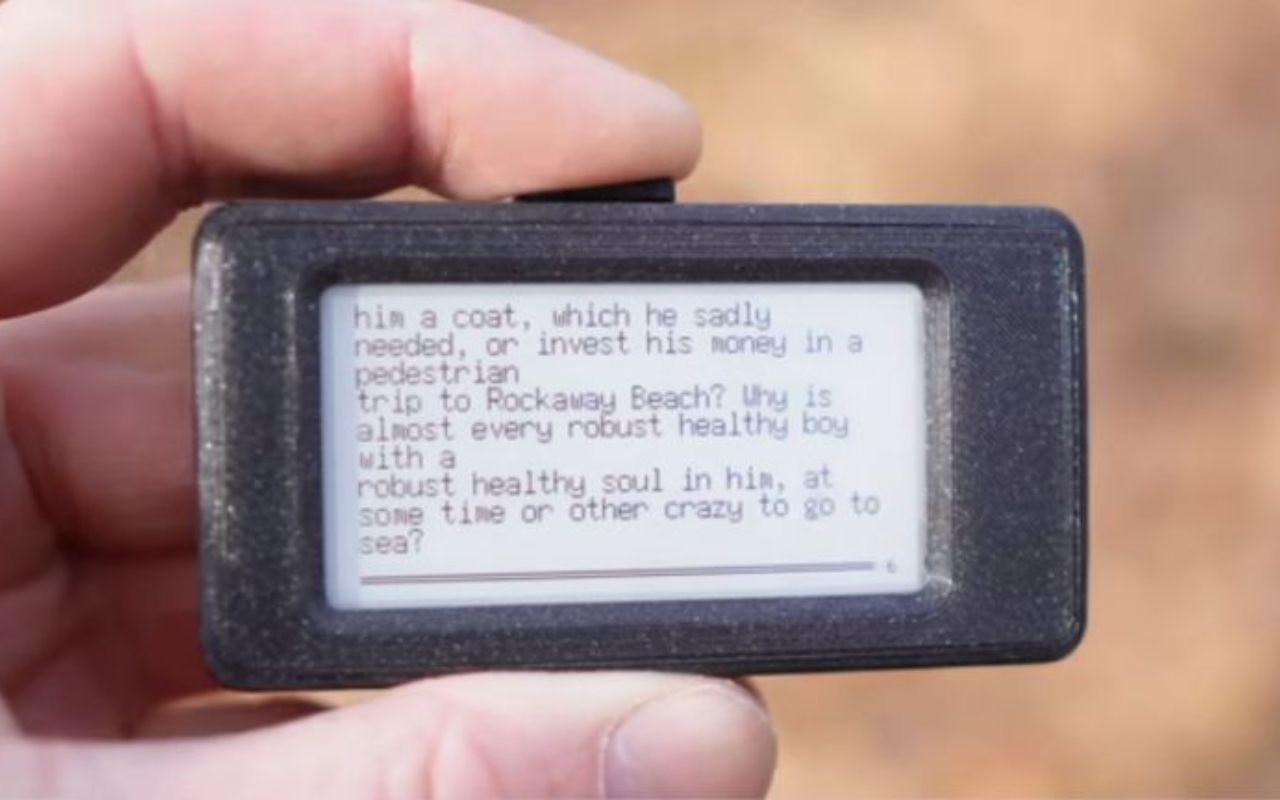
Mini portable Kindle created by a YouTuber goes viral on the internet: tiny reader costs R$ 150 and fits in the palm of your hand.
An innovative proposal aimed at digital reading has been drawing attention for its simplicity and efficiency. The Mini Kindle, developed by creator Paul Lagier, was designed to be extremely compact and affordable, costing around R$ 150.
The idea is to offer a portable alternative for those who want to read during quick moments in everyday life, such as while waiting in line or during commutes.
Device allows you to carry books in your pocket easily
The size of the Mini Kindle is one of its main differentiators. The device is small enough to be carried in your pocket without discomfort.
-
Chinese Company Unveils Robotic Toilet That Comes to You, Featuring Lidar Sensors, Voice Command, Bidet, Hot Air Drying, UV Light, and Self-Cleaning Waste Disposal

-
Rotterdam Develops Floodable Square to Absorb Nearly 2 Million Liters of Rainwater, Doubling as Sports, Theater, and Leisure Space When Dry to Combat Urban Flooding
-
U.S. National Park Deploys Robotic Birds Near Wyoming Airport to Protect Endangered Species: Dancing and Sound-Emitting Replicas Aim to Lure Real Birds to a 100-Acre Restored Area Away from Runways After 32 Aircraft-Related Deaths
-
Russia and India Lift 320-Ton Pressure Vessel into Kudankulam Nuclear Plant Reactor, Advancing Project That Has Already Prevented 112 Million Tons of CO2 Emissions



With dimensions similar to those of a wireless earbud case, it stands out for its practicality. Thus, the user can access their books anywhere. This portability is the central focus of the project.
Even being compact, the device surprises with its battery life. With a capacity of 1,500 mAh, it can last for up to two weeks.
Charging occurs via USB-C, a common standard in current devices. This makes it easier to use in everyday life. Additionally, it reduces the need for constant recharges.
Mini Kindle uses simple and efficient technology
The operation of the Mini Kindle is based on the ESP32 microcontroller. This component is known for its low energy consumption.
It is often used in smart devices. In the case of the reader, it ensures adequate performance for reading. Thus, the project maintains a good balance between cost and functionality.
To transfer files, the device creates its own Wi-Fi network. The user accesses an address via browser and sends the contents.
Additionally, there is support for organization in folders. This facilitates library management. It is also possible to customize the sleep screen.
Device has practical functions for continuous reading
The system of the device was developed to be straightforward. When turned on, it immediately displays the list of available books.
The reader features a progress bar and automatic page saving. This allows you to easily resume reading. Additionally, there is a favorites function to highlight important passages.
Despite the advantages, the device has some limitations. It only supports plain text files.
Formats such as PDF and EPUB are not compatible. The storage allows for keeping between six and ten books. Even so, it meets the basic reading proposal well.
Mini Kindle bets on minimalist and customizable design
The device’s structure is made with 3D printing. This allows for customization of colors and materials according to the user’s preference.
Another detail is the absence of visible screws. This contributes to a cleaner look. The design reinforces the device’s simple proposition.
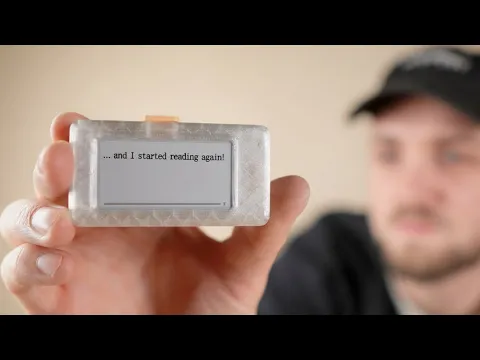

The project can be reproduced with an approximate investment of $30. In direct conversion, this is equivalent to about R$150.
The creator has made files and instructions available for assembly. This facilitates access to the project. Thus, the Mini Kindle becomes accessible to enthusiasts.
The popularity of the Mini Kindle reflects a growing trend. Smaller and more practical devices are gaining space in the market. Additionally, affordable solutions attract a larger audience.
With information from CanalTech





Be the first to react!