






 Portuguese
  Spanish
  5 min of reading
  0 comments


Homemade Rubber Paint Recipe Gains Searches For Cheap Alternative To Protect External Walls.
The mixture of acrylic paste, white PVA glue, gloss liquid, water, and pigment is gaining traction on home improvement and construction tips websites, where it is presented as a kind of “homemade rubber paint” intended for facades and exterior walls.
According to these tutorials, the combination aims to replicate the characteristics of industrial rubber waterproof paints, such as protection against rain and coverage of micro-cracks.
Although the method is popular in DIY content, there are no standardized laboratory tests confirming performance equivalent to manufactured products.
-
Transnordestina sets record by installing 1.69 km of tracks in a single day, reaches 81% completion, and plans to deliver an additional 100 km of railway by the end of June 2026.

-
Instead of plastering the wall, Argentine architects left ordinary bricks exposed, without traditional mortar, without finishes, without paint, and created a perforated pavilion that looks like an art installation.

-
Prefabricated wooden house surprises in Spain with 132 m², two floors, up to four bedrooms, and a price starting from 45,751 euros, while the version with insulation for living can reach 80,059 euros without assembly, installation, and architect included.

-
China builds a bridge over a river in just 24 hours using two 650-ton Zoomlion cranes, 9 beams of 125 tons, and a convoy of over 100 km with trailers, counterweights, and heavy trucks in synchronized operation during the early hours.



Homemade Rubber Paint Recipe With Acrylic Paste
The most consulted tutorials describe a relatively uniform formula.
The guidance is to use about 1.5 kg of ready-made acrylic paste, approximately 200 milliliters of white PVA glue, the same amount of gloss liquid, nearly 1.7 liters of clean water, and pigment to adjust the color.
According to this content, the proposal is to offer a domestic alternative for those looking to reduce costs in painting external areas, using items easily found at construction retail.
Protecting Facades Against Rain And Moisture

External walls, especially walls and facades exposed to the elements, tend to show darkening, mold stains, and recurrent moisture absorption, according to building maintenance specialists.
In certain cases, this moisture can advance into the interiors of homes.
Water-based interior paints are not designed for constant exposure to sunlight and rain.
Therefore, manufacturers and professionals recommend using waterproof acrylic paints or rubber paints in external areas.
Since these products have a higher cost compared to common alternatives, homemade recipes have begun to circulate as budget-friendly options, as blogs and tip portals report.
How Industrial Rubber Paints Work
Technical catalogs describe rubber paint as a variation of acrylic paint with a formulation adjusted to ensure greater elasticity and adaptation to the natural movements of masonry.
This category is intended to form a continuous and waterproof film, resistant to rain and temperature variations.
Manufacturers claim that the product also helps to cover small cracks and facilitates the cleaning of external surfaces.
The homemade recipe seeks to replicate some of these effects, using acrylic paste as a filling element and PVA glue with gloss liquid as cohesion and finishing additives.
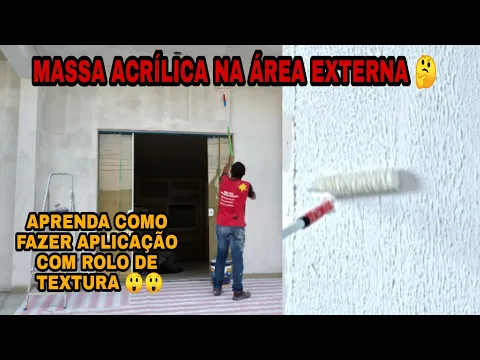

Function Of Acrylic Paste, PVA Glue, And Gloss Liquid
In the tutorials, acrylic paste appears as the component responsible for giving body to the mixture and helping to fill micro-cracks.
In external walls, this type of paste is traditionally used to correct flaws before painting, according to manufacturer manuals.
Therefore, its direct use in the mixture is presented as a way to unify correction and painting in a single application.
PVA white glue is noted in this content as a component that increases the adhesion of the paint to the wall.
According to technical documents on PVA adhesives, additives of this type can improve the cohesion of mortars and coatings and reduce surface cracking, which explains its inclusion in the homemade recipe.
The gloss liquid, commercially used to finish latex and acrylic paints, is described in the tutorials as an additive that helps close the pores of the surface, improves washability, and offers a slight sheen.
Its inclusion aims to reinforce the uniformity of the formed film.
How To Prepare And Apply The Mixture
The preparation process indicated in these guides is standardized. First, the acrylic paste is mixed with the PVA glue and gloss liquid until a homogeneous texture is obtained.
Then, water is added gradually until the desired consistency for use with a roller or brush is achieved.
The pigment is incorporated during the mixing until the color is uniform. Before application, the tutorials suggest testing the paint in a small area.
If the texture seems too thick, more water can be added. The wall should be clean, with no loose parts or mold.
Building maintenance content emphasizes that when mold is present, it is necessary to remove the contamination before painting to avoid premature peeling.
The application follows the usual standard: brush in corners and roller in larger areas, with two coats as a reference.
Waterproofing And Coverage Of Micro-Cracks
Information from manufacturers about industrial rubber paints highlights that these products create an elastic and waterproof layer that reduces moisture transfer and allows washing with water and soap.
In DIY tutorials, the homemade recipe is presented as a “rubber waterproofing paint” aimed at external areas.
According to this content, acrylic paste would act in covering small cracks, while the combination of PVA glue and gloss liquid would contribute to a more cohesive and water-resistant film.
Economy And Limits Of The Homemade Solution
Portals that publish the recipe emphasize the low cost as the main attraction.
The mixture is presented as an alternative for situations where the budget does not allow for factory waterproof paints.
In responses to readers, authors of these tutorials often warn that the homemade solution does not replace specific products for slabs, roofs, or areas subject to heavy infiltration.
They also indicate that the use should be evaluated according to the condition of the surface and, when possible, tested on smaller sections.
Construction material experts remind us that acrylic paste, PVA glue, and gloss liquid have well-documented technical functions individually, but there are no public sources with standardized studies analyzing the performance of this specific combination when used as waterproof paint.
Thus, the decision to adopt or not the recipe depends on cost evaluation, wall conditions, and the expected level of protection.





-

3 people reacted to this.