






 Portuguese
  Spanish


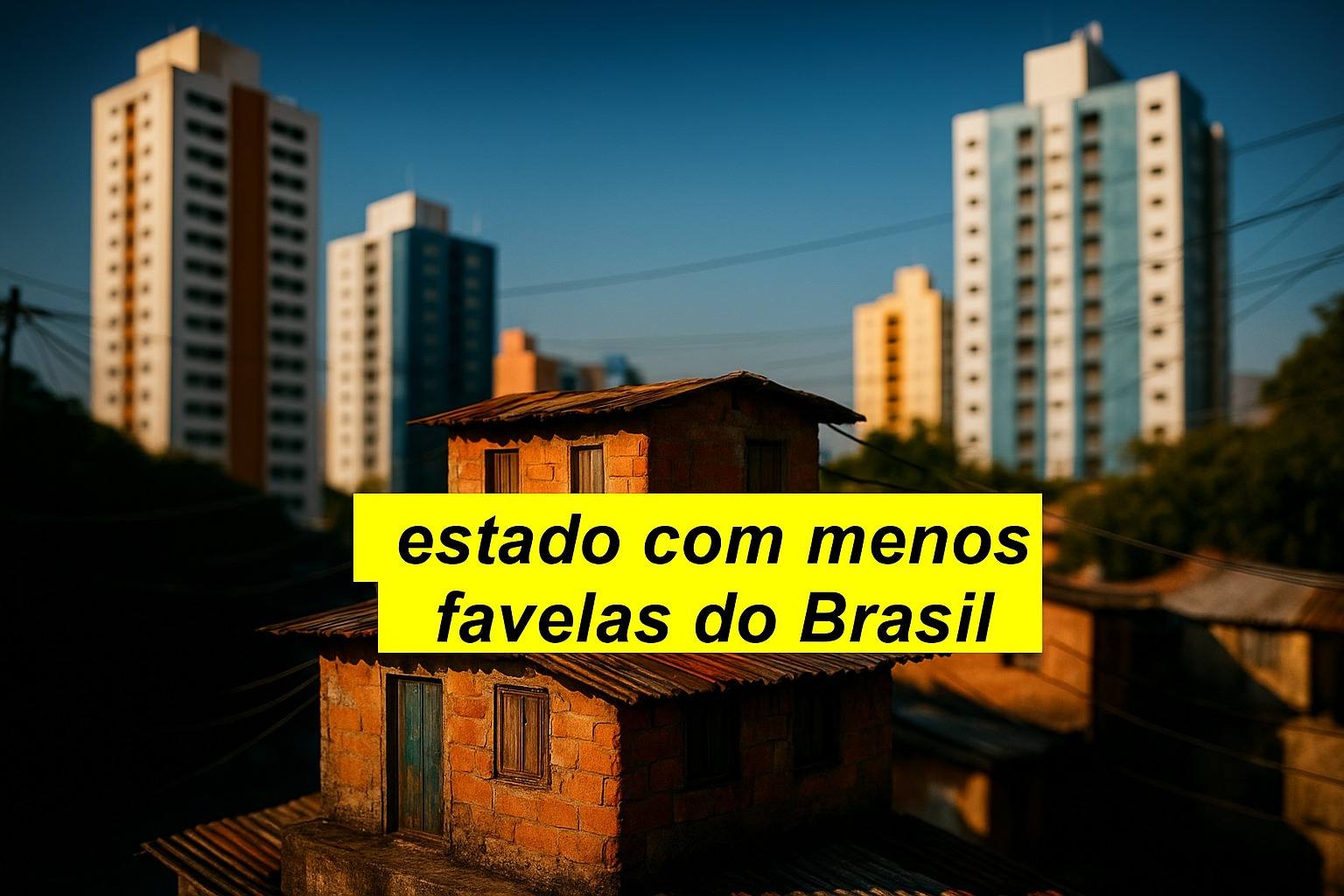
Even With Brazil Having More Than 16 Million People Living in Favelas, A Central-Western State Surprised By Recording the Lowest Percentage in the Country, With Only 0.6% of the Population in Urban Communities
Neither Santa Catarina nor Paraná. A new survey by IBGE revealed that the state with the lowest percentage of residents living in favelas in Brazil is not in the South, but in another region of the country.
Mato Grosso do Sul leads a positive ranking released by the Brazilian Institute of Geography and Statistics (IBGE): it is the state with the lowest percentage of residents living in favelas and urban communities in the entire country.
According to the 2022 Census, 16,678 people live in these areas, which represents only 0.6% of the state population, estimated at 2.76 million inhabitants.
-
How Underwater Bridge Foundations Support Thousands of Tons Without Sinking: The Engineering Techniques Behind River and Sea Constructions

-
BYD’s Giant Ship Docks in Southern Brazil with 7,216 Electric and Hybrid Cars, Marking the Largest Automotive Operation at the Port in 2026 and Bringing First-Half Total to Nearly 15,500 Vehicles
-
Cuba Implements Sweeping Economic Reforms, Legalizes Holdings and Corporations, Allows Foreign Investment in Private Companies, and Lifts Employee Limits After Over 60 Years
-
8-Year-Old Entrepreneur from Brazil Builds Poultry Business with 80 Birds, Aspires to Study Agronomy at Leading University



On the national scenario, the contrast is significant. Brazil has over 16.3 million people residing in favelas and urban communities, equivalent to 8.1% of the total population.
Thus, Mato Grosso do Sul appears in the 27th position of the ranking, being the state with the lowest rate among the 27 federative units, ahead of Santa Catarina (1.4%) and Goiás (1.34%).
Only 31 Favelas in Eight Cities
The survey also revealed that Mato Grosso do Sul has the second lowest absolute number of favelas in the country: 31 communities distributed across eight municipalities. Campo Grande holds the majority of them, with 16. Next are Dourados, with five, and Corumbá, with three. Três Lagoas and Aquidauana each have two, while Sidrolândia, Ponta Porã, and Novo Horizonte do Sul register one favela each.
In comparison, the state of São Paulo occupies the other end of the ranking, with 3,123 favelas — equivalent to 25.3% of the national total — spread across 656 Brazilian municipalities.
Profile of Residents and IBGE Criteria
According to the 2022 Census, most residents of these areas in Mato Grosso do Sul identify as brown. Women represent 50.8% of the residents, while men account for 49.2%.
IBGE defines favelas and urban communities as “popular territories arising from the various strategies used by the population to meet, usually in an autonomous and collective manner, their housing needs and associated uses in light of the insufficiency and inadequacy of public policies and private investments.”
Additionally, about 72.5% of Brazilian favelas have up to 500 homes. Areas are classified as such when they exhibit insecurity in land tenure, lack or precariousness of public services, self-produced infrastructure and, in many cases, location in risk zones or environmental restrictions.







Be the first to react!