Portuguese
  Spanish


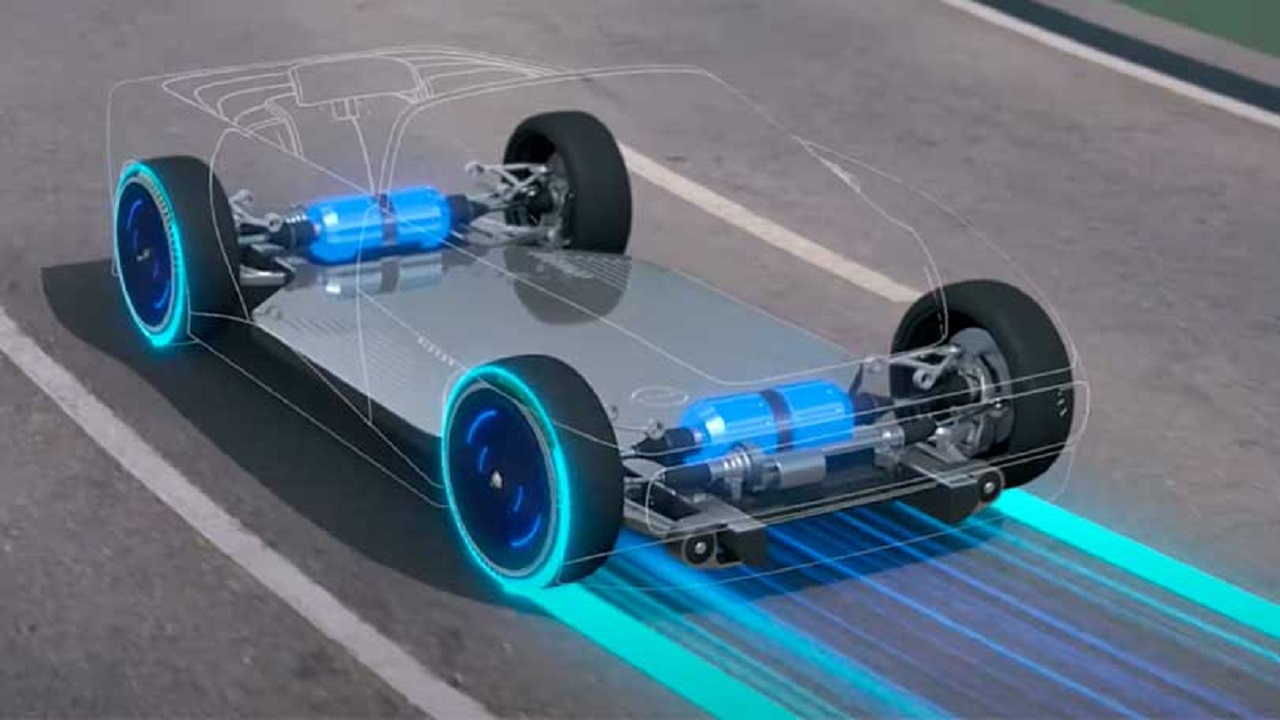

Nissan Is Advancing with Its Plan to Deliver Solid-State Batteries by 2028 and Has Developed a New Production Unit Exclusively for These Electric Vehicle Components.
Nissan, when announcing its “Ambition 2030” plan at the end of November last year, made the promise to launch electric vehicles powered by internally developed solid-state batteries by 2028 and reaffirmed its commitment this Monday (11). Now, the Japanese manufacturer is on track to fulfill that promise. A prototype plant for the production of these components has been built at Nissan’s Research Center in Kanagawa Prefecture.
Discover Nissan’s Strategy for Solid-State Battery Production
As stated by the automaker, with Ambition 2030, the goal is to develop a pilot production line at its Yokohama factory, where, according to plans, the first prototypes of the solid-state batteries will be produced by 2024.
Following this strategy, the manufacturer believes that the production cost of the component could drop to US$ 75 per kWh by 2028 and US$ 65 in the following years, making it possible for electric vehicles to achieve cost parity with their predecessors that use internal combustion engines, the major turning point in the energy transition.
-
End of an era in Brazil: beloved sedan by Brazilians is discontinued despite having a 2.0 engine with 151 hp, CVT transmission, 466-liter trunk, and up to 650 km of range.

-
New Law Proposal in Brazil Could Heavily Penalize Drivers: Dangerous Overtaking May Become a Serious Offense with Fines Increased Tenfold and a 12-Month License Suspension; Update on 2026 Progress

-
Electric Revolution: Watts W125 Motorcycle Offers 160 km Range, 90 km/h Speed, and Affordable Price Starting at $3,000
-
General Motors Replaces Over a Thousand Workers with 50 Cobots at Electric Vehicle Plant, UAW Union Criticizes Move Amid Industry’s Automation Push
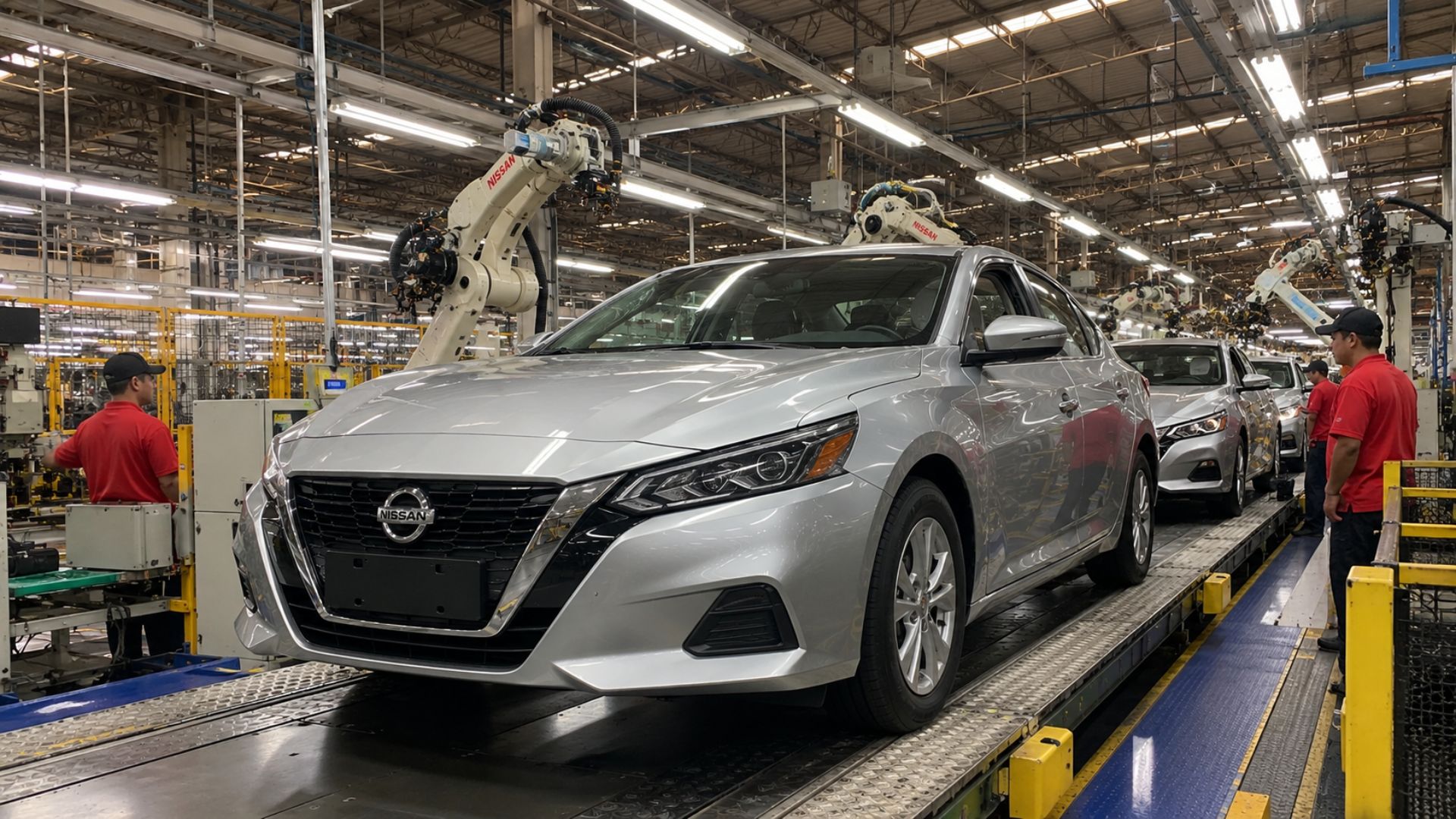



Nissan emphasizes the benefits of solid-state batteries, which have an energy density about twice that of common lithium-ion batteries, a much shorter charging time due to high discharge performance, and a lower cost due to the use of cheaper materials.
Nissan Will Use Solid-State Batteries in Several of Its Electric Vehicles
“The goal of the Japanese automaker is to utilize this innovative new technology in a wide range of vehicles, including pickup trucks, making its electric cars more competitive in the global automotive market,” said the company’s Executive Vice President of Research & Development, Kunio Nakaguro.
According to the executive, Nissan is a leader in electrification technology through extensive Research & Development, from molecular-level battery materials to high-performance electric cars. The company’s studies also include the development of cities that utilize this type of cleaner vehicle for energy storage.
The experience and knowledge gained over the years contribute to the advancement of solid-state batteries. The Research and Development and Manufacturing divisions will continue to work together to ensure that the new prototype unit is utilized effectively to accelerate the application and market arrival of solid-state batteries.
Nissan Invests in Clean Fuel Project: e-Bio Fuel Cell
Since 2016, the Japanese automaker has been investing in the e-Bio Fuel Cell project, which uses ethanol or a mixture of ethanol and water to power a fuel cell. The Japanese company claims that this technology will enable the electric car to achieve a range greater than 600 km, matching the level of electric cars with a larger range in Brazil.
With this technology, energy is generated in the fuel cell as a result of a chemical reaction between hydrogen carried by oxygen from the air and the vehicle. An electric converter located beneath the fuel cell contributes voltage to the motor, which powers the entire system.
This technology has the potential to complement internal combustion engines, electric cars, and plug-in hybrids in the long term, possibly serving as an alternative to battery electric cars. The Japanese automaker believes that the development of this technology should complement hybrid cars. However, there is a hypothesis that fuel cell vehicles could be their successors in a more distant future.