Portuguese
  Spanish


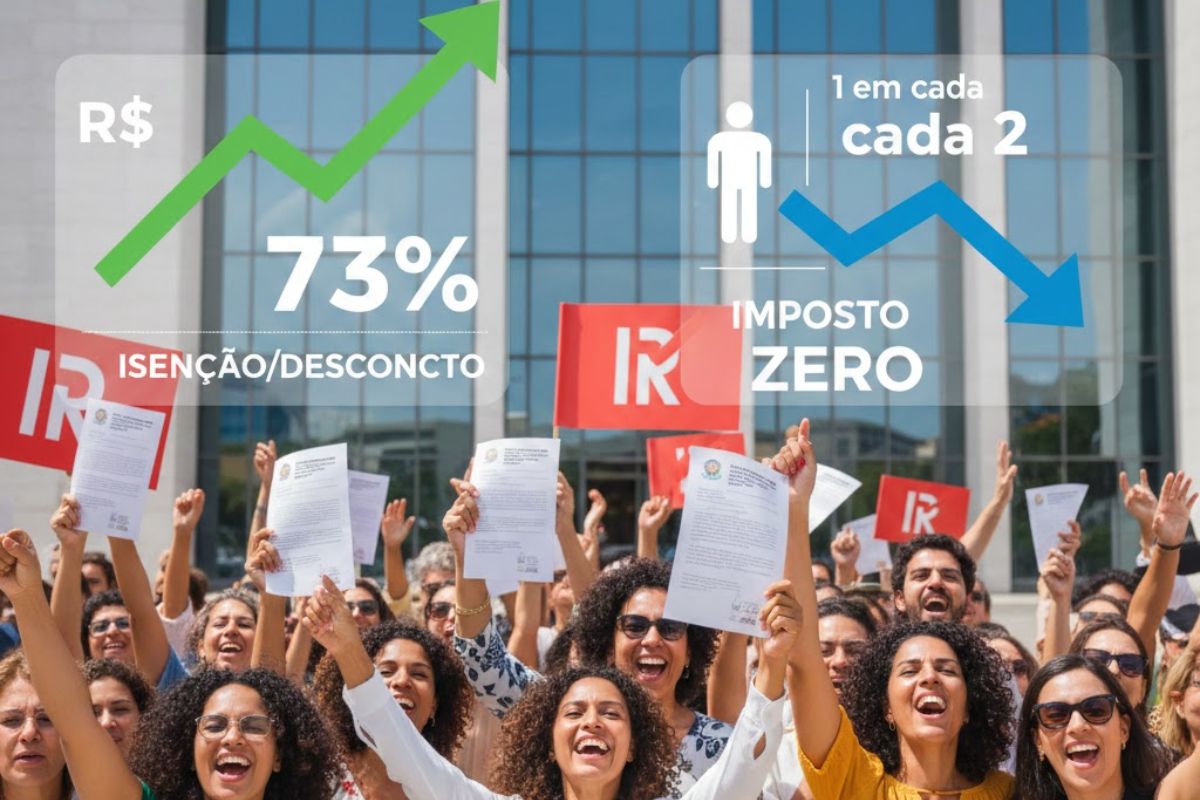


Simulation of the New Income Tax for Individuals Shows That Up to 73 Percent of Teachers Could Have Exemption or Discount, with One in Every Two Stopping Paying Income Tax and Earning More Than Five Thousand Reais per Year Thanks to the Change Proposed in the Progressive Table Presented in December Nationwide.
In the projected scenario for the new Income Tax of teachers, valid from the new calendar year of declaration, the category appears as the great beneficiary, with strong relief in the monthly taxation of salaries.
According to the projection, 73 percent of teachers would be entitled to exemption or discount on the Income Tax, with one in every two completely free from the tax and annual earnings exceeding five thousand reais, substantially changing the money that comes at the end of the month.
How the New Income Tax for Teachers Would Work
In practice, the tested model is based on the idea that teachers would receive more favorable treatment in the Income Tax table, concentrating relief mainly on the lower and middle income brackets.
-
Toll Fees in São Paulo’s Countryside Drop by Up to 50% Starting Today

-
Petrobras Invests $2.3 Billion in Brazilian Coastal Shipyards, Creating Over 5,000 Jobs and Revitalizing the Naval Industry

-
$2.5 Billion Amazon Potash Mine Aims to Reduce Brazil’s 95% Import Dependency

-
Grendene’s Sales Decline in 2025, but Melissa Brand Surges 36% and Becomes Key Focus


Half of the category would have total exemption, with no monthly deductions related to the Income Tax from their paycheck.
The remaining group within the 73 percent would have significant discounts on the effective rate, reducing the amount withheld at the source and, in many cases, eliminating the need for additional payment on the annual declaration.
The logic is to align teachers’ net compensation with the reality of living costs, recognizing the weight of the profession for the country’s development.
How Much Extra Money Teachers Would See at the End of the Year
The most striking number from the simulation is the direct impact on income. The projection indicates that benefited teachers could take home more than five thousand reais extra per year, solely from the reduction or elimination of the Income Tax.
In monthly terms, this would mean something around about four hundred to five hundred reais more in their paycheck, depending on each teacher’s salary and how the discount would be distributed throughout the year.
This additional amount could be used to pay off debts, invest in continuing education, bolster family savings, or simply ease basic expenses such as rent, transportation, and food.
Who Would Be Exempt and Who Would Still Pay Tax
Within the universe of teachers, the simulation suggests three groups. The first is that of totally exempt teachers, who would amount to one in every two professionals.
These are primarily those with salaries closer to the municipal, state, or private network minimum wage.
The second group would consist of teachers with partial discount on the Income Tax, who would still pay tax but at a lower effective rate compared to the current rule.
This includes many educators with extended hours, holding coordination positions, or earning intermediate salaries.
Finally, there would be a smaller segment of teachers, with higher salaries, who would continue to contribute more intensely to the Income Tax, although they could also be reached by adjustments in deductions or brackets.
In this scenario, most of the benefit concentrates at the base of the category, where the impact of the extra money is most felt in the household budget.
Impact on the Career and Quality of Life of Teachers
A change of this magnitude does not only affect spreadsheet numbers. More money in teachers’ pockets means a change in career perspective, especially for those who currently need to supplement their income with extra classes, side jobs, or activities outside of education.
With a lower tax burden, some of these professionals could reduce the need for a double or triple workload, which tends to reflect in better lesson preparation, less illness, and greater longevity in the profession.
In addition, the relief in the Income Tax opens space for personal investment in courses, materials, educational technology, and even home improvement, which impacts overall quality of life.
What Still Needs to Be Defined to Become Reality
Although the depicted scenario shows a potential for transformation, any new model of Income Tax for teachers would depend on changes in legislation, definition of exact brackets, criteria for classification, and mechanisms for verifying teaching activity.
For example, it would be necessary to establish how teachers of basic education, higher education, private networks, and public networks would be treated.
Another sensitive point is the fiscal impact. The simulation indicates strong relief for 73 percent of the category, with half remaining completely exempt.
To become real public policy, the government would need to detail how to compensate for the revenue loss, whether through adjustments in other taxpayer brackets, revision of benefits, or broader changes in the tax system.
Teachers at the Forefront of the Tax Debate
For the first time in a long time, the category appears as a protagonist in an Income Tax debate, and not merely as another group affected generically by the rules.
Putting teachers at the center of the tax discussion means recognizing the strategic role of education for long-term development.
At the same time, the tested proposal opens space for discussions about equity concerning other professionals who also claim a high tax burden.
And you, do you think a new Income Tax focused on teachers would be a fair way to value the category or would it end up creating too many differences compared to other workers?