






 Portuguese
  Spanish
  3 min of reading
  0 comments


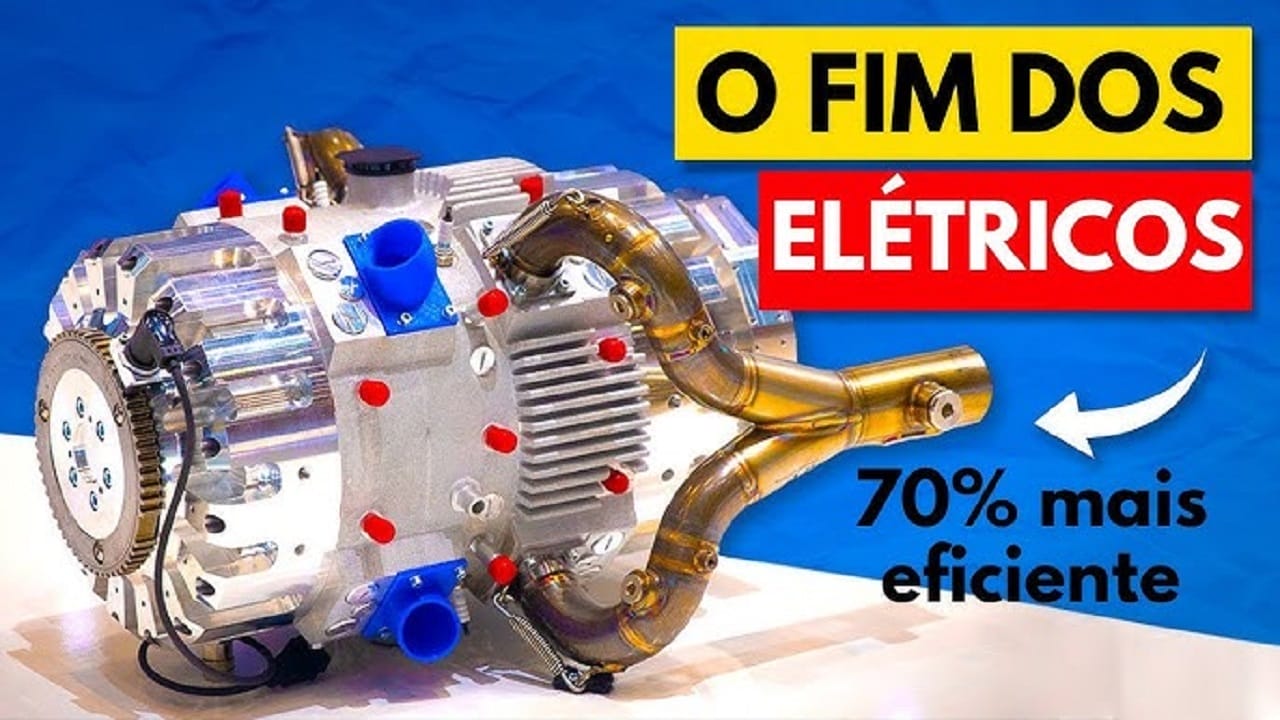
Development Of A Revolutionary 500cc 2-Stroke Engine In Progress, Offering Efficiency And Power Equivalent To A 2000cc Engine, Four Times Superior To Traditional Engines.
In 2019, INNengine, an innovative company from Spain, announced the development of a revolutionary 2-stroke engine. Although this new 2000cc engine maintains the use of pistons and cylinders, it stands out due to a unique configuration and the incorporation of several advanced technologies. More compact and lighter than conventional piston and cylinder engines available in the market, it matches the power of a 2000cc engine. It promises not only enhanced efficiency but also superior performance.
Company Has Two 2-Stroke Engine Concepts


INNengine has patented and developed two 2-stroke engine concepts, namely e-REX and REX-B. Both models feature 1Stroke engine technology, patented by the brand. Thus, they have 4 times the power of a conventional 4-stroke engine and twice that of a 2-stroke engine.
The E-REX engine, equivalent to a 2000cc engine, was developed to replace conventional 4-stroke engines and all current applications and much more.
-
Toyota sells a “Family Spin” cheaper than the Chevrolet Spin in Brazil, with 7 seats and a price starting from around R$ 70,000 in tax-free conversion; Avanza 2026 has a 1.3 or 1.5 engine, manual or CVT transmission, 205 mm ground clearance, and a family proposal that Brazilians don’t have in Indonesia.

-
Five used cars that can handle 100 km per day without breaking the bank, but experts warn that even the most durable ones may hide expensive repairs if they’ve gone years without proper maintenance.

-
Dodge Charger Daytona receives solid-state battery in real test and reignites the race for lighter electric cars, faster to charge and with more range.

-
Hyundai Staria Hybrid arrives as a “premium Kombi” hybrid with 7 or 9 seats, 1.6 turbo engine, 54 kW electric motor, spacious cabin, Relaxation seats, and a work van version with 3 or 6 seats in Europe.


Its cutting-edge technology reduces consumption and pollutant emissions compared to any modern 4T engine, while being 4 times more powerful and compact. After hundreds of hours of testing and having powered a demonstration car, its e-REX engine has achieved TRL6 and is on track to reach TRL9.
The REX-B is a simplification of the e-REX only in concept, but not in quality. Built to meet aerospace industry standards, the REX-B will replace 2-stroke engines in applications where raw power, simplicity, ultra-compactness, and cost are only desirable but not fundamental.
New 2-Stroke Engine Is 70% Lighter
According to the developing company, if the client could choose a dream engine for long-range applications, it should be light and small to leave extra space for batteries and motors, have 0 vibration to not interfere with a smooth electric experience. And since electric cars are already expensive enough, they should be simple and cheap to produce.
The new 500cc engine, equivalent to 2000cc, is all this and much more, being more efficient than a traditional engine, however, smaller and twice as powerful as a 2-stroke engine.
Without a crankshaft, valves, camshafts, or cylinder head, the new 2-stroke engine is 55% smaller and 70% lighter than any other engine. The moving parts of the propulsor and the balance at all times and in all three planes eliminate vibration.
Applications Of The New 500cc Engine
Currently, the company is working with CMT from the University of Valencia to develop the e-REX to meet the European emission standard (EU7) when implemented in 2025. Looking further ahead, the company aims to make the new e-REX, equivalent to a 2000cc engine, the perfect green hydrogen engine to achieve 0 emissions.
Although the medium-term goal is EU7 Ready, there are several applications where the company expects to implement the e-REX sooner. Among them are:
Aviation: Its size, weight, and compact power generation, along with the lack of vibration, make it a perfect engine to power drones and aircraft, eliminating the need for an extra turbine.
Power Generator: A whole new generation of portable, ultra-efficient, and ultra-light generators, specifically designed to meet the most demanding requirements in the least accessible locations.
Marine: The company has also implemented its solution in hydraulic systems of yacht/boat. In addition to the aforementioned advantages, the engine also works well upside down, protecting against any malfunction in case of overturning.





-

1 person reacted to this.