Portuguese
  Spanish


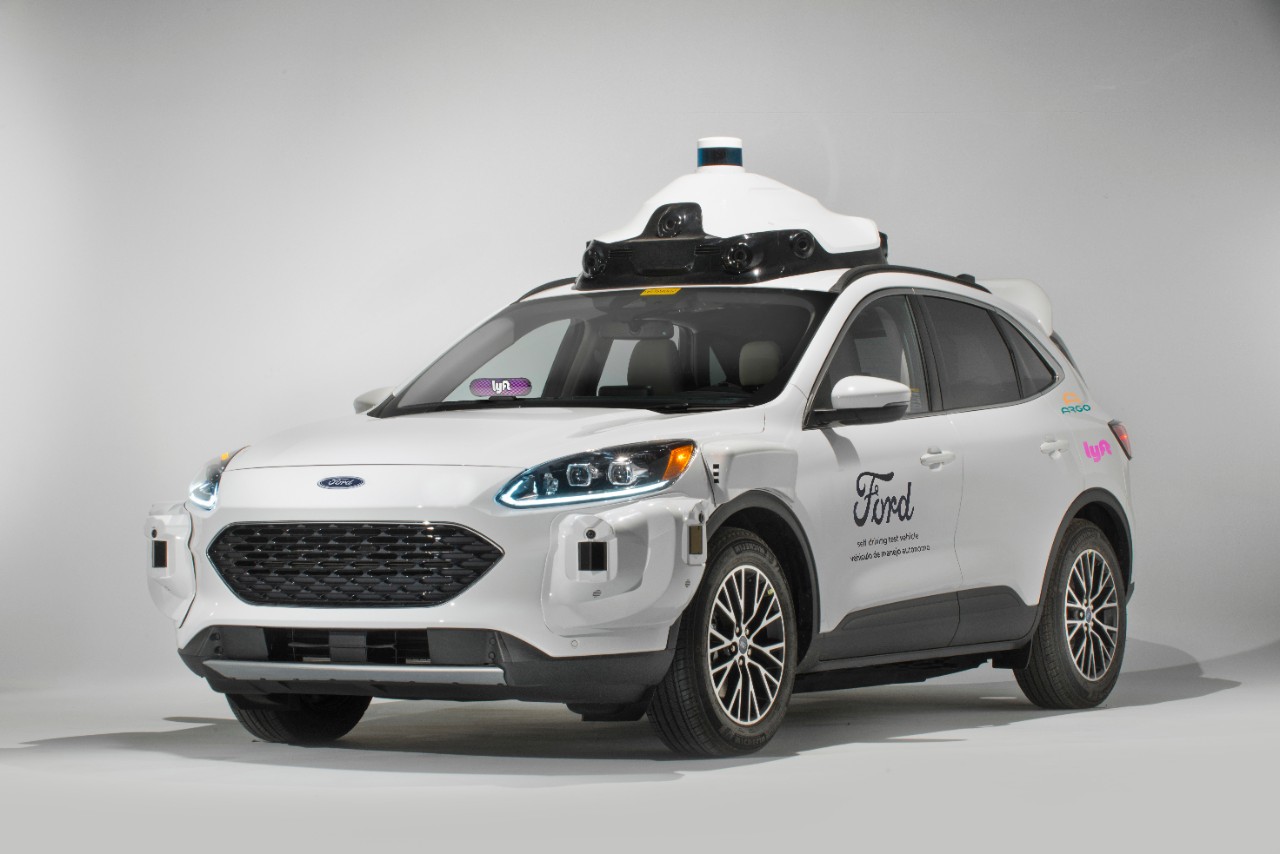

Ford Has A Huge Loss Of US$ 2.7 Billion Due To Its Ambitious Push In Autonomous Vehicles. None Of This Has Slowed GM’s Investments So Far
There has been undeniable excitement about autonomous vehicle technology in recent years, with startups and established companies competing to dominate this emerging market.
Investors may be questioning whether the trend toward fully autonomous vehicles is a mistake following Ford Motor Company’s (F 0.44%) decision to stop developing fully autonomous driving technology via Argo AI and the accompanying US$ 2.7 billion loss.
Investment Returns Will Take Longer Than Expected, Says Ford.
Ford and the Volkswagen Group were the primary investors in Argo AI, a startup developing autonomous vehicle technology. To shorten the story, the company announced in the fall that it would cease operations due to a lack of funding.
-
Suitcase-sized hydrogen engine spins at 25,000 rpm, nearly doubling the efficiency of conventional cars and replacing exhaust smoke with water vapor

-
1983 Chevrolet Runs Over 100,000 km Without Gasoline, Powered by Wood Chips, Reaches 125 km/h in Airport Test

-
Workshop Converts Giant Tractor Tire Tricycle into a Three-Wheel Drive Hybrid with 36,000-Watt Electric Motor Capable of Climbing Hills

-
Chery Offers Lifetime Battery Warranty and Car Replacement for Major Failures Under New Chinese Regulations


Ford’s massive net loss in the third quarter, totaling US$ 827 million, can be attributed to the company’s decision to take a non-cash, pre-tax write-down on its significant investment in Argo.
Ford’s admission that profitable commercialization of Level 4 ADAS is far from possible at the moment was perhaps more revealing to Ford investors and more concerning for automotive investors in general.
CEO Jim Farley said in a press release: “We are excited about the future of L4 ADAS, but profitable, fully autonomous vehicles at scale are a long way off, and we won’t necessarily have to produce this technology ourselves”.
Ford has pivoted and concluded that it would be in the best interest of its shareholders to focus on Level 2 and Level 3 systems, which do not completely eliminate the need for a human driver. Management believes this approach has potential to boost short-term profits, customer satisfaction, and offered services and options.
Ford’s stakes in Argo AI are extraordinarily different from its main rival, General Motors, which has received much praise for Cruise, its autonomous technology subsidiary, in which it invested US$ 2.1 billion this year, increasing its stake from 60% to 80%.
Investors have reasons to wonder if General Motors is wasting money on technology that is years away from being profitable at scale. For now, GM feels confident that it is not making a mistake and that Cruise is making operational progress.
As its operations in San Francisco expand, Cruise is also entering the Austin and Phoenix markets. If regulatory and safety certifications are met, Cruise management expects the company to generate US$ 1 billion in revenue by 2025.
If that US$ 1 billion is achieved by the middle of the decade, investors will have a much better idea if Cruise’s projected annual revenue of US$ 50 billion by 2030 is realistic or not.
GM May Achieve One Of The Most Impressive Milestones Of This Century
If GM meets its revenue goals for Cruise by the end of this decade, it will be one of the most significant achievements of an automaker this century. Investors will also profit substantially from it.
Investors will have many complaints if they find that General Motors is following in Ford’s footsteps and pouring resources into a buzzword that isn’t doing much for the bottom line.
Investors trying to decide between Ford and General Motors should consider the companies’ positions on the development of autonomous vehicles because it represents one of the few significant strategic differences between the two.