






 Portuguese
  Spanish


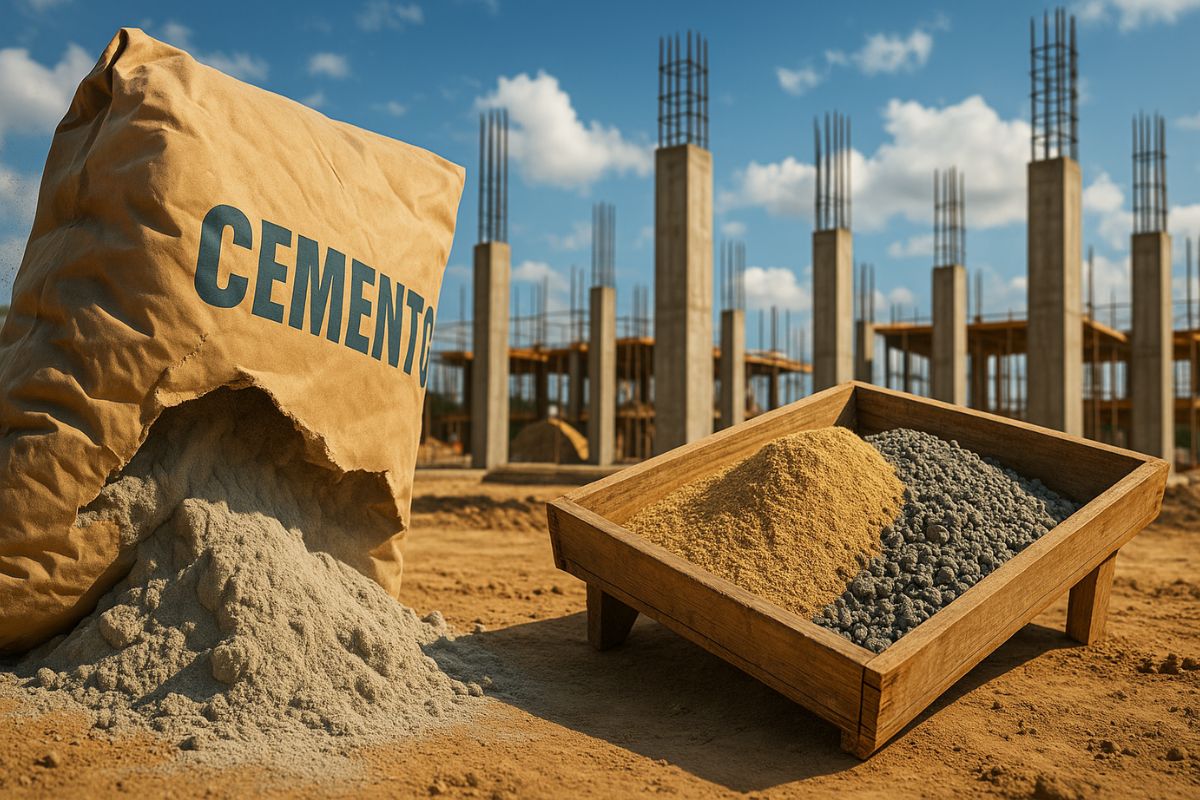

Doing This Can Save Up to 20% of Cement on the Job. Structural Planning, Mix Control, and Waste Reduction Lower Costs and Increase Cement Efficiency on the Job.
The cement on the job is one of the most expensive materials in construction and, at the same time, the one that suffers most from waste when there is no technical control. Reports indicate that losses can reach 20% on poorly organized job sites, significantly increasing the final cost of houses and buildings.
According to consulted engineers, saving cement on the job doesn’t mean using less than necessary, but rather applying the correct amount, following structural calculations, good execution practices, and methods that eliminate waste in the preparation and use of concrete and mortar.
The Role of Structural Design in Cement Economy
Every savings process starts with the structural design. It is in this document that the engineer defines the load of columns, beams, and slabs, determining the exact resistance of the concrete. Following the design prevents “overdosage”, where more cement is used just for safety reasons, generating unnecessary expense.
-
Sustainable Building Solutions Enhance Durability, Long-Term Savings, and Comfort in Home Construction and Renovation

-
Brazilian Fishing Couple Spends 4 Years Building Solar-Powered Floating Home on the Paraguay River, Now a Navy-Approved Vessel with Leisure Area and Tour Demand

-
While the World Opens New Airports and High-Speed Trains, Brazil Rushes to Complete Projects Stalled for 40 Years
-
Brazil Invests in Massive Waterway to Transport Soybeans by Barge, Reducing Costly Truck Reliance



A well-prepared calculation ensures that each part of the structure receives only what it needs. The result is the safety of the job with rational use of cement on the job, without compromising quality and without increasing costs.
The Concrete Mix and Its Importance
The “mix” is the recipe that defines the proportion of cement, sand, gravel, and water. Following this mix closely prevents waste, since each mixture is designed to meet a specific resistance.
In practice, engineers recommend replacing shovels with measuring boxes (padiolas), which standardizes the mixture. Imprecise dosing can increase cement consumption on the job by up to 10% with no real quality gain.
The Choice of Blocks and Its Influence on Consumption
The type of block used also makes a difference. Ceramic or concrete blocks with uniform dimensions allow for thinner joints and less use of mortar. Additionally, structural masonry eliminates part of the beams and columns, reducing the use of concrete.
In both cases, choosing good materials helps to reduce the volume of cement on the job without compromising strength, but rather optimizing constructive performance.
Main Sources of Waste on the Job Site
Studies show that cement waste can exceed 20% when there is no organization on the job site. The main causes are improper storage, inadequate transport, and excessive preparation.
Exposed bags of cement become clumped and are lost. Poorly transported mortar falls along the way. Preparing large volumes of mixture leads to hardening before use. Each of these failures represents wasted money on the job.
Proper Storage and Preparation
The cement on the job should be stored in a covered location, on pallets, and away from damp walls, preventing it from absorbing water. Each bag, which costs between R$ 35 and R$ 50, needs to be treated as an investment.
In preparation, it is advisable to mix only the necessary amount, in clean locations close to the point of application. This practice ensures that all cement used on the job is maximized.
The Importance of Curing Concrete
Curing is the process of keeping the concrete moist in the first days after application. Without this step, some of the cement may not react, weakening the structure.
In other words, neglecting curing does not save but rather wastes the material’s potential. Caring for curing is essential to ensure that each kilogram of cement on the job works with maximum efficiency.
Saving up to 20% of cement on the job is possible when there is planning, discipline in concrete preparation, appropriate block selection, and waste reduction on the job site. This savings not only reduces costs but also increases the durability of the construction.
And you: have you ever faced cement waste on the job or know practices that really work to save? Leave your comment and share your experience — we want to hear from those who live this in practice.


