






 Portuguese
  Spanish
  4 min of reading


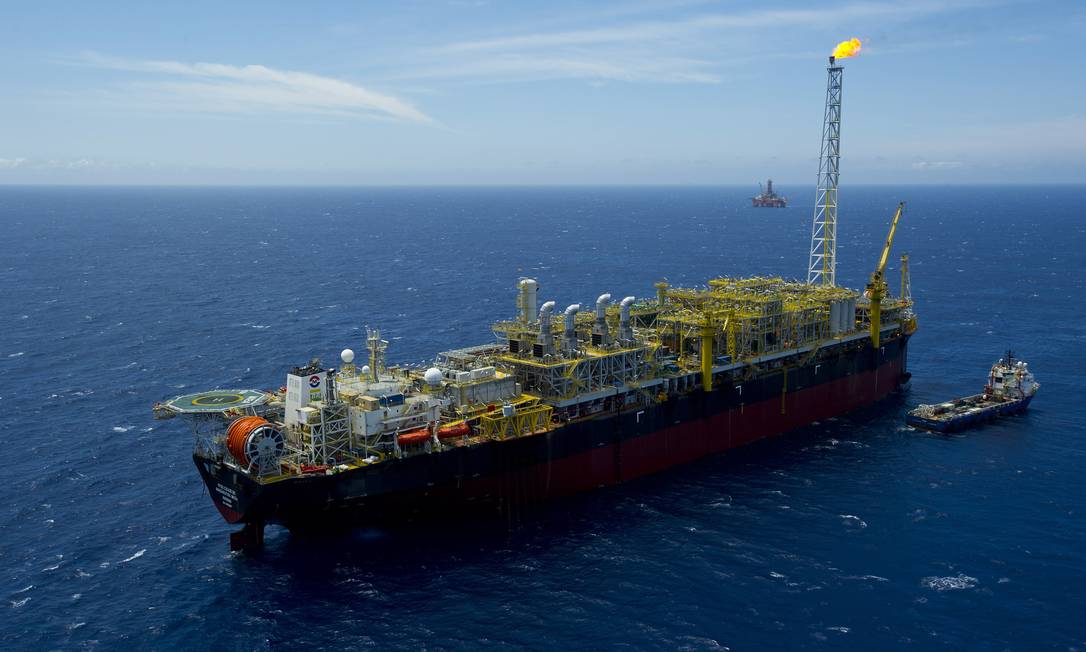
Rystad: FPSO Contracts in 2021 Reach Pre-Pandemic Levels. Ten New Orders Expected in 2022 for Oil and Gas Production
According to Rystad Energy’s research, the market for floating production, storage, and offloading (FPSO) units almost ignored the pandemic’s effect in 2021, primarily driven by demand from Brazil, and is expected to continue at a rapid pace in 2022.
Two leasing contracts were awarded in the fourth quarter of 2021, bringing the total for the year to 10 – up from just three in 2020 – a strong recovery for the FPSO market for oil and gas production.
See Also Other News:
- More than 100 job openings available at PepsiCo Brazil for salesperson, multifunctional operator, promoter, production assistant, logistics assistant, and more
- Using cutting-edge technology, Videome creates Brazil’s first educational robot, which features artificial intelligence
- Ocean battery is the newest form of renewable energy storage, developed by the Dutch. The model is located on the seabed
According to Rystad, the demand for FPSO units in Brazil was a significant factor driving growth in 2021, with 7 of the 10 contracts last year being for Brazilian projects. The South American nation is expected to continue leading global awards in 2022, with three additional FPSOs expected for oil and gas production.
-
Oil production grows in Rio, but reserve replacement raises a warning sign

-
Petrobras is expected to complete the drilling of the Morpho well in the Foz do Amazonas in August 2026, the first well in the Equatorial Margin, an oil frontier that the ANP estimates at more than 30 billion barrels and could redraw the map of Brazil.

-
Oil returns to the center of concerns with tension between the US and Iran

-
IEA reduces forecast for global oil demand in 2026 after impacts of the Middle East crisis



Not only is Brazil delivering more awards, Rystad said, but Brazilian projects are expected to be the largest in terms of production capacity. For example, according to Rystad, the unit destined for P-80 will become the ninth in the Búzios region. It will have an oil processing capacity of around 225,000 barrels per day (bpd) and a gas processing capacity of about 12 million cubic meters per day, the same size as the FPSO Almirante Tamandaré.
In 2022, the other South American country Guyana is expected to contribute one FPSO to the global total, with the UK adding two projects. Angola, Australia, China, and Malaysia are each expected to award one new FPSO contract this year, Rystad said in its report.
FPSO Market for Oil and Gas Production
“With around 30 FPSO units under construction or in the queue for construction, and another 10 expected to be awarded in the next 12 months, the market should leverage its recent success. However, as witnessed in many other facets of the global economy in recent months, supply chain concerns remain and will test the market’s ability to accept new contracts without excesses and uncontrollable cost overruns,” says Zhenying Wu, senior analyst at Rystad Energy.
The FPSO market had a strong finish in 2021, with two leasing and operation contracts, two front-end engineering and design (FEED) contracts, and one contract extension awarded in the fourth quarter.
In Brazil, Yinson received two letters of intent (LOI) from Petrobras to provide the Integrated FPSO Parque das Baleias (IPB), and for operation and maintenance services, under a leasing and operation contract lasting 22 years and six months from the day of final acceptance. The FPSO will be deployed at the Jubarte field in the Campos Basin and is scheduled to start production in late 2024.
Enauta Energia issued another LOI to Yinson to supply, operate, and maintain an FPSO in the Atlanta field in the Santos Basin in Brazil. The work involves the adaptation of the FPSO OSX-2 by Yinson through a turnkey engineering, procurement, construction, and installation (EPCI) contract, with guarantee and operation and maintenance for 24 months.
The acquisition and adaptation cost of the FPSO will be around US$ 505 million. Yinson has the purchase option for a unit tied to financing. If the purchase option is exercised, it will be linked to leasing, operation, and maintenance contracts for 15 years, extendable by five years, totaling US$ 2 billion over 20 years. The contract is Yinson’s third project in Brazil and is subject to a final investment decision during the first quarter of 2022.
Other Countries
Elsewhere in South America, ExxonMobil awarded SBM Offshore an FPSO FEED contract for the development of Yellowtail in deep waters in the Stabroek block off the coast of Guyana. The FPSO will be designed to have an oil processing capacity of 250,000 bpd, a gas processing capacity of 450 million cubic feet per day, and storage of up to 2 million barrels. When completed, the FPSO will be the largest producing unit the company has ever built.
ExxonMobil is currently producing from Stabroek through the FPSO Liza Destiny. The FPSO Liza Unity arrived in Guyanese waters on October 26, and ExxonMobil expects both units to produce this year. When the Prosperity and Yellowtail projects come online in 2024 and 2025, respectively, ExxonMobil will have a total processing capacity of over 800,000 bpd in Guyana.
In Nigeria, BW Offshore secured a lease extension for the FPSO Sendje Berge, operating for Addax Petroleum Exploration (Nigeria) Ltd, which will last until the fourth quarter of 2022.
In Norway, Aker Solutions received an LOI for a FEED contract from Equinor to provide an FPSO to be employed in the Wisting field in the Norwegian sector of the Barents Sea. The scope of the FEED is to provide front-end engineering design for a circular FPSO solution, which includes an option for EPCI of the FPSO topside. If the project advances to the execution phase, the EPCI option potentially represents a significant contract, estimated between US$ 960 million and US$ 1.45 billion, Rystad said.







Be the first to react!