Portuguese
  Spanish




This Data on Job Creation Is Part of the New Edition of the “Logistics Operator Profile,” Conducted by ABOL in Partnership with ILOS. The Sector Also Reached a Gross Operating Revenue of R$166 Billion and Collected R$ 44 Billion in the Last Year.
Logistics Operators – OLs recorded, in 2021, a Gross Operating Revenue – ROB of R$ 166 billion and secured 2 million jobs, both direct and indirect, equivalent to 2% of the total number of employed people in Brazil. Additionally, they collected R$ 44 billion in taxes, highlighting their relevance for national economic development. The figures are part of the 2022 edition of the study “Logistics Operator Profile,” commissioned to the Institute of Logistics and Supply Chain – ILOS by the Brazilian Association of Logistics Operators – ABOL. The research also provides details on the importance, evolution, and role of the sector, maps challenges and aspirations of companies, and brings more visibility and information to the market.
The results confirm a 2021 marked by recovery and growth of OLs: 391 million tons transported and R$ 18 billion in investment. Conducted since 2014, with the latest version released in 2020, it indicates an increase in the presence of Operators in different regions of the country over the past two years. Furthermore, it highlights the broadening of their sectoral reach within the supply chain, serving a greater number of clients in various segments, such as e-commerce.
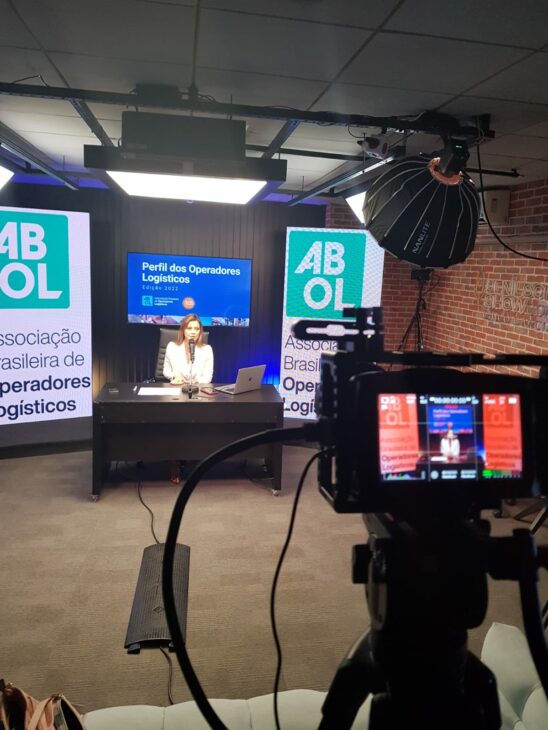
The survey encompassed a universe of 1,000 companies – including those associated with ABOL – that met the prerequisites set by ILOS (based on the National Classification of Economic Activities – CNAE and the services offered). “In addition to expanding the base, we divided the companies into small, medium, and large sizes to understand the issue of job creation from their perspective, revealing the behavior of each group in light of, for example, the Brazilian political and economic scenario,” highlighted ABOL’s Executive Director, Marcella Cunha.
-
Why can the crane operator only obey the correct signalman on the construction site: among dozens of workers, a hand raised by the wrong person can confuse the maneuver and turn a load of tons into an immediate risk.

-
What changes with the new public transportation rules that can reduce pressure on fares and pave the way for zero fare in Brazil?
-
Argentina confirms Belgian giant to lead strategic Paraná River waterway and promises to reduce logistical costs on one of South America’s most important routes
-
MBRF surprises the logistics sector by demonstrating how Artificial Intelligence can directly influence deliveries throughout Brazil by reorganizing distribution routes in seconds, optimizing fleet usage, reducing logistics costs, and speeding up product arrivals even in the face of unforeseen road incidents.


Scope
The activity of OLs covers all five national regions, where 37% of respondents are located. Moreover, since the 2020 edition of the survey, there has been an increase in the regional activities of OLs, rising from 25% to 44% in the North, 43% to 58% in the Northeast, 37% to 62% in the Midwest, 63% to 75% in the South, and from 92% to 97% in the Southeast. The responses reveal a search for national operations, despite the presence of regional Logistics Operators, mainly concentrated among small-sized companies that also generate jobs in this modality.
The growth in the sectors served was also confirmed by the study. Compared to 2020, the presence of Operators increased by 12% in the cosmetics sector, 16% in e-commerce, 14% in cleaning products, and 12% in industrial and service technology.
The research also shows that, although Brazilian logistics operators have a clear preference for operating in high value-added segments, there is a trend toward expansion. “In the case of e-commerce, the increasingly prominent presence of OLs – one of the reflections of the pandemic – is related to the market’s potential to bring significant volume to a niche that is growing at higher rates than other sectors,” explains Marcella.
Investments
The main activities performed by OLs are Closed Road Transport, General Warehousing, and Crossdocking. The questionnaire revealed that 94% of OLs perform joint operations of Transport and Warehousing. This occurs for 44% of the cargo.
When discussing profit and cost, the losses caused by difficulties faced in recent months, such as the fuel crisis, are glaring. The study makes it clear that while the profit margin increased for most, it did not keep pace with revenue growth at the same level. Additionally, companies reported that they were unable to pass all costs onto the service price. To navigate the hurdles, which also include the coronavirus pandemic, Operators (59%) increased their investments, the study reveals.
The funds were predominantly allocated for the modernization of facilities and infrastructure and software, prioritizing technological integration with clients and suppliers. There was also a strong trend of investments in startups and logtechs by nearly half of the Operators last year.
Small and Medium
The research also clarifies that the strategy of smaller OLs is to reduce costs, that of medium OLs is to gain market share, and that of larger OLs is to improve service. The majority of Logistics Operators want to stand out in the market through flexibility and customization of their operations. Speed and price are not the targets of differentiation, being more seen as enablers for the service. Integration with the client, technology and automation, service level, and productivity are the main focus areas for developing the activity.
The largest OLs lead the sector, both in the execution of services and in the goal of delivering economic results more quickly to the market and to the country as a whole.
Sustainable initiatives, workforce qualification, and hiring employees, primarily through CLT, were other points highlighted in the survey. “The development of ESG areas has also been increasing in Brazil as a global trend, as there is an understanding that businesses need to sustain themselves in the long term. In this sense, we observe progress within organizations, with large ones leading, and smaller ones following, focusing on growth,” analyzed the ABOL executive.
Elections
In an election year, OLs expect a greater government involvement in reducing the tax burden and improving infrastructure, focusing on highways, road infrastructure in medium and large cities, and access to urban centers. When it comes to the recognition of the activity, Operators showed awareness of PL 3757/2020, which aims to regulate the function of OL and is currently under deliberation in the National Congress.
The financial losses incurred due to truckers’ strikes were also part of the questionnaire, given the frequent protests carried out by the category that directly impact the routines of OLs. For 38% of respondents, strikes are nearly always unrecuperable. For the others, it takes about four days to recover from one day of protest.
“The research allows for a broad understanding of the sector, revealing its particularities and macro needs, especially after two years of the pandemic and other obstacles that compromised the international supply chain. We can say that resilience is the main characteristic of OLs, as there has been recovery and a desire for development and innovation,” concluded Marcella.
ABOUT ABOL
ABOL – Brazilian Association of Logistics Operators aims to consolidate the activity of the Logistics Operator in Brazil, institutionally strengthening this important market. Founded in 2012, the Association brings together the 31 largest players in the sector, national and foreign companies from diverse productive chains: Andreani, BBM, Bomi, Brado, Bravo, Coopercarga, DHL, Fedex, FM Logistic, Gafor, Gefco, Geodis, Grupo Toniato, Kothe, ID Logistics, JSL, Localfrio, Luft Pharma, Multilog, Mundial, Penske, Prosegur Log, RV Ímola, Santos Brasil, Sequoia, Solítica, Tegma, Tora, UPS, Veloce, and Wilson Sons.
More information: www.abolbrasil.org.br
-

Marcella Cunha, Executive Director of ABOL (1) -

Marcella Cunha, Executive Director of ABOL (02)