Portuguese
  Spanish


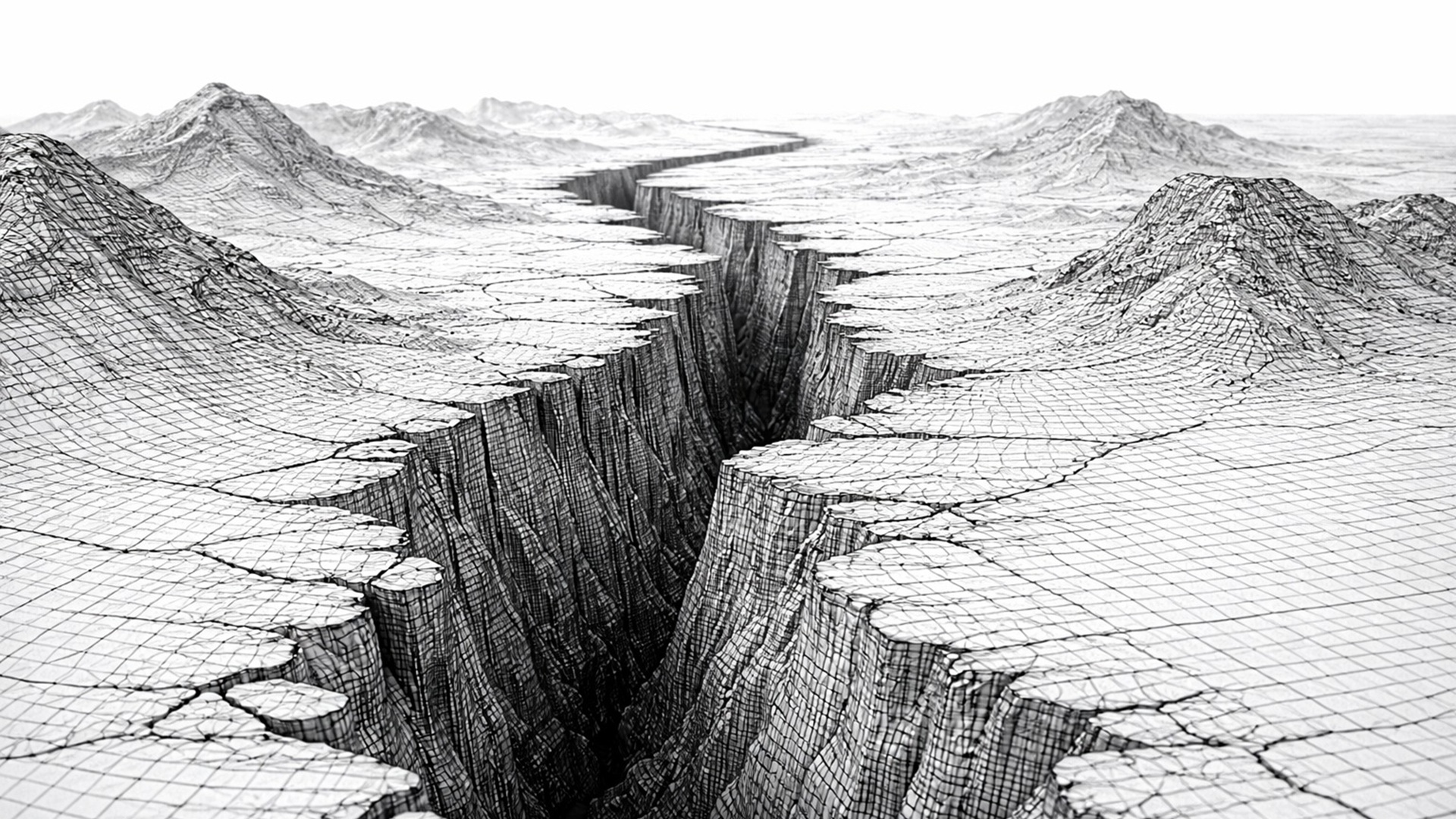


When Analyzing Ancient Fractured Lava Flows Along the Tuz Gölü Fault, Over 200 Kilometers Long in Central Turkey, Researchers from Curtin University Identified Direct Evidence of Slow Continental Separation, with an Average Rate of About 1 Millimeter per Year, Changing the Understanding of Seismic Risks and Regional Tectonic Deformation
The study of ancient fractured lava flows along the Tuz Gölü Fault Zone in Turkey revealed that the geological structure is widening at an approximate rate of 1 millimeter per year, providing new evidence on how continents slowly separate and enhancing the assessment of seismic risks.
Geological Evidence in a Fault Over 200 Kilometers Long
Researchers from Curtin University analyzed ancient lava flows that solidified and were subsequently fractured along the Tuz Gölü Fault Zone, a geological formation over 200 kilometers long and clearly visible from space. The study provided new clues about continental deformation processes over time.
The research demonstrated that the fault is gradually widening rather than displaying only lateral displacement.
-
OnePlus N6 Smartphone to Launch in India with 8,000mAh Battery and 45W SuperVOOC Charging, Lasting Up to Three Days

-
Scientists Plan to Release Air Bubbles Underwater to Protect Antarctica’s “Doomsday Glacier” from Melting

-
Chinese R6000 Drone Combines Airplane and Helicopter Features, Carries Up to 12 People for Multiple Missions
-
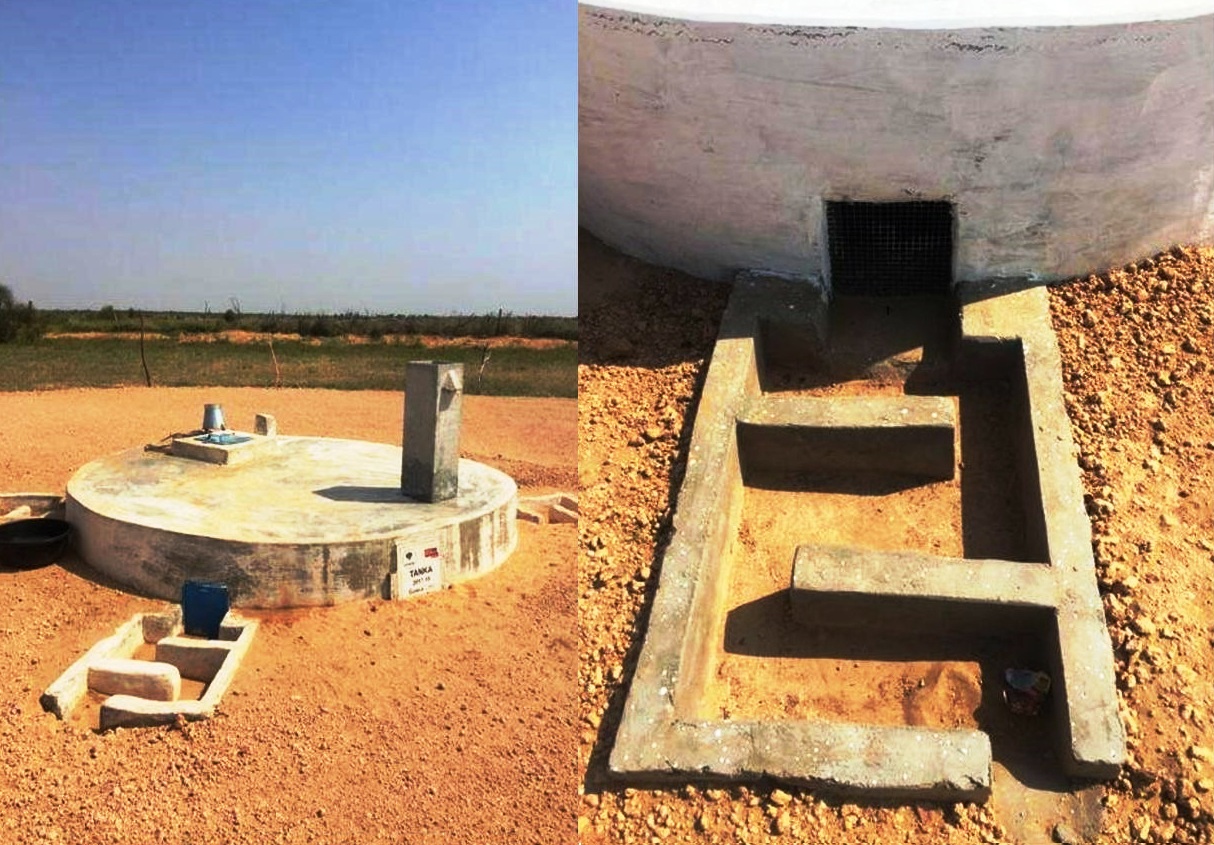
In the World’s Most Densely Populated Desert, Families Dig Funnel-Shaped Underground Cisterns to Capture Rare Rainfall and Store Drinking Water for Up to Eight Months




This finding allows for direct observation of the forces shaping the Earth’s crust in regions where large tectonic plates interact, contributing to a more detailed understanding of continental movements.
The principal author of the study, Professor Axel Schmitt from the John de Laeter Center and the School of Earth and Planetary Sciences at Curtin University, explained that the results solve an age-old question about the type of movement of the fault. According to him, the findings represent a significant advancement for seismic risk assessment and global continental deformation models.
Confirmation of Extensional Fault in Central Turkey
According to Professor Schmitt, while Turkey is widely known for slip faults associated with earthquakes, the study confirms for the first time that the Tuz Gölü Fault is an extensional fault. In this type of structure, the land blocks on both sides move away from each other.
This dynamic differs from the previous model that considered displacement predominantly lateral. The confirmation of the extensional nature alters the interpretation of tectonic processes in the region and provides a more accurate basis for understanding how the crust behaves under prolonged stresses.
The results indicate that separation occurs slowly and continuously over thousands of years.
The estimated rate of about 1 millimeter per year was considered consistent with the geometric reconstruction of ancient lava flows that crossed the fault before being fragmented by earthquakes.
Reconstruction of Lava Flows from the Hasandağ Volcano
The researchers identified that several lava flows from the Hasandağ volcano flowed over the fault, cooled down, and were subsequently broken by seismic events. The team was able to reconstruct the original shape of these rocks and accurately determine their age.
This reconstruction allowed for tracking how rocks that were once connected gradually separated over time. According to the authors, the results unequivocally reveal that the fault is opening, rather than sliding laterally as previously thought.
Understanding these movements is deemed crucial not only for assessing seismic and volcanic threats but also for improving global models that describe how continents deform. The data obtained help explain how tectonic energy is released in regions of continental collision.
Advanced Techniques and Zircon Dating
The team applied advanced scientific methods that combined remote sensing data, ion microprobe analyses at the John de Laeter Center, and helium dating performed at the Western Australia Thermochronology Center. These techniques allowed for determining the exact age of the lava flows and measuring the accumulated displacement over thousands of years.
Associate Professor Martin Danišík, a co-author of the study, explained that tiny zircon crystals present in the lava act as natural geological timekeepers. These crystals retain helium produced by the radioactive decay of traces of uranium and thorium, preserving a detailed record of the thermal history of the rock.
By measuring uranium, thorium, and helium in the zircon crystals, the researchers were able to establish when the flows erupted, overflowed the fault, and subsequently cooled. This approach provided a reliable timeline for assessing the rate of separation along the fault, even in the face of slow and hardly observable processes.
Slow Movements and Interaction Between Tectonic Plates
Co-author Janet Harvey, a remote sensing specialist at Curtin University, highlighted that earthquakes on the Tuz Gölü Fault occur less frequently than on the fast-moving faults in northern and eastern Turkey. Therefore, landscape deformation studies provide information that the modern seismic record alone cannot capture.
The fault is situated at a strategic point where the Eurasian, Arabian, and African plates interact. According to Harvey, studying its movements helps understand how tension is distributed when continents collide, offering applicable insights for other regions of continental deformation.
The authors emphasize that the knowledge gained can be used in areas along the Alpine-Himalayan range and in other similar zones around the world.
The research also reinforces the importance of revising outdated geological assumptions in light of modern measurement techniques capable of accurately quantifying how continents respond to tectonic pressures over geological time.