Portuguese
  Spanish


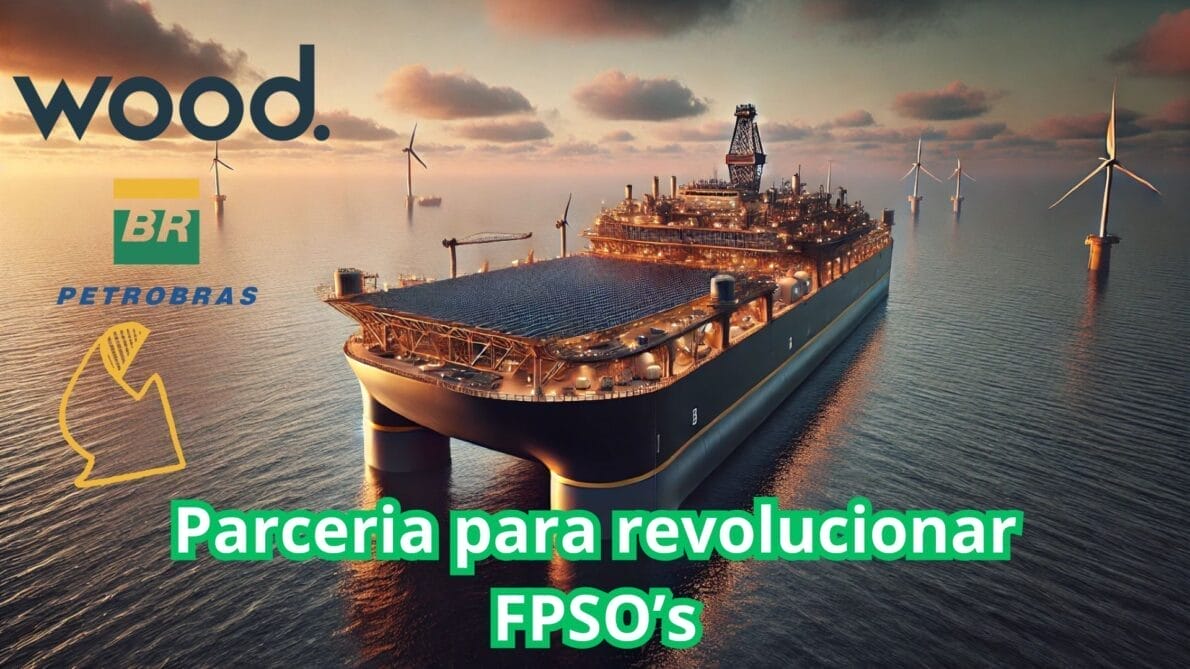

A strategic agreement was recently signed between the engineering multinational Wood and the Brazilian oil giant Petrobras. The partnership aims to develop conceptual studies focused on the optimization of Floating Production, Storage, and Offloading (FPSO) units.
FPSO: The Future of Offshore Production
In recent years, FPSOs have become essential in the exploration of offshore oil and gas. However, with increasing environmental demands, companies are looking to modernize their operations. Wood, globally recognized for its expertise in offshore engineering, has been chosen by Petrobras to conduct this innovative research. Expectations are high as the two companies have joined forces to explore new technological solutions capable of addressing operational and environmental challenges.
First Study: Less Risks and Greater Reliability
The first study proposed by Wood and Petrobras will focus on developing concepts that reduce human exposure to risk during operations. FPSOs, due to their complexity, present significant risks for workers. Now, with advancements in automation and the implementation of new technologies, it is possible to create designs that limit human presence in hazardous areas, increasing the safety of the entire operation.
Moreover, operational reliability will be a priority. The oil and gas industry demands continuous efficiency, and this study aims to develop practical solutions to increase the robustness of systems, reducing the need for human interventions. To test these concepts, a practical assessment will be conducted on one of the plant’s modules, analyzing the feasibility of implementing them across the entire FPSO unit.
-
Petrobras Explores Entry into Corn Ethanol Market, Aiming to Become a Biofuel Giant

-
Brazil’s $8.5 Billion Auction Secures New Power Plants to Prevent Peak Hour Energy Shortages
-
Why Gasoline Prices Remain Stable: How Petrobras’ Subsidies and Pricing Policies Control Fuel Costs in Brazil
-
SpaceX Plans 13 km Pipeline to Reduce Truck Reliance and Speed Up Starship Rocket Launches in the U.S.


Second Study: The FPSO of the Future Without Emissions
The second study focuses on a true revolution: transforming Petrobras’s current FPSO model into a unit without onboard power generation, being completely electrified by external sources.
- Electrified FPSOs: Instead of burning fossil fuels to generate power, as is done in conventional FPSOs, the new proposal is for the unit to be powered by external sources, such as offshore generation centers or even by connection to onshore power systems.
- Environmental Impact: This change could eliminate one of the largest sources of carbon emissions from FPSOs, representing a significant advance in the quest for more sustainable operations.
Thus, the project aims not only to meet the ever-evolving environmental requirements but also to position Petrobras as a leader in innovative sustainable offshore technologies.
Innovation and Collaboration to Reduce Emissions in the Oil Sector
The studies to be developed between Wood and Petrobras fundamentally feature the use of innovative technological solutions, many of which have never been applied in conventional FPSO projects. John Day, president of Wood’s Oil, Gas and New Energies division, stated that this collaboration is a unique opportunity for both companies to explore concepts still unexplored by the industry.
The project is aligned with global decarbonization goals in the energy sector, aiming at reducing emissions and promoting safer and more efficient operational practices. The partnership also reflects the mutual trust between the companies, with Wood bringing its extensive experience in offshore engineering and Petrobras contributing its vast technical and practical knowledge in the field of FPSOs.
Wood and Petrobras: A Successful Global Partnership
The execution of this project will be primarily carried out by Wood’s office in Houston, with local support from the office in Rio de Janeiro. The international collaboration does not stop there: Wood’s office in Sandefjord, Norway, specialized in offshore systems and hulls, will also participate in the development of the studies. This integration between teams from different countries underscores the global nature of the partnership and the diverse expertise involved.
- Houston Office: Project execution center, coordinating activities and collaboration among teams.
- Rio de Janeiro Office: Essential local support, close to Petrobras, facilitating technical alignment.
- Sandefjord, Norway: One of the largest centers of expertise in offshore hulls, ensuring cutting-edge technical solutions.
Technology Serving Emission Reduction and Safety
With the increasing global demands regarding sustainability, Petrobras recognizes the importance of innovating. The development of new technologies and processes for FPSOs represents a significant step in meeting environmental goals, especially regarding emission reduction. Additionally, safety remains an essential pillar, and modernizing FPSO systems can generate lasting positive impacts for the entire industry.
The Role of Cenpes in Petrobras Innovation
Another key aspect of this partnership is the involvement of Cenpes (Petrobras Research Center), one of the largest oil research centers in the world. Located in Rio de Janeiro, Cenpes plays a central role in developing technologies that place Petrobras at the forefront of innovation in the oil and gas sector.
- Specialized Team: Engineers, scientists, and researchers from Petrobras, with extensive technical knowledge in FPSOs, will work together with Wood professionals.
- Continuous Innovation: Cenpes is responsible for developing the technologies that support conceptual and detailed engineering projects (FEED), which will be applied in the new FPSOs.
Offshore Sector Trends: What to Expect for the Future?
The partnership between Wood and Petrobras is part of a global movement to transform the offshore sector, especially in oil and gas exploration. As the world commits to energy transition, the role of FPSOs is being reimagined. Key trends include:
- Electrification of Platforms: The use of external power, such as offshore wind, to power FPSOs.
- Automation and Digitalization: Increasing use of technologies to monitor and operate FPSO units, reducing the need for human intervention.
- Emission Reduction: FPSOs of the future will be designed to minimize their environmental impact, using cleaner energy and technologies that maximize efficiency.
A Project That Promises to Redefine the Offshore Energy Sector
The partnership between Wood and Petrobras marks a milestone in the evolution of FPSOs, focusing on operational efficiency and emission reduction. By combining the forces of two giants in the oil and gas sector, the project seeks not only to meet current demands but also to shape the future of offshore production. The use of innovative technologies and a commitment to safety and sustainability ensure that these new FPSOs are prepared for the challenges of the coming decades.