Portuguese
  Spanish




Sustainable Innovation Can Accelerate Development of More Durable, Lighter, and Higher Energy Density Batteries
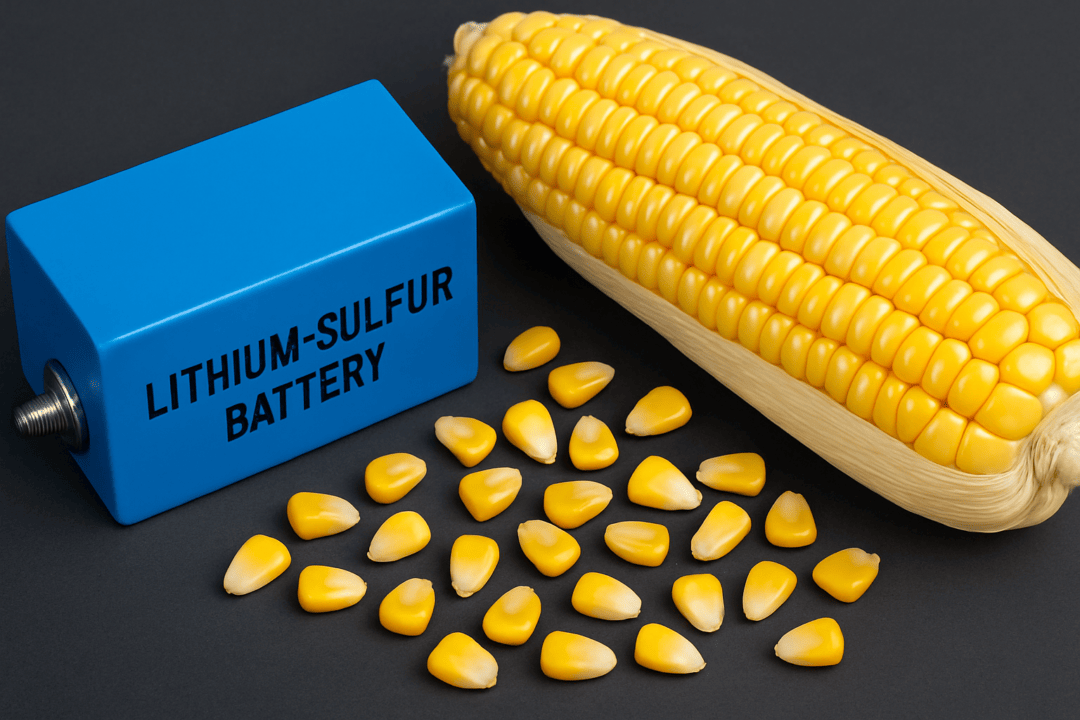
Researchers from Washington State University have discovered an unusual way to improve the performance of lithium-sulfur batteries. By using corn protein in a component of the battery, the team was able to significantly increase its durability and efficiency.
The innovation could help expand the use of these batteries in electric vehicles, renewable energy storage, and other applications.
Lighter and More Eco-Friendly
Lithium-sulfur batteries are considered promising because they can store more energy with less weight. This means that, in practice, electric vehicles could use smaller and lighter batteries. Additionally, these batteries are more environmentally friendly. They utilize sulfur in the cathode, a cheap, abundant, and non-toxic material.
-
Exceptionally Rare 3rd Century AD Discovery Unveils Bronze Surgical Tool for Bladder Stone Surgery Near the Temple of Hercules in Ancient Roman City Heraclea Sintica

-
Astronauts Returning from Space Show Altered Gut Bacteria and Loss of Protective Microbes, Highlighting Potential Risks for Mars Missions

-
Electrolux Unveils Smart Washing Machine Line with 12kg Capacity, 45-Minute Cycle, Automatic Dosing, Dirt Sensors, Sanitizing Steam, App Control, and User-Guiding Display
-
Realme Launches Affordable 16x 5G Phone with Military Certification, 6,600 mAh Battery, 50 MP Camera, and 6.8-Inch Screen Starting at $320



On the other hand, today’s common lithium-ion batteries use metal oxides and heavy metals, such as cobalt and nickel, which are toxic and expensive. Therefore, the use of sulfur represents a cleaner and more sustainable option.
Challenges Hindering Use
Despite the advantages, lithium-sulfur batteries face technical challenges. One of them is the so-called “shuttle effect,” which occurs when sulfur escapes to the liquid part of the battery and ends up migrating to the lithium side. This process reduces the battery’s lifespan.
Another issue is “dendrites,” metallic spikes that form on the lithium side. They can cause short circuits and compromise device safety. Due to these two factors, the commercial use of these batteries is still limited.
The Solution with Corn Protein
To address these problems, scientists developed a protective barrier in the battery separator made with corn protein combined with a common plastic. This barrier helped to prevent both the shuttle effect and the formation of dendrites.
Tests were conducted on button-type batteries. According to the study, they managed to maintain their charge for over 500 cycles, representing a significant improvement compared to versions without corn protein.
“Corn protein is a good material for batteries because it is natural, abundant, and sustainable,” explained Jin Liu, a professor at the School of Mechanical and Materials Engineering at the university and author of the paper.
How It Works in Practice
Proteins are made up of amino acids, which interact with the internal materials of the battery. These interactions help with the movement of lithium ions and reduce the shuttle effect. However, the protein has a naturally folded structure, which may hinder its performance.
To solve this, researchers added a small amount of flexible plastic. This helped to “open” the protein structure, improving the efficiency of the separator.
“The first thing we need to think about is how to open the protein so that we can use these interactions and manipulate it,” said Liu.
Next Steps in Research
The study was published in the Journal of Power Sources and was led by graduate students Ying Guo, Pedaballi Sireesha, and Chenxu Wang. The researchers also conducted experiments and simulations to test the efficacy of the new solution.
Now, they want to delve deeper into studying how exactly the protein interacts with the battery. The goal is to discover which amino acids are most efficient and how the structure can be optimized.
“A protein is a very complex structure,” said Katie Zhong, a professor at the same school and co-author of the study. “We need to conduct more simulations to identify which parts of the protein work best for dealing with the shuttle effect and dendrites.”
The team also aims to partner with companies to test larger batteries and develop large-scale production methods. If successful, the application of corn could become part of the future of cleaner and more durable batteries.