Portuguese
  Spanish


The PRF Adopted a New Tool That Allows Drivers to Transfer Federal Highway Fines Directly Through the App. Find Out How This Update Is Making Life Easier for Drivers!
From now on, drivers can transfer fines on federal highways directly through the Digital Transit Wallet (CDT) app, simplifying the process of identifying the real offender.
The CDT, available since 2018, already allowed users to access documents such as the National Driver’s License (CNH) and the Vehicle Registration and Licensing Certificate (CRLV-e).
Now, with the adherence of the Federal Highway Police (PRF), all infractions committed on federal highways can also be transferred via app.
-
Thinking of Installing LED Headlights? Why Replacing Halogen Bulbs is Still Banned, the Glare Risks Authorities Worry About, and How a New Proposal Could Allow Certified, Safe Installations

-
2027 Toyota Corolla Cross Unveiled: New Design, Enhanced Fuel Efficiency, Reduced Maintenance Costs, Advanced Technology, Connected Services, and Up to 10-Year Warranty

-
Fiat Cronos Precision 2018: Affordable Sedan with Spacious Trunk and Reliable Maintenance
-
Volkswagen to Cut Production by 1 Million Cars by 2030, Reducing Jobs and Platforms, Focusing on More Profitable Models





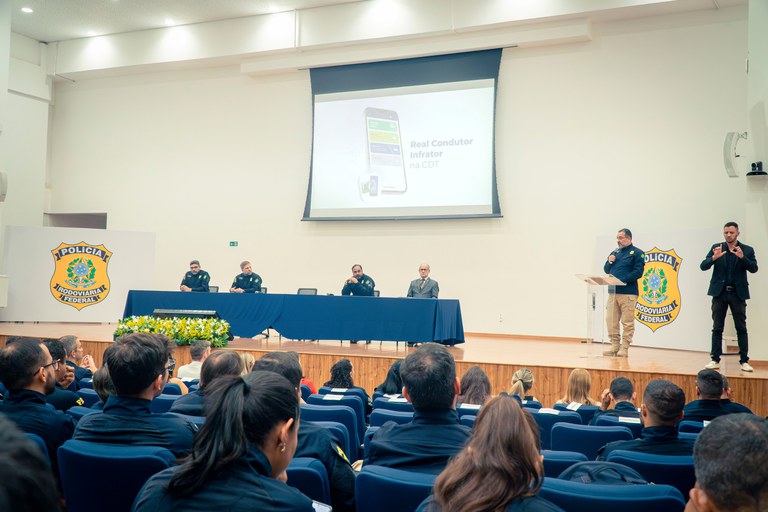
Previously, this functionality was limited to highways managed by the National Land Transportation Agency (ANTT) and the National Department of Transportation Infrastructure (DNIT). However, following the PRF announcement made last Wednesday (18), the change has been extended to all federal territory, streamlining the process of transferring fines.
According to the PRF, before the new functionality, an average of 700 processes were requested daily for the substitution of data of the offending driver. Between January and May of this year, 260,000 indications of the real offender were already recorded nationwide.
In addition to the inclusion of federal highways, the tool was already being used by Detrans in 11 Brazilian states: Alagoas, Federal District, Espírito Santo, Goiás, Mato Grosso, Mato Grosso do Sul, Minas Gerais, Paraná, Rio de Janeiro, Rio Grande do Sul, and Roraima.
In the state of São Paulo, which has the largest vehicle fleet in the country, the use of the tool for indicating infractions via mobile was implemented on January 1st of this year.
Step by Step to Transfer Offenses on Federal Highways
To transfer a fine applied on a federal highway monitored by the PRF, the process is simple and follows the same parameters as the infractions recorded by other agencies. The 30-day deadline, counted from the notification, must be respected for indicating the real offender.
It is important that both the vehicle owner and the real offending driver are registered in the CDT app or on the National Transit Secretary’s Portal (Senatran).
Both must have their accounts in the gov.br system with silver or gold seals. If the account is classified as bronze, it is possible to request a level upgrade through facial validation, which can be done directly in the Gov.br app.
Here Is the Step by Step to Transfer a Fine Registered on a Federal Highway:
- Access the CDT of the driver on whom the fine was applied and click on “Infractions”;
- Select the “By Offender” tab;
- When the infraction appears, select it and then click on “Real Offender” at the bottom of the screen;
- The real offender must access their CDT account and confirm the infraction.
This tool brings more practicality to the driver, facilitating the regularization of traffic infractions quickly and digitally.