Portuguese
  Spanish



Since 2011, Porto Itapoá Handles 10 Million TEUs and Reaches Second Place in the National Container Ranking in 2025, with Strong Expansion in Operations
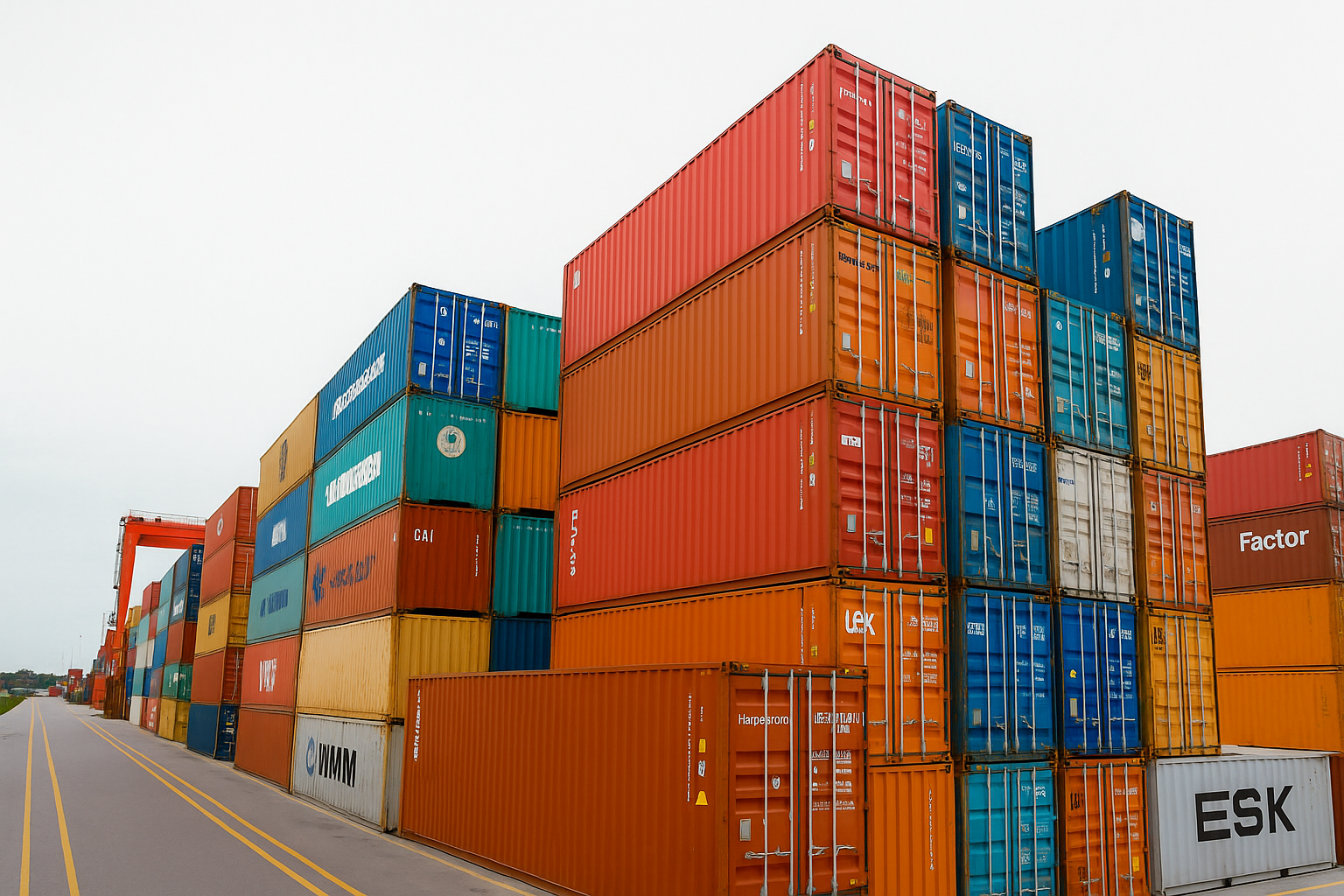
Porto Itapoá, in Santa Catarina, has reached an impressive milestone since the beginning of its operations in 2011. Over this period, it has handled 10 million TEUs. The evolution has been steady: in 2014, the terminal reached 1 million accumulated TEUs; in 2016, it hit 2 million; and in 2017, it surpassed 3 million. In 2023, it recorded 1 million TEUs handled in just one year.
Between 2015 and 2025, the port’s operational profile underwent significant changes. Exports, which represented 64% of the movement in 2015, fell to 41% in 2025. On the other hand, imports grew from 36% to 59% during the same period.
There were also changes in the main import chains. In 2015, “Automobiles and Their Components” and “Electronics” were leading.
-
The U.S. Navy Conducts Submarine Tests in Idaho Lake to Detect Underwater Noises Hidden by the Ocean

-
Nuclear Submarine USS Alexandria Retired After 35 Years, Having Completed Over 1 Million Miles in Missions

-
MODEC Introduces New Hull Design for FPSO Gato do Mato to Produce Up to 120,000 Barrels of Oil Per Day in Brazil’s Pre-Salt Region
-
This Massive 12-Meter, 21-Ton Underwater Drone Can Operate Autonomously for Up to Five Days


By 2025, the highlights are “Plastics and Their Products” and “Machinery and Steelmaking.” The main countries of origin for imports remain China, the United States, and Germany.
In the export sector, the transformation has also been remarkable. In 2015, the main exported products were “Frozen and Chilled Meats” and “General Machinery and Its Components.”
By 2025, the leaders are “Forest Products” and “Food and Beverages.” The destinations for exports have changed slightly. In 2015, the largest markets were the United States, Venezuela, and China. By 2025, they are the United States, China, and Italy.
In the first quarter of 2025, Porto Itapoá established itself as the second-largest container handler in Brazil.
More than 202 thousand units were handled, falling behind only Porto de Santos. The growth during this period was 37% compared to the same quarter in 2024, surpassing the national average of 10%.
With information from Portos e Navios.