Portuguese
  Spanish




The Duplication of the Lake Palmas Bridge in Tocantins Has Begun! The Engineering Project Will Revolutionize Local Transportation and Drive Economic Growth.
Will the duplication of the Lake Palmas Bridge transform mobility in the region? That is what everyone is asking! The structure, which already connects Palmas to the district of Luzimangues, is about to double its capacity, easing traffic and expanding the development potential for Tocantins and all of Brazil.
A Grand Engineering Project for a Historic Challenge with the Lake Palmas Bridge
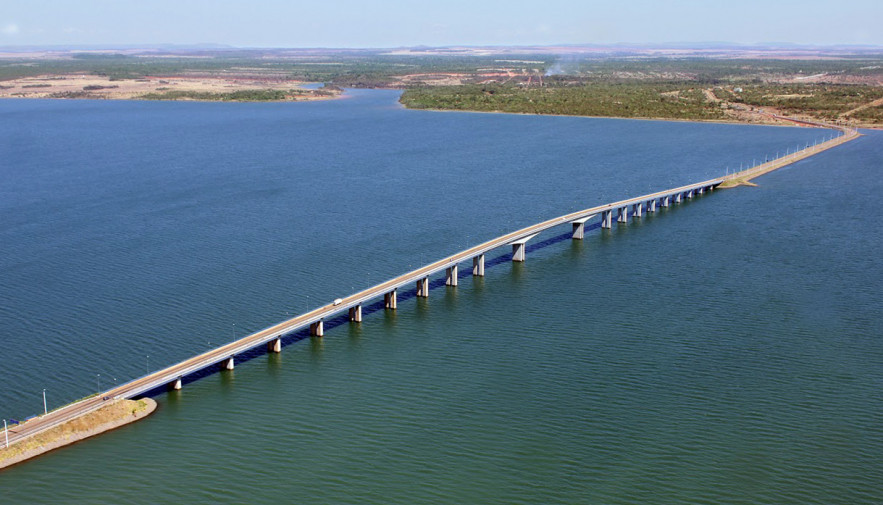
The Governor José Wilson Siqueira Campos Bridge, known as the Lake Palmas Bridge, is a key piece of infrastructure in the region, being the main link between Palmas and Luzimangues. Inaugurated in 2002, this 1,442-meter structure is part of a larger complex that includes two smaller bridges and stretches of embankment, totaling 8.1 km. However, the economic and population growth in the region has exceeded initial expectations, resulting in frequent congestion and undersized infrastructure.
The engineering project to duplicate the Lake Palmas Bridge, budgeted at 98 million reais, goes far beyond a mere expansion. It promises to revolutionize local traffic, transforming the bridge into a symbol of modernity, safety, and sustainability. The duplication plan is part of a broader strategy, which includes the duplication of the TO-080 highway to Paraíso do Tocantins, with a total investment of 150 million reais, covering approximately 50 km.
-
Single Mother Working Three Jobs Receives 111 m² 3D-Printed Home with Concrete Walls Built in 12 Hours, Featuring 3 Bedrooms, 2 Bathrooms, and a Printer for Replacement Parts

-
Simple Technique to Restore Rusty Metal Window Grilles Gains Attention for Revitalizing Old Structures Without Full Replacement

-
Couple Transforms Suffolk’s Last 1891 Windmill into Luxurious Four-Story Home with Zinc Observation Room in England
-
Father and Son Build 97 cm Thick Circular Stone House in Brazil, Inspired by Scottish Architecture, Creating a New Agrotourism Hub




An Engineering Project That Combines Innovation and Sustainability
The duplication project includes the addition of lateral metal walkways for pedestrians and cyclists, allowing the existing deck to be fully used for vehicle traffic. This innovative solution will double the capacity of the Lake Palmas Bridge, solving congestion issues and making crossings much safer.
The structure will be modernized with high-strength steel, ensuring durability and protection against adverse conditions such as strong winds and vibrations. Additionally, real-time monitoring systems will be installed to ensure the preventive maintenance of the bridge, increasing its lifespan and safety.
The embankment areas will also undergo significant modifications, with the expansion of lanes for vehicles, cyclists, and pedestrians. The engineering project aims not only to increase capacity but also to prepare the infrastructure for the future population and economic growth of the region. Strict environmental measures will be applied during construction, ensuring the preservation of local fauna and flora while minimizing negative impacts on Lake Palmas.
A Prosperous Future for the Region
The duplication of the Lake Palmas Bridge will not only benefit drivers. It promises to boost economic development by attracting new investments to Tocantins. With improved transportation infrastructure, the region is expected to become a strategic hub for industries and logistics companies. The increased efficiency of freight transport and reduced costs will make the area even more competitive on the national stage.
The project will have a direct impact on the real estate sector, especially in the Luzimangues region, which may see significant appreciation with increased accessibility and local infrastructure. The duplication of the Lake Palmas Bridge is more than just an engineering project; it is a crucial investment for the region’s future, bringing more quality of life for residents and opportunities for businesses.
Now, the question remains: what will be the next impacts of this duplication on the economy and local life? Share your thoughts in the comments!