






 Portuguese
  Spanish



Discover How to Access the Free Neuroscience Course from USP on YouTube! Learn About the Human Brain at No Cost and Explore the Fascinating World of Neuroscience.
Imagine having access to cutting-edge cognitive neuroscience content, taught by some of the top experts in Brazil and the world, at no cost and entirely online.
This unique opportunity is now available for those who wish to explore the mysteries of the human brain and understand how it shapes behavior and emotions.
The University of São Paulo (USP) is offering, until October 25, the international Cognitive Neuroscience course, a deep and free learning experience available on YouTube.
-
Surprising opportunity in the railway sector: MRS offers a free course for assistant train driver and shunter in Juiz de Fora with a R$ 1,600 scholarship, specialized training, and the chance to join one of the largest railway operators in Brazil.

-
It’s official: IFMS opens spots in free courses on artificial intelligence, drones, and app creation, expanding technological education in 2026 and preparing students for areas with high professional demand and accelerated digital transformation.
-
Senai launches an unprecedented program with Petrobras and opens 2,000 spots in free courses with recognized certification, a monthly allowance of R$ 600, and training for industrial professions that continue hiring across the country.

-
Petrobras and SENAI open 480 spots in free technical courses with a scholarship of up to R$ 858, meal allowance, and training in Mechanics, Welding, Metallurgy, and Industrial Automation to meet the growing demand of the industry and the oil and gas sector.


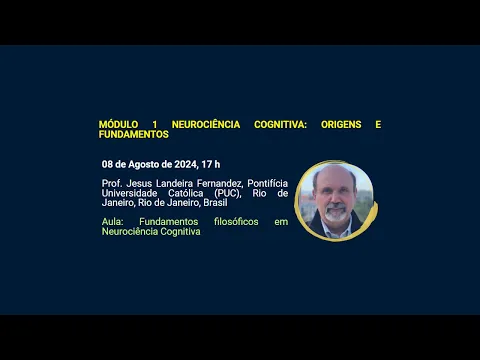
With content accessible to everyone, the course already has 16 classes on the channel of the Working Group on Psychobiology, Neuroscience, and Behavior at USP.
The classes, broadcast live, explore a wide range of topics, from the fundamental principles of neuroscience to advanced discussions on cognition and behavior.
USP emphasizes that the goal is to enable the general public to understand, through accessible language, how the human brain operates and influences our daily actions.
Renowned Professionals Share Knowledge in the Course
Among the professors involved in this initiative are prominent academics such as Sérgio Sheiji Fukusima, a specialist in psychobiology, and Priscila Medeiros de Freitas, recognized for her contributions at the Ribeirão Preto Medical School.
These specialists are joined by international guests who provide a global perspective on the study of cognitive neuroscience, connecting the Brazilian audience with cutting-edge research and discoveries.
Each module is designed to enrich participants’ understanding, providing a panoramic view of the areas explored by neuroscience.
According to USP, this approach allows students and curious minds to advance at their preferred pace, absorbing information gradually and solidly.
A Curriculum That Covers All Levels of Knowledge
The course is organized into ten carefully crafted modules to address everything from initial concepts to more advanced topics, such as the impacts of neuroscience on mental health, behavior, and cognitive functions.
The material covers essential areas, including the structure and functioning of the brain, the biological bases of emotion, and the mechanisms behind learning and memory.
For those wondering about the relevance of this course, it is worth noting that cognitive neuroscience has become one of the most dynamic and promising areas of science, with direct implications in psychology, medicine, and even technology.
Exploring how the brain processes information, forms memories, and regulates emotions can provide valuable insights for a variety of fields, from education to the development of therapies for mental disorders.
Understand the Importance of Neuroscience in the Current Context
With advances in technology, we have seen exponential growth in understanding how the brain works and how it affects all aspects of our lives.
For USP, offering this course for free and accessibly is a way to democratize knowledge and prepare more people to understand the challenges and opportunities brought by these advancements.
In addition to the educational content, the course provides access to recent research that elucidates complex issues, such as neuroplasticity – the brain’s ability to adapt and reorganize over time.
This knowledge can be particularly useful in times when mental health disorders, such as depression and anxiety, are becoming increasingly prevalent in society.
By learning about how the brain functions, students are empowered to better understand these issues and, eventually, contribute to solutions.
Perspectives for the Future: The Impact of Cognitive Neuroscience on Society
This course is just the beginning of a long journey that the field of neuroscience still has ahead.
With the development of new technologies, such as artificial intelligence and advanced neuroimaging, scientists are increasingly capable of uncovering the secrets of the brain and applying these discoveries practically in everyday life.
With free and comprehensive access, USP’s course is an opportunity to explore the secrets of the human mind, helping to prepare society for a future where knowledge about the brain will be increasingly relevant.
Cognitive neuroscience is already shaping the present, and those who dedicate themselves to learning more about the subject will play an important role in creating new solutions to the problems we face today.
For those wishing to enroll, USP provides a contact email where more information can be requested. This course is an unmissable opportunity for anyone interested in understanding the workings of the human mind and the impact of neuroscience on modern society.
How to Enroll and Watch the Classes
The course does not require formal enrollment. Classes are broadcast live on YouTube, making access easy for anyone interested.
The videos are available after the live broadcast, allowing students to revisit the content and deepen their learning as needed. You can check out the full content here.
The channel of the Working Group on Psychobiology, Neuroscience, and Behavior at USP presents all the content, organized by modules, with a weekly posting schedule at 6 PM.
For specific questions about the content or access to the course, USP provides a direct contact email through which participants can ask questions and request additional information.
And you? Do you think initiatives like this should be more frequent in Brazilian universities? Leave your opinion in the comments!


⁹a neurociencia
Qual e-mail para se inscrever no curso de Neurovciencia?
Incrível!!!!!
Necessário, na área da Educação, grata🙏