






 Portuguese
  Spanish


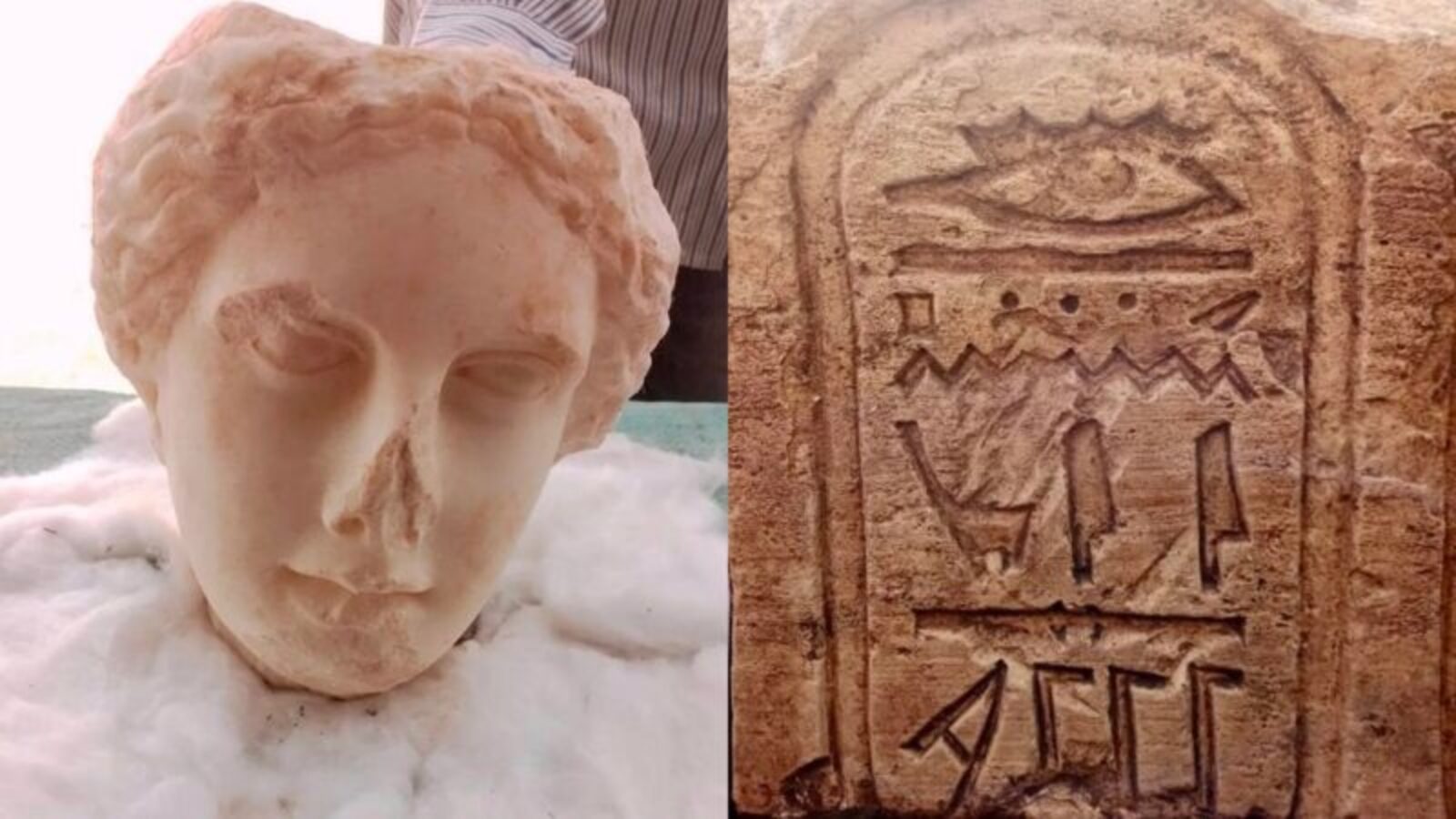
Excavations in Ihnasya, Egypt, revealed inscription linked to Senusret III, marble head of Aphrodite, structures of a Roman basilica, and remains showing the religious, political, and economic importance of the ancient city
Excavations in Ihnasya, an ancient city in the province of Beni Suef, Egypt, revealed a rare find of artifacts from different periods, including an inscription linked to Pharaoh Senusret III, a marble head of Aphrodite, and new parts of a Roman basilica, expanding the understanding of the religious, political, and economic importance of the site.

Rare find of Senusret III inscription reinforces religious significance of Ihnasya
One of the main finds is a reused stone block with the cartouche of Senusret III, ruler of the Twelfth Dynasty. The inscription preserves both the throne name and the birth name of the pharaoh.
The discovery gains relevance because Senusret III was already associated with other monuments found in the region.
-
Russia and India Lift 320-Ton Pressure Vessel into Kudankulam Nuclear Plant Reactor, Advancing Project That Has Already Prevented 112 Million Tons of CO2 Emissions

-
Brazilian Student Wins Global Science Fair in the U.S. with Sound Wave Method to Alter Alzheimer’s-Linked Genes
-
Bosch Unveils Revolutionary 2.3 kg Hub Motor for E-Bikes with 45 Nm Torque and 400 Watts Power, Eliminating Resistance Above 25 km/h in Historic Shift for German Manufacturer
-
Brazilian Engineer Develops Marine Bacteria from Ubatuba into a Mini Power Plant Generating 227 mW per Square Meter, Cleans Air by Capturing CO₂ and Releasing Oxygen


The new record strengthens the connection between the pharaoh and Ihnasya, a city that played an important role in different phases of Egyptian history.
Archaeologists also identified another cartouche related to Osiris-Nefertem, a deity worshiped in the area.
The presence of this reference reinforces the religious character of the city and shows how its places of worship spanned different historical periods.
Known by the Greeks as Heracleopolis Magna, Ihnasya maintained regional importance even after ceasing to be a capital.
The set of finds helps explain why the site remains relevant for the study of urban, religious, and political organization of ancient Egypt.
Roman basilica used parts of dismantled Doric temple
The excavations also revealed previously unknown sections of a Roman basilica. During the work, archaeologists identified that elements of an ancient Doric temple were dismantled and reused in the construction of the religious building.
Preliminary analyses indicate that, in the 6th century AD, the builders incorporated parts of this earlier structure into the foundations and floor that supported the basilica’s columns.
The reuse of materials shows an important transformation in the use of public and religious spaces in Ihnasya.
Large stone blocks were arranged to form a base capable of supporting monumental columns.
Some of these columns are estimated to weigh around 45 tons. Three of them remain preserved in their original positions, which helps researchers study the techniques used in the construction and adaptation of the building.

Head of Aphrodite is considered rare at the archaeological site
Another highlight of the excavations in Ihnasya is a marble head representing Aphrodite, the Greek goddess of love and beauty. The piece measures approximately 24 by 25 centimeters.
The sculpture preserves refined details, such as facial features and sculpted curls. According to archaeologists, the piece follows common characteristics of classical representations of deities and prominent figures of the Greco-Roman world.
The material was classified as a rare example among the finds already identified at the archaeological site. Its presence broadens the picture of cultural influences recorded in Ihnasya over time.
The discovery also reinforces the presence of Greco-Roman elements in the city, which underwent successive religious, architectural, and institutional transformations.
Coin molds indicate economic activity in the Roman period
In addition to the inscription of Senusret III, the head of Aphrodite, and the structures of the Roman basilica, archaeologists located fragments of sculpted reliefs, decorated architectural elements, and clay molds used in coin production.
These materials indicate that Ihnasya remained active and economically relevant long after the end of the pharaonic era.
The presence of the molds points to activities related to monetary production during the Roman period.
The set of evidence helps reconstruct the city’s trajectory over more than a millennium. The discoveries show changes in religious practices, architecture, and public institutions, reflecting the influence of different cultures.
The recovered materials are still under analysis and will undergo new dating studies. Researchers hope to more precisely understand how Ihnasya transformed and how its inhabitants responded to the political, religious, and cultural changes throughout Egypt’s long history.
This article was prepared based on information from Archaeology News and the Ministry of Tourism and Antiquities of Egypt, with data, numbers, and statements preserved as per the consulted material.




Be the first to react!