






 Portuguese
  Spanish
  3 min of reading
  0 comments


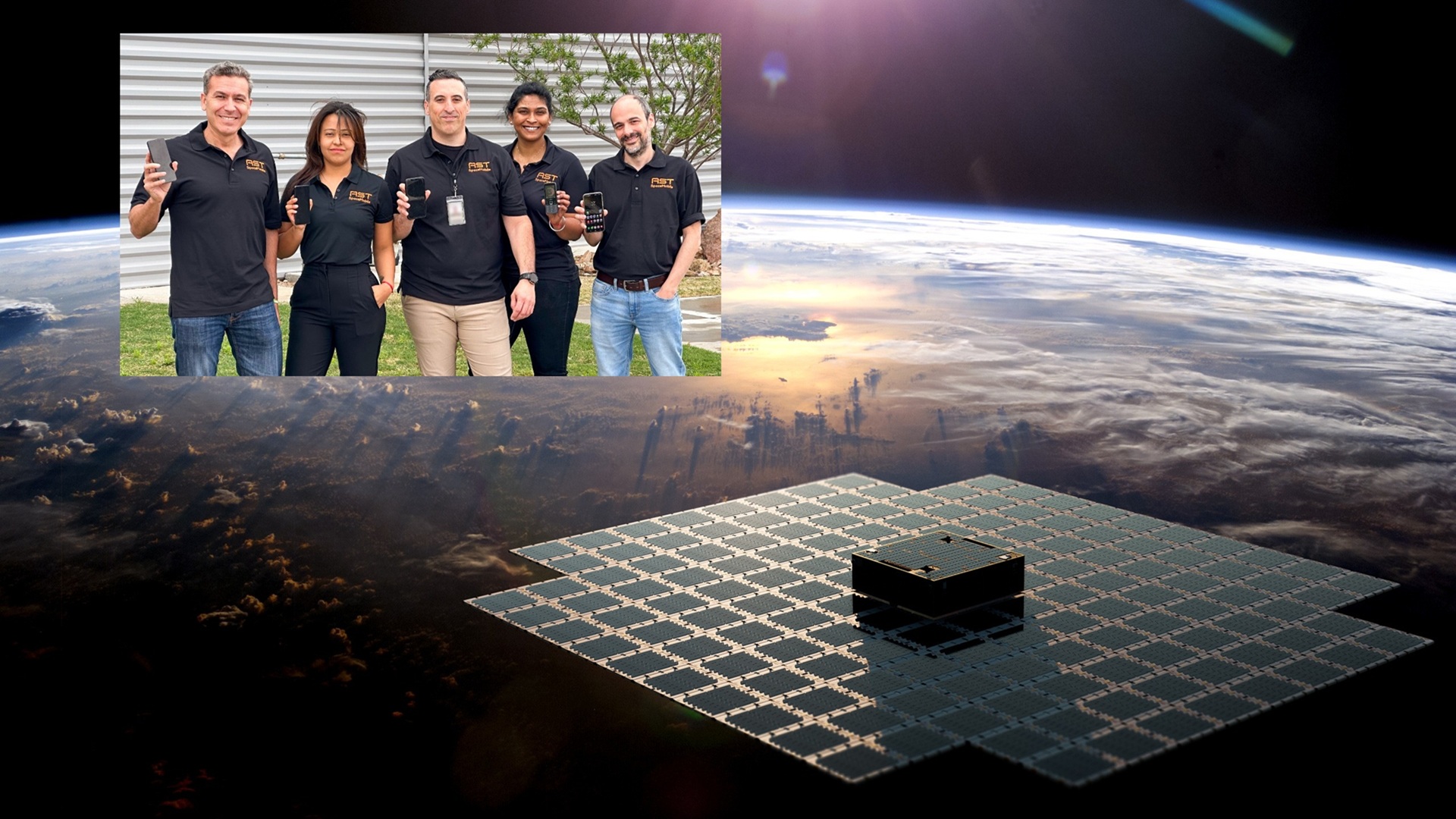
The Texas Company AST SpaceMobile Successfully Launched BlueBird 6, Which Became the Largest Commercial Satellite in History at 223 Square Meters, Aiming to Establish the First Global 5G Cellular Broadband Network to Compete Directly with SpaceX While Facing Warnings from Scientists About the Impact of Excessive Brightness in Orbit.
AST SpaceMobile Launches BlueBird 6 in India with 223 Square Meters to Start 5G Broadband Network and Compete with SpaceX
AST SpaceMobile Launched BlueBird 6, the Largest Commercial Satellite in the World, on December 23 in India. The equipment aims to establish a global cellular broadband network to compete with SpaceX.
Details of the Orbital Launch and Record Dimensions
The satellite departed aboard the Indian LVM3 rocket from the Satish Dhawan Space Centre. This event marks the beginning of a new era for the Texas company in the quest for global connectivity via space.
-
Forget the image of a frozen and still continent: scientists have just revealed hundreds of earthquakes beneath East Antarctica, in an area where no one expected to find this phenomenon.

-
Huawei will install Chinese batteries in 24 cities in the Amazon, in a project worth R$ 850 million that could become the largest energy storage system in Brazil.

-
China connects to the power grid the largest ultra-large battery storage station ever built in the world and signs a billion-dollar contract that consolidates a technology capable of sustaining entire cities with clean energy.
-
Research reveals evidence that autism may represent several different conditions instead of a single disorder, transforming medical strategies, accelerating advances in neuroscience, and increasing the precision of interventions for millions of people.



BlueBird 6 stands out for being approximately three times the size of its predecessors. This feature makes it the largest commercial satellite currently in orbit around the Earth, surpassing the dimensions of previous models.
The equipment is the first of a generation designed to directly rival SpaceX. The central goal is to create the first space-based cellular broadband network to cover smartphones.
Testing History and Fleet Specifications
The company began its tests in September 2022 with the launch of BlueWalker 3. This set of antennas served to validate the innovative technology of orbital cellular towers developed by the company.
A significant milestone was achieved in 2023 with the completion of the first 5G phone call. The operation utilized BlueWalker 3 from space, proving the technical feasibility of direct communication with mobile devices.
AST SpaceMobile has already launched six BlueBird satellites to date. The latest model supports 10 gigahertz of bandwidth and speeds of 120 megabytes per second for devices.
Constellation Expansion and Data Coverage
The antenna set of the BlueBird 1 model measures about 64 square meters. After full deployment, its brightness increased by two magnitudes, overshadowing most visible objects in the night sky.
The new BlueBird 6 measures 223 square meters with its antenna set fully deployed. These proportions confirm its status as the largest commercial satellite ever placed in space by the current aerospace industry.
The company plans to launch between 45 and 60 additional satellites by the end of 2026. This expansion will allow for 5G data provision in the United States and in some other regions of the world.
Comparisons with Starlink and Scientific Warnings
SpaceX’s Starlink constellation currently has over 9,000 satellites in low Earth orbit. AST satellites are much larger, allowing for broader coverage with just one unit.
Astronomers point to the size of these sets as a problem for sky observations. Scientists have criticized the impact of these bright objects since SpaceX began launching thousands of Starlink satellites in 2019.
Astronomer Dr. Samantha Lawler stated in an interview that we are on the brink of the Kessler Syndrome. A destructive scenario could leave the feeling of being inside a snow globe after sunset.
NASA has already warned that these satellites could hinder the detection of dangerous asteroids. The agency fears that the visibility of objects on a collision course with Earth could be compromised by reflections.










-

-

2 people reacted to this.