Portuguese
  Spanish


Military relic lost since 1944 was identified near the Kuril Islands, ending a wait of more than eight decades
The United States Navy confirmed the identification of the USS Herring SS-233, a World War II submarine that disappeared in 1944 during a patrol in the North Pacific. The announcement turns a dark spot in American naval history into an officially recognized site as the final resting place of 83 crew members.
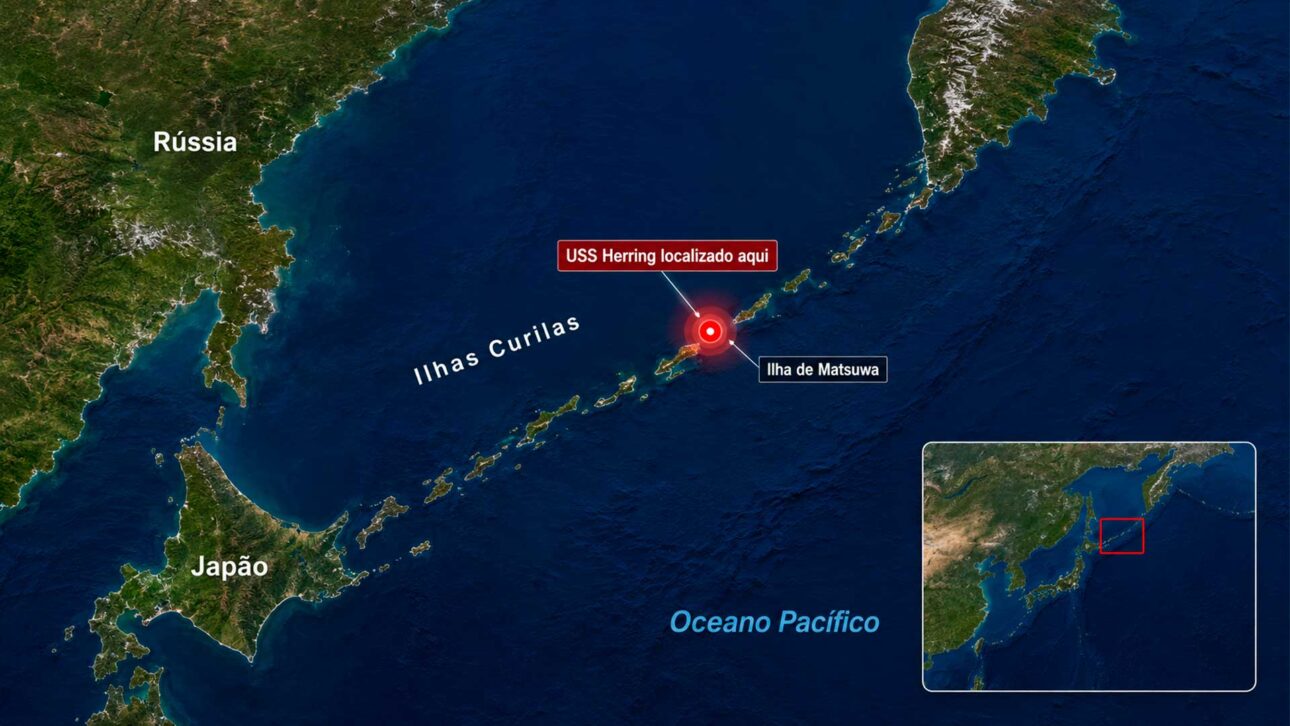
The submarine was associated with a wreck located near Matsuwa Island in the Kuril Islands, a region north of Japan. The vessel rests more than 300 feet deep, equivalent to over 90 meters, and shows signs consistent with combat records from the time.
According to the Naval History and Heritage Command, the body responsible for preserving U.S. naval history, the confirmation was made based on data collected by the Russian Geographical Society and analyzed by researchers from the United States and Japan. The identification was announced on June 1, 2026, exactly 82 years after the date the submarine was believed to have been lost in combat.
-
Tokyo Scientists Create First 18cm Biohybrid Hand Using Human Muscle, Capable of Scissor Gesture and Holding a Pipette

-
Brazil Faces Norway in World Cup at Stadium Linked to Jimmy Hoffa’s Mysterious Disappearance

-
Retired Woman Leaves French Public Housing Due to Fear, Lives in Van for Weeks, Prompting Response from Local Authorities and a Priest
-
9-Year-Old Fabio Isaac Wins Gold at Copernicus Math Olympiad in Singapore, Representing Peru Against Global Young Talents



The case draws attention not only for its archaeological value but also for its human significance. The USS Herring is not treated as a mere wreck: it is considered a war grave, protected by United States regulations and under the jurisdiction of the Department of the Navy.
What was found at the bottom of the North Pacific
The wreck is located near Matsuwa Island, in the Kuril archipelago, a strategic and contested area at the end of World War II. The region was used by Japanese forces and became the scene of intense naval operations, especially in the final years of the conflict.
The found vessel is resting on its keel, in a vertical position, and maintains a high degree of structural integrity. This allowed specialists to compare the state of the hull with military documents describing the submarine’s final moments.
Among the most important signs are battle damage to the conning tower and evidence of grounding at the bow. These elements coincide with Japanese reports that a coastal battery had hit the submarine as it moved away from the region under fog.
The detail is decisive because, for decades, the exact location of the USS Herring remained uncertain. The Navy knew the submarine had disappeared, but lacked a physical confirmation capable of linking the wreck to the records of the final patrol.
How the USS Herring disappeared in 1944
The USS Herring was launched on January 15, 1942, at the Portsmouth Naval Shipyard and entered service on May 4 of the same year. It participated in patrols in the Atlantic, the Mediterranean, and the Pacific, three important fronts of the naval war waged by the Allies.
Before disappearing, the submarine completed eight war patrols and received decorations for its performance. Among them were medals related to campaigns in the European, African, Middle Eastern, and Asiatic-Pacific theaters, as well as the World War II Victory Medal.
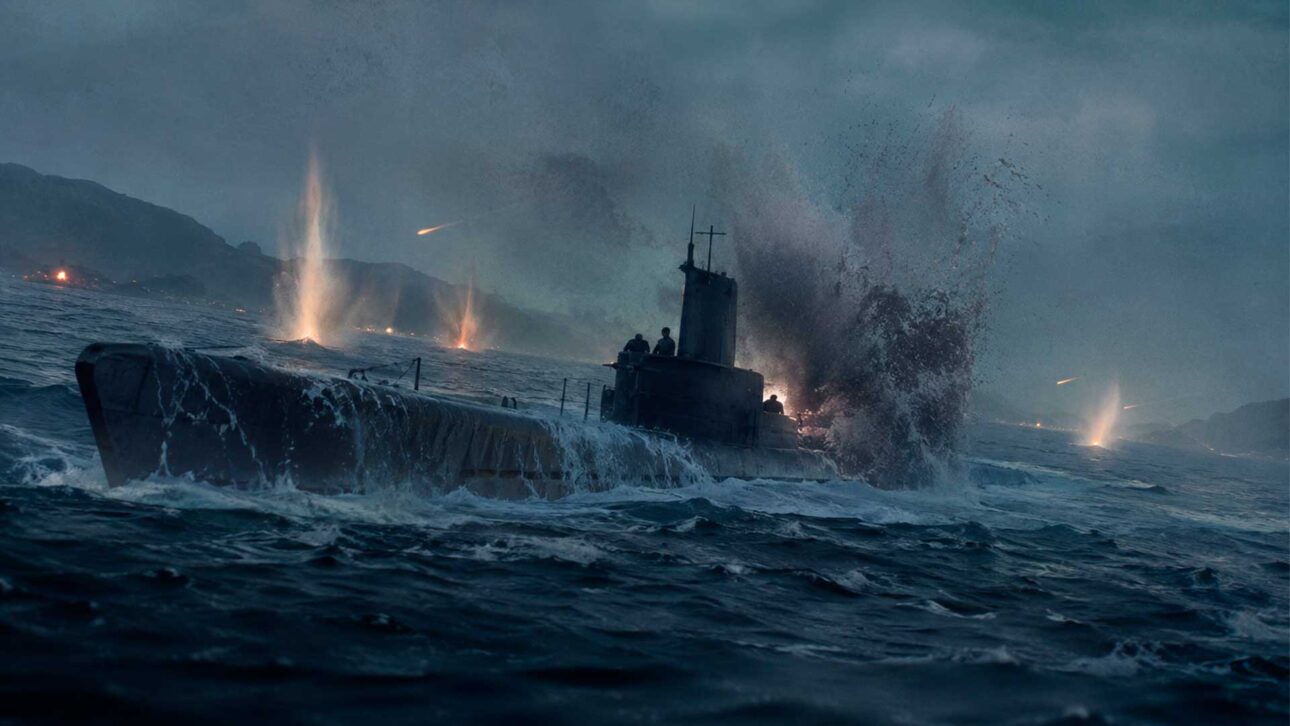
On the night of May 31, 1944, the USS Herring was seen by the USS Barb SS-220, another American submarine. The two vessels met to organize patrol areas near the Kuril Islands.
Shortly after, in the early hours of June 1, the crew of the USS Barb recorded sounds of distant explosions. These noises were interpreted as indications of an attack related to the USS Herring, which would not communicate again.
According to historical records, the submarine attacked and sank Japanese ships in the region, including the Iwaki Maru and the Hiburi Maru. After that, Japanese coastal batteries reportedly opened fire on a stranded vessel near the attack sites.
The clue left by the damage on the conning tower
The confirmation of the sinking depended on the comparison between historical documents and physical evidence. The most important point was the presence of impact marks on the conning tower, exactly where Japanese reports indicated the submarine had been hit.
Records state that the coastal batteries scored two direct hits while the submarine attempted to retreat. The presence of these damages on the found hull helped to complete the historical puzzle.
Another relevant element was the evidence of grounding on the front part of the vessel. This detail also matches the description that the submarine had become stuck or touched the bottom before trying to escape.
The USS Herring was only officially presumed lost on July 13, 1944, when it did not respond to the expected call at Midway. In practice, the crew had not given any signs since early June.
The current confirmation does not change the military outcome but changes the historical record. After more than eight decades, the place where the 83 sailors disappeared has ceased to be just a hypothesis and has come to be officially recognized.
Discovery began with Russian expeditions
The recent history of the find began in 2017, when a joint expedition involving the Russian Geographical Society and Russian military reported the discovery of a submarine in the area. Based on the location and appearance, there was suspicion that the wreck was the USS Herring.
In 2022, a new expedition returned to the site to document the state of the vessel and pay tribute to the crew. On this occasion, a commemorative plaque was placed alongside the wreck.
The memorial record On Eternal Patrol reports that the United States Navy officially confirmed, on June 1, 2026, that this point is the final resting place of the USS Herring crew. The page also highlights that the first reports of the find were made in Russian territory and later presented to American representatives.
The subsequent analysis involved volunteer researchers from the United States and a Japanese researcher. This data cross-referencing, on a topic linked to a world war and a sensitive region, shows how underwater archaeology can depend on international cooperation.
Why the submarine is treated as a war grave
The USS Herring should not be seen as an object of exploration or tourist curiosity. For the US Navy, the wreck is a sunken military vessel protected by law, and it represents the site of death for sailors who were in service.
This means that invasive activities, such as removing parts, excavation, or direct interference with the structure, require specific authorization. Remote documentation and non-intrusive studies may be accepted, but any action capable of altering the site is controlled.
The Smithsonian Magazine highlighted that the discovery also has symbolic value for families, historians, and military institutions. More than locating steel at the bottom of the sea, the identification helps reconstruct names, routes, decisions, and human losses that have been frozen since 1944.
This type of confirmation usually brings a form of historical closure. Although it does not erase the loss, it allows descendants and researchers to know where the vessel remained after its last mission.
A case within the search for lost submarines
The story of the USS Herring connects to a larger search for missing American vessels from World War II. The US Navy lost dozens of submarines in the conflict, and many had their resting places identified only in recent decades.
According to historical records from the American naval tradition itself, 52 United States submarines were lost during World War II. These losses involved thousands of military personnel and were primarily concentrated in the Pacific theater, where submarine warfare played a decisive role against Japanese maritime transport.
In recent years, advances in sonar, underwater vehicles, photogrammetry, and digital image analysis have helped reopen old cases. With these technologies, researchers can map deep structures without directly touching the wrecks.
The USS Herring now enters this list of vessels identified with the support of modern data. The difference is that, in this case, the investigation also relied on Russian and Japanese records, in addition to final American validation.
What the confirmation changes for history
The identification of the USS Herring corrects an important gap in the naval history of World War II. Until now, there were documents about its final mission, but no official confirmation of the location where the vessel rested.
For researchers, the discovery helps to better understand operations in the Kuril Islands in 1944. For the US Navy, it reinforces the commitment to preserve sunken military sites and to keep alive the memory of the crew members.
For the public, the case shows how the war continues to produce discoveries even eight decades later. The ocean floor still holds ships, planes, submarines, and objects that help explain decisions made at decisive moments of the 20th century.
The confirmation also reignites a delicate discussion: to what extent should these sites be studied, filmed, and disclosed without violating respect for the dead? Historical science needs documentation, but the memory of the crew members demands clear limits.
In the case of the USS Herring, the official response is that the site should remain protected. The submarine can be studied, but should not be treated as a treasure, attraction, or abandoned piece, but rather as part of a history marked by war, sacrifice, and memory.