Portuguese
  Spanish


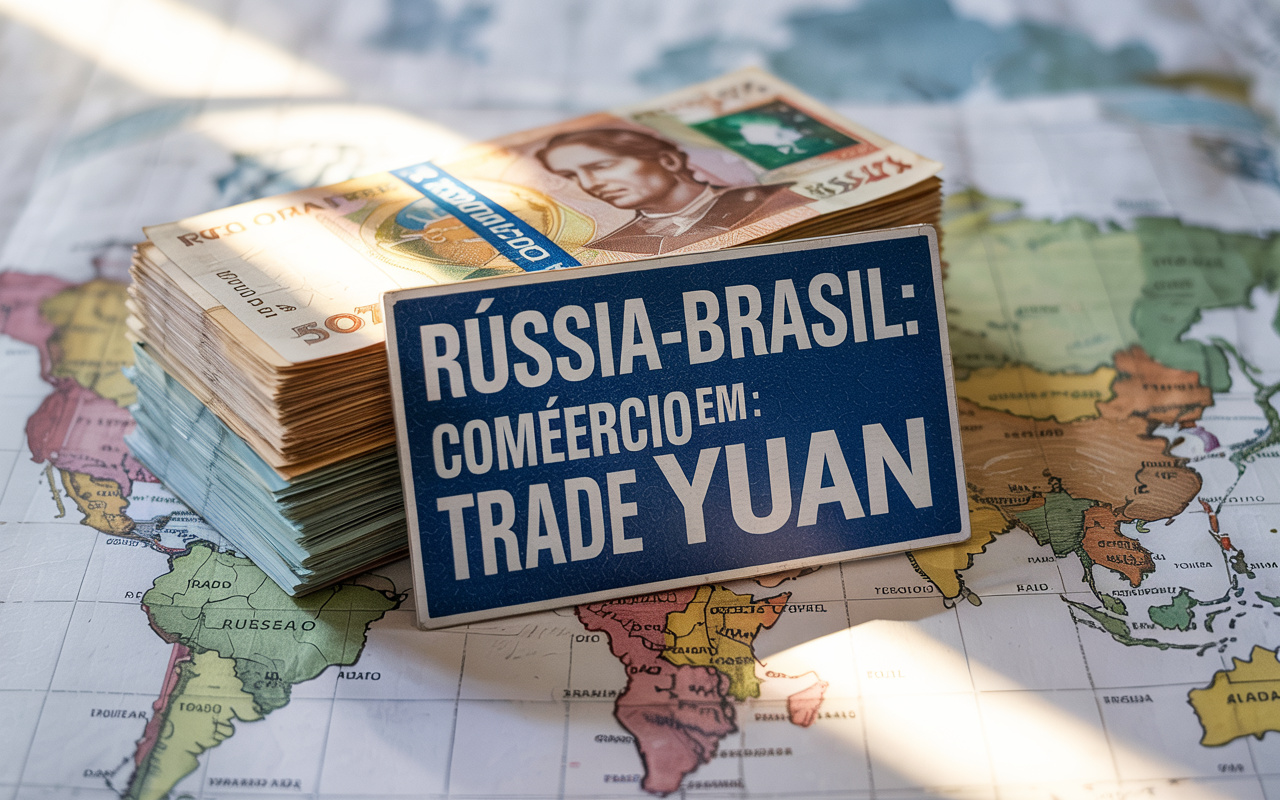

Russia Expands Use of Yuan in Exports to Brazil and Other Countries in 2025, Reducing Dollar’s Space and Strengthening Ties in Energy, Grains, and Fertilizers.
In 2025, a new piece of information raised alarms in Washington and Brussels: Russia began to expand the use of yuan in its exports to Brazil, drastically reducing the dollar’s share in strategic sectors such as energy, grains, and fertilizers. The gesture, reflecting both Western sanctions and rapprochement with the BRICS, marks another step in the process of dedollarization of international trade.
Brazil, which had already closed a currency swap of R$ 157 billion with China, now sees the yuan also advancing in its relations with Moscow. The move transforms the Chinese currency into a central piece of South-South exchanges and puts the dollar on a path of retraction in vital areas for the planet’s food and energy security.
Fertilizers: The Most Sensitive Link
Among all sectors, fertilizers represent the most strategic point of the new relationship. Russia is, alongside Belarus, one of the largest global suppliers of potassium, ammonium nitrate, and urea. In 2024, over 25% of fertilizers imported by Brazil came from Russia, supporting grain production in the Midwest.
-
European Parliament Approves Digital Euro, Aiming to Challenge Visa and Mastercard’s Dominance and Transform Payments Across Europe by 2029

-
Israel finds Hezbollah militarized tunnel over 200 meters long under village, with 4 missile launch shafts, 12 chambers, anti-tank missiles, drones, and weapons depots at a depth of 25 meters.

-
Ukraine launches largest drone attack on Moscow since 2022, Russia claims to have intercepted nearly 200 aircraft near the capital, Kapotnya refinery targeted again, and offensive reignites alert about war reaching the Russian energy heart just a few kilometers from the Kremlin.

-
Truck drivers, freight, and fines from 2022 take center stage in politics: Chamber approves MP with amnesty, mandatory tracking by CIOT, million-dollar penalties, and new minimum wage for those who spend more than 24 hours on the road.




Starting in 2025, import contracts began to be settled in yuan. This means that part of the supply chain for Brazilian agricultural inputs — the foundation of soy, corn, coffee, and meats that feed the world — no longer depends on the dollar.
For Russia, isolated financially by sanctions after the war in Ukraine, the yuan has become the perfect escape valve; for Brazil, the change brings practical advantages but also strategic risks.
Energy and Grains: The Dollar Loses Ground
The same process is repeating in other sectors. Brazilian purchases of Russian diesel and refined oil have already begun to be settled in yuan, avoiding the use of American and European banks. Similarly, batches of Russian wheat, intended to supplement domestic production, have also started to be traded under contracts denominated in Chinese currency.
These movements, combined with the weight of fertilizers, reinforce a trend: the dollar is being isolated from the essential Brazil–Russia supply chains, which strengthens financial autonomy between the two countries and gives momentum to the BRICS monetary integration goals.
The Role of China: The Yuan as the Pivot Currency
Although trade is bilateral, the mechanism depends on a third player: China. The yuan has become the preferred currency not only for its economic weight but because Beijing offers banking infrastructure and liquidity capable of supporting large international operations.
In practice, Moscow sells fertilizers, energy, and grains; Brasília pays in yuan; and Beijing provides the financial channels that make the operation possible.
The result is a geopolitical triangle: Russia supplies, Brazil consumes, and China finances — all without going through the dollar.
The Alert in Washington and Brussels
For the United States, the advance of the yuan in Russian exports to Brazil is seen as yet another sign that the dollar’s hegemony faces silent erosion. The fear is that the practice will spread to other emerging markets, reducing America’s ability to impose financial sanctions.
In the European Union, the scenario is doubly concerning. First, because the EU already competes with Brazil in the agricultural sector and fears any cost advantage in inputs. Second, because, by losing ground to the yuan, European banks are excluded from billion-dollar contracts in strategic sectors.
Direct Impacts on Brazil
For Brazil, the change brings immediate advantages:
- Reduction of Costs and Bureaucracy: Contracts in yuan eliminate dollar intermediaries and reduce currency exchange fees.
- Supply Security: Even under sanctions, Russia guarantees the supply of fertilizers and energy to Brazil.
- Agricultural Competitiveness: Access to cheaper and more stable inputs strengthens Brazilian agribusiness, the engine of exports.
But there are also risks:
- New Dependency: Brazil becomes even more tied to China as it relies on yuan for its Russian imports.
- Geopolitical Vulnerability: In case of further tensions between China and the U.S., Brazil may be pressured to choose sides.
- Financial Opacity: The lack of full convertibility of the yuan limits the transparency of operations.
The BRICS as a Monetary Shield
The adoption of the yuan in Russian exports to Brazil is also linked to the strengthening of the BRICS. The bloc discusses the creation of a BRICS Pay, an alternative payment system to Swift, capable of sustaining transactions in local currencies.
Although the idea of a “single currency” has been discarded, the advance of the yuan and the support of countries like Russia and Saudi Arabia show that the strategy to fragment the dollar’s hegemony is underway.
In this scenario, Brazil emerges as a key player: it imports the most fertilizers from Russia, is a central partner of China in agribusiness, and serves as a bridge to Latin America.
The Future of the Dollar in the Trade of Inputs
Experts differ on how far this trend may go. Some believe that the dollar will remain dominant, as it still accounts for nearly 80% of global transactions. Others, however, argue that Moscow and Beijing’s goal is not to replace the dollar, but gradually reduce its space in critical sectors.
And in this game, fertilizers, grains, and energy are perfect targets: without them, there is no food security or agricultural production. If the yuan dominates these chains, Beijing and Moscow gain disproportionate influence on the global chessboard.
By agreeing to pay in yuan for Russian exports, Brazil reaps immediate benefits: cheaper inputs, less dependence on the dollar, and strengthening of the BRICS. But in the medium term, the question is inevitable:
Is the country gaining autonomy or just becoming more dependent on the Chinese orbit?
What is certain is that, in 2025, the dollar lost yet another silent battle. And this time, the battlefield was the fertilizers, energy, and grains that sustain Brazil and feed the world.