Portuguese
  Spanish


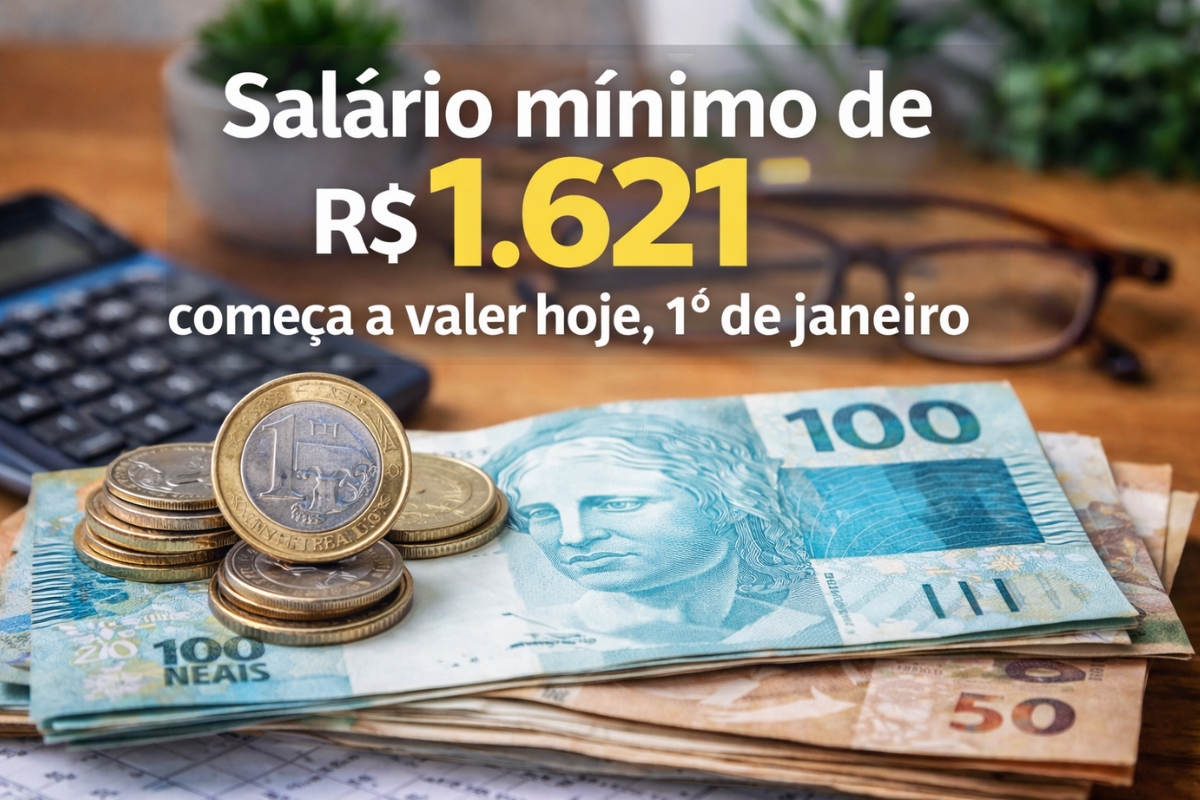


New Minimum Wage of R$ 1,621 Is Now in Effect and Influences Payments That Use the Minimum as Reference, with Impacts on Public Accounts
The minimum wage of R$ 1,621 has been in effect since this Thursday, January 1st. The amount replaces the previous minimum of R$ 1,518.
The total adjustment is 6.79%. In practice, the minimum serves as the basis for salaries and benefits that cannot fall below this level.
Those who receive the minimum wage, or amounts tied to it, are likely to feel the impact in the payment made at the beginning of February, as the new minimum takes effect on January 1st.
-
Chinese E-commerce Giant Predicts Robots Will Replace 700,000 Delivery Workers as Autonomous Vehicles Expand to 200 Cities, Offering Training for Workers to Maintain Their Machines

-
Trump warns Europe with 100% tariff threat on digital tax, potentially impacting wine and trade agreements

-
As Homeownership Becomes Unattainable in Brazil, Japanese Municipalities Offer Abandoned Houses for as Low as $3,000 to Revitalize Aging, Emptying Cities
-
Job Market in 2026 Welcomes High School Graduates: Logistics, Retail, and Construction Hire Without College Degrees; Quick Courses in Forklifting, Building Electricity, and Welding Boost Salary Prospects


What Happened and Why It Garnered Attention
The country started 2026 with the minimum wage adjusted to R$ 1,621. The change draws attention because it affects salaries and various benefits linked to the national minimum.
The adjustment was below R$ 1,631 projected in the 2026 Budget. It was also lower than R$ 1,627, the government’s estimate at the end of November.
The difference occurred because the inflation used in the calculation was lower than expected.

What Changes in Practice for Those Who Receive the Minimum and Linked Benefits
The new amount affects those who receive minimum wage or multiples of it. The impact also extends to benefits linked to the minimum wage.
This includes unemployment insurance and the Continuous Cash Benefit, BPC. As the minimum took effect on January 1st, the adjusted payment will appear in the cycle at the beginning of February.
The minimum wage also influences indirect values in the economy, such as the increase in average salary and the purchasing power of workers.
Who Is Entitled and What the Law Says When Applicable
The minimum wage is the lowest remuneration that a formal worker can receive in the country. It applies nationally and serves as a reference for employment contracts.
The Constitution guarantees a minimum wage capable of meeting basic needs. The constitutional text also provides for periodic adjustments to preserve purchasing power.
The constitutional rule requires adjustments at least by inflation. This seeks to prevent the minimum wage from losing purchasing power over time.
How the Value Was Calculated in 2026
The calculation considered the inflation measured by the INPC in 12 months until November, which stood at 4.18%. This indicator is used to update the minimum wage.
In addition to inflation, a real increase linked to economic performance was included. The rule takes into account the growth of the GDP from two years prior.
The GDP of 2024 was 3.4%, but the real increase was capped at 2.5% due to a law passed in December of last year. This brought the total to a minimum of R$ 1,621.
Points of Attention About Inflation, GDP, and Fiscal Framework Limit
The formula combines inflation and economic growth, but the real gain has a limit. This cap prevents the increase from exceeding 2.5% above inflation.
This brake is linked to the fiscal framework, a set of rules to control the growth of expenses. The aim is to contain pressure on public debt.
With the period’s inflation lower than projected, the final result also fell short of other forecasts.
Impact on Public Accounts and Government Budget
The increase in the minimum wage raises federal expenses because several payments cannot be lower than the minimum. This includes pension benefits, as well as items like salary bonuses and unemployment insurance.
The reported calculation indicates that each R$ 1 increase generates expenses in 2026 of approximately R$ 420 million. The total increase of R$ 103 represents about R$ 43.2 billion more in mandatory expenses.
With more mandatory spending, there is less room for discretionary expenses, which are the flexible expenditures used for government policies and programs.
The minimum wage of R$ 1,621 has been in effect since January 1st, with an adjustment of 6.79% over the previous R$ 1,518. The change affects salaries and benefits that use the minimum as a reference.
The new minimum also increases public expenses and reduces budget space for discretionary spending, while the calculation rule combines INPC of 4.18% with real gain limited to 2.5%.