






 Portuguese
  Spanish


Study indicates that microplastics can reduce food production by up to 14% and increase global hunger risk in the coming decades.
In 2025, an international study published on March 10 in the scientific journal PNAS placed microplastics at the center of a new alert for global food security. The research, led by scientists from institutions in China and the United States, analyzed 3,286 experimental records and estimated that these particles can reduce the efficiency of photosynthesis in terrestrial plants, marine algae, and freshwater algae. The most concerning impact appears in the crops that sustain much of the world’s food: rice, wheat, and corn.
According to the authors, the estimated annual loss in the production of these foods can range from 109.73 million to 360.87 million tons per year, turning microplastic pollution into a problem that is no longer just environmental but directly affects the foundation of global food production.
Understand how nearly invisible particles can interfere with photosynthesis, reduce plant growth, and increase pressure on food security on a global scale.
-
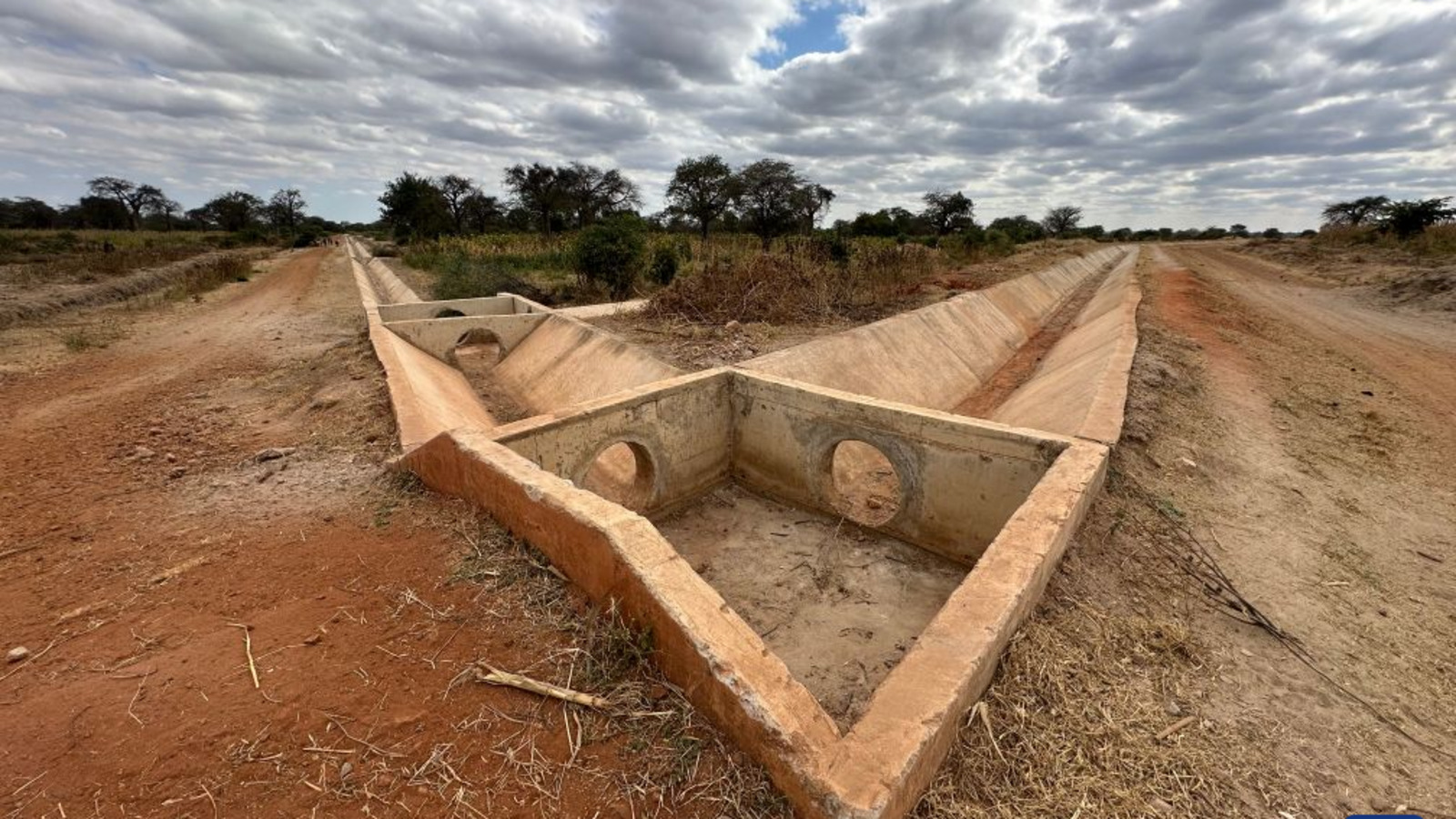
China Builds 400-Hectare Irrigation System in Tanzania to Aid 1,000 Families Dependent on Rainfall

-
High School-Educated Farmer in India Converts 40 Hectares of Arid Land into Native Forest with 900 Species and Up to 40,000 Trees

-
After Two Years of Water Scarcity, Brazilian Farmer Finds Well on Her Land, Boosting Mango and Passion Fruit Production in Central Brazil

-
Cashew Becomes Billion-Dollar ‘Superfood’ in Ivory Coast: 1.6 Million Hectares of Monoculture Encroach on Forests as Families Trade Food for Nuts



More than 3,286 observations show a consistent pattern of decline in productivity
The scientific analysis gathered data from 157 experimental studies, totaling 3,286 observations, making the survey one of the most comprehensive ever conducted on the subject.
The results indicate that the presence of microplastics in soil and the environment can reduce agricultural productivity by a range of 4% to 14%, depending on the crop and the conditions analyzed.
This type of reduction, although it may seem moderate in percentage terms, gains scale when applied to global production. Even small percentage declines in essential crops can represent massive losses when considered on a global level.
Microplastics directly interfere with plant photosynthesis
The main mechanism identified by researchers is linked to photosynthesis, a fundamental process for plant growth.
Studies show that microplastics can reduce global photosynthetic efficiency by 7% to 12%, affecting the ability of plants to convert sunlight into energy.
This impact occurs through different pathways:
- partial blockage of light on leaf surfaces
- release of toxic substances
- interference with water and nutrient absorption
- alteration of soil structure
By compromising photosynthesis, microplastics directly affect the foundation of plant growth.
Contaminated soil alters root structure and functioning
In addition to photosynthesis, microplastics also affect the soil, the environment where plants develop their roots. These particles can modify:
- water retention
- air circulation in the soil
- nutrient availability
As a result, roots operate in a less efficient environment, compromising plant development from their early stages. The impact occurs not only on the surface but also on the structural basis of plant growth.
Projection indicates an increase of up to 400 million people at risk of hunger
Based on the collected data, researchers developed models to estimate the global effects of the decline in agricultural productivity.
The projections indicate that if the impact of microplastics continues to advance, the number of people at risk of hunger could increase by up to 400 million in the coming decades.

This number does not represent currently observed data, but an estimate based on the combination of reduced agricultural production, population growth, and pressure on food systems.
The potential scale of the impact positions microplastics as a relevant factor in global food security.
Impact can add to other known factors, such as climate change
The study indicates that microplastics do not act in isolation. They add to other factors already pressuring food production, such as climate change, soil degradation, water scarcity, and increased global demand.
This combination can amplify the negative effects on agriculture. The risk is not just in an isolated factor, but in the convergence of multiple pressures on the food system.
Microplastics are already present in agricultural soils worldwide
Another important point is that the presence of microplastics is not localized. These particles have already been detected in agricultural soils in different regions of the planet, resulting from the degradation of plastic waste, the use of contaminated fertilizers, irrigation with polluted water, and atmospheric deposition.
This means that the problem is not restricted to specific areas but can affect agricultural systems globally. The dissemination of microplastics expands the potential reach of the impact identified by the studies.
Although the results are consistent, researchers emphasize that there are still uncertainties. Part of the analyzed data comes from controlled experiments in laboratories or simulated environments, which may differ from real field conditions.
Therefore, new studies are needed to validate large-scale impacts, understand regional variations, and refine future projections. The identified trend is clear, but the exact magnitude is still being investigated.
Global food security can be affected by an invisible factor
Unlike extreme weather events or agricultural pests, microplastics represent an invisible threat.
They do not cause immediately perceptible impacts but act gradually, cumulatively, and silently. This type of risk is harder to detect and mitigate, especially in complex agricultural systems.
The absence of visible signs can delay the response to a problem that is already underway.


