Portuguese
  Spanish


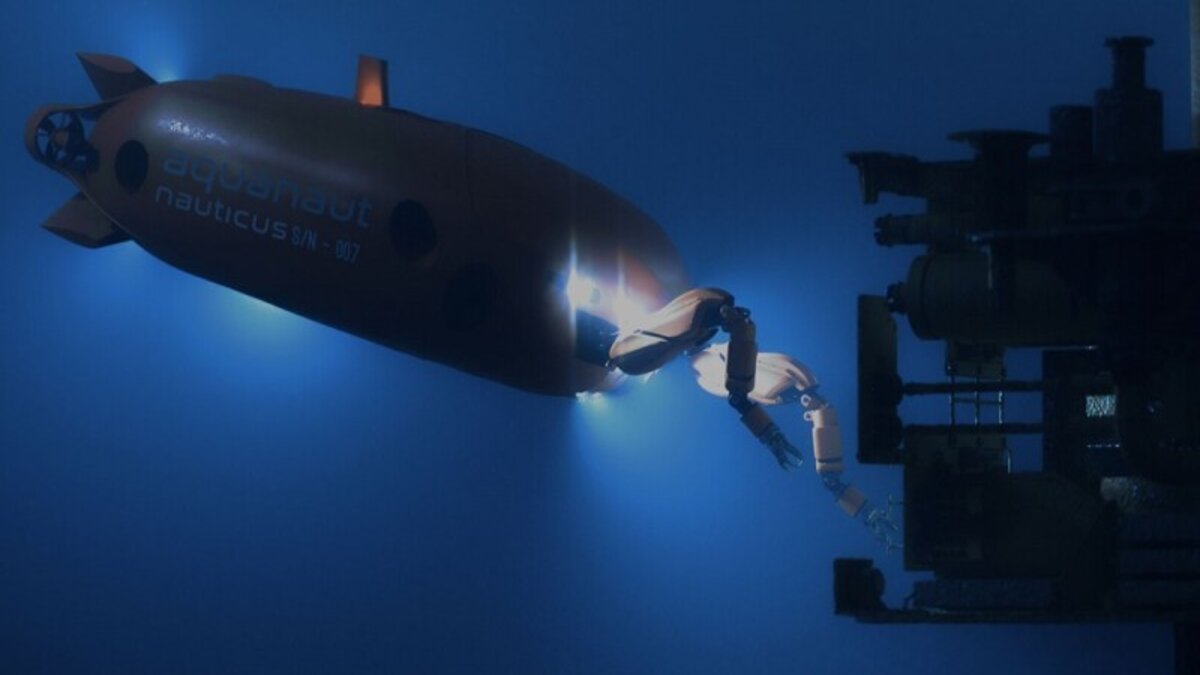

The Robotic Platforms of the Company Nauticus Robotics Will Monitor the Submarine Assets of the Oil Company Shell in a New Data Collection Project About the Company’s Business with the Support of International Technology.
The oil company Shell has signed a contract with the company Nauticus Robotics for the use of the company’s monitoring technology for the collection of diagnostic data regarding the submarine assets. Thus, the Aquanaut and Hydronaut robotic platforms from Nauticus will be used in the project to ensure the integrity of Shell’s submarine assets, which aims to further introduce modernization and technology into its international operations.
Robotic Platforms from Nauticus Robotics Will Be Used to Monitor the Integrity of Shell’s Submarine Assets in a New Project by the Company
The marine technology company from the Houston area, Nauticus Robotics, announced a significant new partnership for the oil, natural gas, and other fuels sector in the global market. This time with the multinational company Shell, which is now investing in its project to monitor its submarine assets.
In this way, the technology company will use its cutting-edge equipment to provide Shell with the necessary information for the control of its submarine project integrity. Thus, Shell intends to advance in the phase of qualifying a more efficient means of acquiring submarine integrity data using Nauticus Robotics’ Aquanaut and Hydronaut robotic platforms, which use state-of-the-art technology for data collection offshore.
-
France Launches Network to Recycle 20 Million Cookware Pieces by 2027, Accepting All Brands for Aluminum and Coating Separation

-
Giant Ship Appears to Sink as It Takes on Water to Load 91,000-Ton Platform from China to Rio de Janeiro
-
Nuclear Submarine USS Alexandria Retired After 35 Years, Having Completed Over 1 Million Miles in Missions

-
MODEC Introduces New Hull Design for FPSO Gato do Mato to Produce Up to 120,000 Barrels of Oil Per Day in Brazil’s Pre-Salt Region



Shell will then achieve even more efficient monitoring of the integrity of its submarine assets, and the project will allow both companies to share their experiences and knowledge for the development of an integration of services and solutions alongside Nauticus Robotics’ technology.
Furthermore, the oil company has recently conducted an initial feasibility study of the technology project with Nauticus Robotics, and the team is now moving into the operational qualification phase, which focuses on the remote operations of the robotic duo using supervised autonomy and tool control using Nauticus’ technology.
The collaboration will then proceed to enable the creation of an offshore pilot project before necessarily moving to the monitoring of Shell’s submarine assets in the future.
Nauticus Robotics Celebrates Contract and Says That the Monitoring Project of Submarine Assets Will Be Carried Out with the Company’s Best Technology
Todd Newell, Senior Vice President of Business Development at Nauticus Robotics, celebrated the contract with Shell and said: “Working with a leading company like Shell is an exciting milestone for Nauticus, and this collaboration further validates the superior capabilities and extensive use cases of our robots in the energy sector. The implementation of our supervised autonomous method — which has proven to be more robust and dynamic than most of its kind — should provide our partners and future clients with more than 50% cost savings compared to current operating methods.”
Additionally, the company stated that it would utilize the cutting-edge technology of its robotic platforms to ensure greater efficiency in the project. Thus, the company will integrate its main submarine robot, the Aquanaut, which is deployed from the company’s small surface vessel, and the Hydronaut, a robot focused on transport, recharging, and communication of the Aquanaut, thereby ensuring higher quality in monitoring the oil company’s submarine assets.
Finally, Ross Doak, Deep Water Robotics Engineer on Shell’s robotics team, emphasized that this is the time to combine the best in technology and expertise from both parties of the agreement to make the oil company’s onshore sector even more efficient and safe.