Portuguese
  Spanish


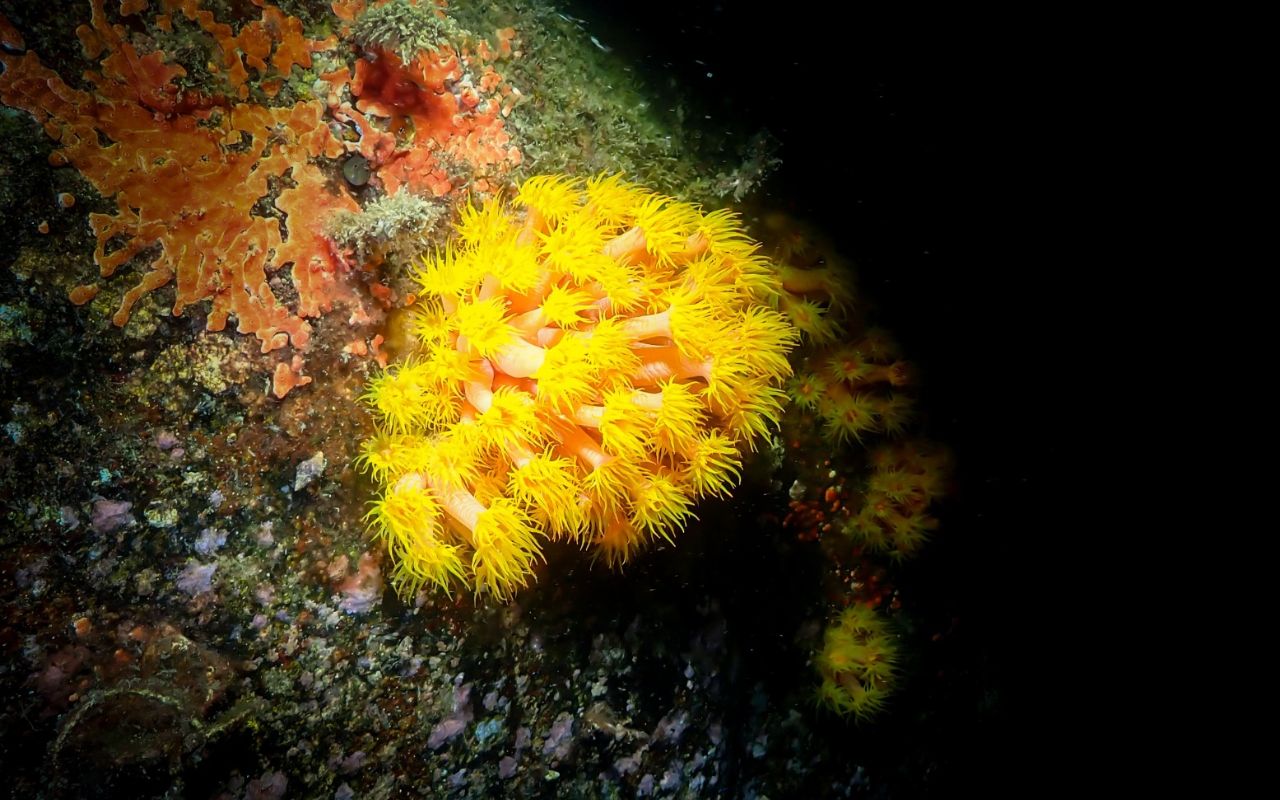

Studies in Santa Catarina Show Advances in the Control of Sun Coral (Tubastraea coccinea), an Exotic Species Threatening Marine Ecosystems. Innovative Techniques and Detailed Monitoring Help Protect Biodiversity.
The invasion of sun coral (Tubastraea coccinea) in Brazilian reefs has received scientific attention. On the coast of Santa Catarina, researchers have presented significant results in monitoring and controlling the species, which can harm marine biodiversity.
The solutions developed include innovative management techniques, with the expectation of being applied in other regions of the country where the sun coral has spread.
The study is part of the Action Plan for the Prevention and Control of Sun Coral in the Arvoredo Biological Reserve and Surroundings (PACS Arvoredo), initiated in 2022 as an environmental impact mitigation measure linked to the Operational License of Ibama for the exploration of the Baúna Field in the Santos Basin.
-
Spectacular Green Aurora Seen from Space Illuminates International Space Station, Captivates French Astronaut

-
In Tasmania, a Beach Features a Natural Stone Mosaic Formed by Earth’s Cracks Millions of Years Ago
-
China’s Artificial Sun Reaches 100 Million Degrees, Six Times Hotter Than the Sun’s Core, Putting Beijing Ahead in the Race for Infinite Energy

-
Steam Machine Converts All Types of Plastic Waste into Durable Building Blocks, Processes Over 90 Tons Monthly, and Is Sold to Municipalities


The PACS Arvoredo involves researchers from UFSC and the ICMBio team in Florianópolis.
Detailed Monitoring and Innovative Management
Throughout the research, 114 dives were conducted, totaling 140 hours of monitoring across about 65 kilometers of rocky shores of the Arvoredo Marine Biological Reserve.
“Based on the results of this mapping, management actions are planned and implemented,” explains ICMBio environmental analyst, Adriana Carvalhal Fonseca.
Equipment for mechanical removal of sun coral has been developed, such as hammer, electric brush, injection gun, compressed air triggers, and ultraviolet light application device.
“Some of these tools and techniques have been tested or adapted for the first time in a natural environment by this project, highlighting the importance of environmental licensing for innovation,” states Ibama environmental analyst, Fernando Augusto Galheigo.
Field activities will continue until March. “The idea is to use this knowledge to reduce the species’ density in already invaded areas and, if possible, detect it early where it has not yet been recorded,” adds Adriana Carvalhal Fonseca.

Sun Coral: Exotic Species and Its Impact
Native to the Indian and Pacific Oceans, sun coral is a azooxanthellate that grows in shallow waters over tropical reefs and rocky shores. It is estimated to have arrived in Brazil in the 1980s, likely transported by ship hulls and oil platforms, and has since spread along the Brazilian coast.
According to a survey by the Ministry of the Environment and Climate Change (MMA), there are two species in the country: Tubastraea tagusensis (yellow) and Tubastraea coccinea (red-orange).
They are present in Bahia, Ceará, Espírito Santo, Paraná, Rio de Janeiro, Santa Catarina, and São Paulo, in both natural environments and artificial structures.
According to Bárbara Segal, a professor at UFSC, when dominating the reef environment, sun coral reduces the available space for native species, altering the structure of ecosystems and causing the loss of Brazilian marine biodiversity; thus, it should be combated.
Innovative Strategies for Control and Prevention
The PACS Arvoredo demonstrates how research, technology, and environmental licensing can work together to tackle invasive species.
The mechanical tools and the application of ultraviolet light, combined with detailed monitoring, have shown promising results in removing sun coral and controlling its proliferation.
Moreover, the results can be replicated in other regions of the country, strengthening the National Plan for the Prevention, Control, and Monitoring of Sun Coral, published in 2018.
This approach allows for the reduction of environmental impacts, protection of marine ecosystems, and promotion of innovation in invasive species management techniques.