Portuguese
  Spanish


The Startup Selfie presentation showcases ByFusion’s Blocker, the steam and compression system that creates ByBlock, the first construction material made entirely from discarded plastic
The global plastic crisis has found a solution that fits in a warehouse: a machine that consumes waste and returns construction blocks. According to the Startup Selfie channel, in a presentation published in December 2022, the Blocker from American company ByFusion uses steam and compression to convert all types of plastic waste into a revolutionary material called ByBlock.
The central promise addresses the sector’s biggest skepticism. ByBlocks do not crack or crumble, and the system is already being sold to waste management companies, governments, municipalities, and corporations with an environmental agenda worldwide, as presented by Startup Selfie. It is the bet to transform the most visible problem of modern consumption into walls, barriers, and urban furniture.
The machine that consumes any plastic
The keyword of the technology is: any. According to Startup Selfie, the Blocker’s differential is accepting all types of plastic waste, without the fine sorting that hinders traditional recycling, where each resin needs to be separated, washed, and processed through its own route.
-
John Deere’s Autonomous 9RX Tractor Uses 16 Cameras for 360-Degree Vision, Operates in Short Weather Windows While Monitored by Smartphone

-
Scientists Develop Needle-Free Insulin That Penetrates Skin, Reduces Glucose in Animals Within an Hour, Paving the Way for Diabetes Patches and Creams for Humans

-
After 40 Years of Research, Powdered Coconut Water to Be Produced in Brazilian Biorefinery, Aiming to Revolutionize Health for Children, Elderly, and Hospital Patients
-
Queen Guitarist Brian May Collaborates with ESA Scientists to Study Asteroids Bennu and Ryugu Using 3D Simulations


The process dispenses with complicated chemistry. The system combines steam and compression to fuse and press the mixed plastic into the final block shape, as described by Startup Selfie. It is an intelligent inversion of the recycling logic: instead of spending fortunes returning the plastic to the state of virgin raw material, the machine permanently freezes it into a useful product form.
ByBlock: the block that does not crack or crumble
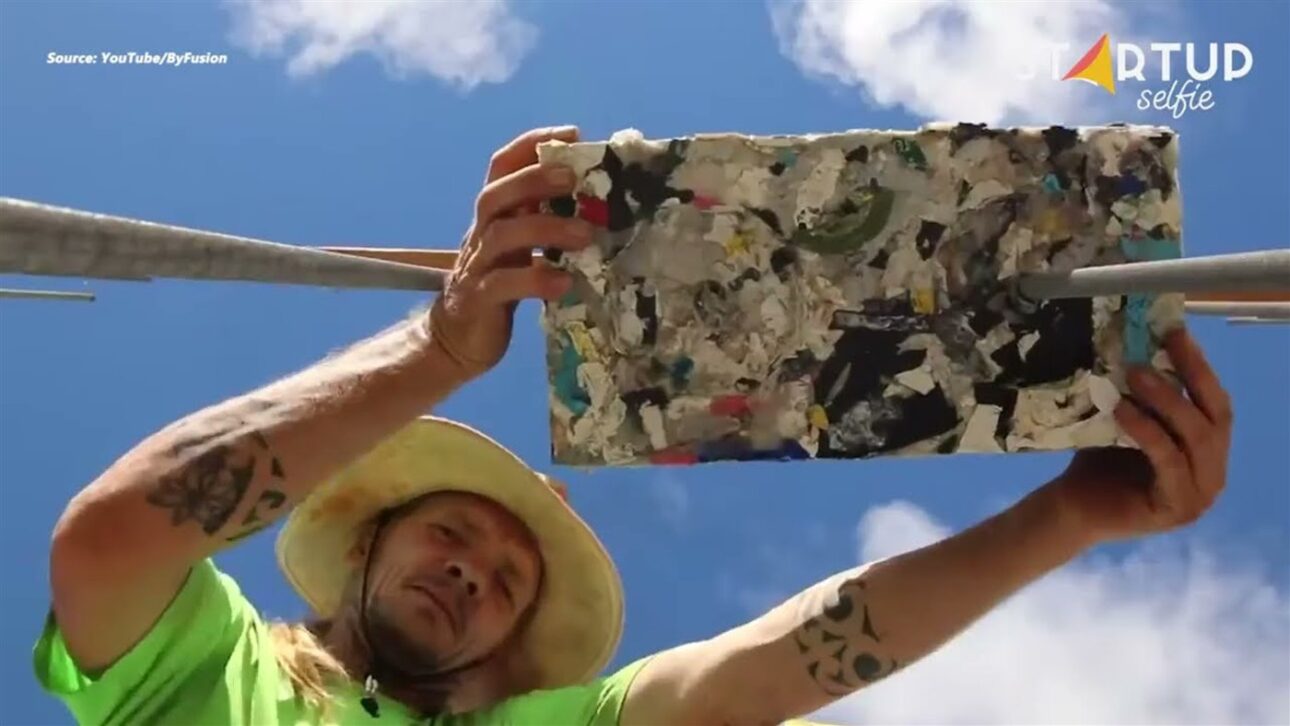
The final product carries an unprecedented title in the sector. According to Startup Selfie, ByBlock is the first construction-grade material made entirely from plastic waste, a category that no competitor occupied until then.
The mechanical behavior is the selling point. While traditional recycled materials suffer from cracks and disintegration, ByBlocks do not crack or crumble, as highlighted by Startup Selfie. The explanation lies in the nature of pressed plastic: instead of the brittle rigidity of concrete, the block has the tenacity of polymer, which absorbs impact without breaking apart.
From retaining wall to furniture: where the block fits
The list of applications mapped in the presentation is long. According to Startup Selfie, the blocks are ideal for retaining walls, acoustic barriers, sheds and warehouses, privacy fencing, terracing and landscaping, feature walls, and even furniture.
The pattern of the list reveals the strategy. The applications focus on gravity and enclosure structures, where the weight and stability of the block work in favor, without requiring the structural certifications of a habitable house, a direct reading from the presented catalog. It is the classic path of the new material: first dominate the backyard, the park, and the containment work, and leave housing for when the standard reaches innovation.
2 machine sizes: 30 and 90 tons per month
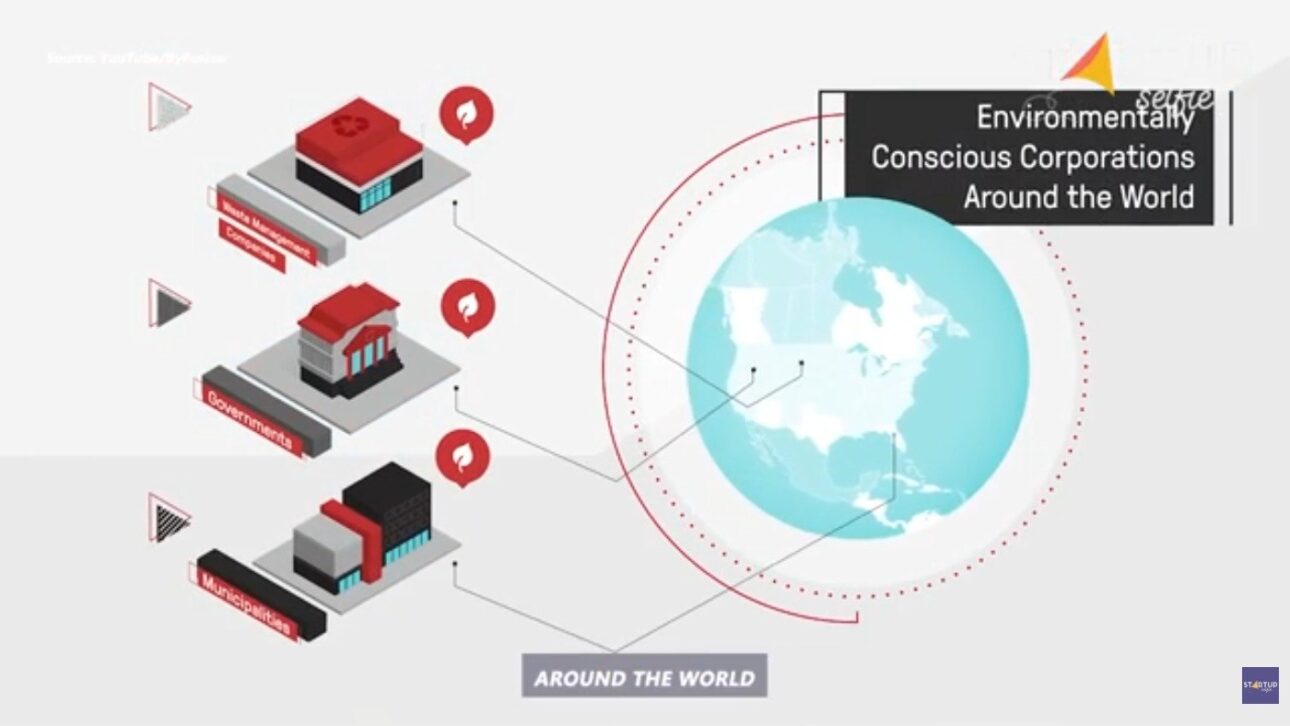
The system is sold in two scales. According to Startup Selfie, the Community Blocker was designed for smaller recyclable sorting facilities and processes up to 30 tons of plastic per month, while the Industrial Blocker is a customizable system designed for large-scale operations.
The numbers of the larger version give the industrial dimension. An entry-level industrial system processes more than 90 tons per month, with scalable engineering for high-volume recycling facilities and municipalities, as detailed by Startup Selfie. In practice, a medium-sized city can transform a significant portion of its collected plastic into public works material, closing the cycle within the territory.
Plastic waste that becomes a sellable product
The business model is the heart of the proposal. According to the Startup Selfie channel on YouTube, those who acquire their own Blocker start to reshape tons of plastic waste into a new and sellable product, changing the mathematics of waste management.
The annual arithmetic impresses more than the monthly. A community machine of 30 tons per month diverts 360 tons of plastic per year from the landfill, and an industrial entry system, with more than 90 tons monthly, exceeds 1,080 tons annually. In the domestic scale, each ton of plastic corresponds to around 50,000 common PET bottles, each weighing 20 grams, which gives the dimension of the river of waste that a single municipal press can swallow in 12 months.
The accounting inversion is what seduces municipalities and companies. The plastic that used to cost money to bury now generates revenue as a block, and the presentation defines the system as the definitive landfill diversion solution, as summarized by Startup Selfie. Each pressed ton is a ton that no longer occupies landfill space, turns into microplastic in the ocean, or burns in the open air.
The California Environmental Seal
A machine that melts plastic raises an immediate suspicion: what about the smoke? According to Startup Selfie, ByFusion responds by stating that both the community and industrial systems comply with California’s emission standards.
The reference is not random. California maintains some of the toughest emission rules in the world, and meeting this standard serves as an environmental quality seal to sell the technology in any other market, a well-known context in the sector that explains why the company insists on the comparison. If the machine operates within the Californian standards, it can operate under practically any legislation on the planet.
What the Plastic Block Teaches Brazil
The technology is American, but the problem is blatantly Brazilian. Brazil is among the largest generators of plastic waste in the world and recycles a small fraction of what it discards, a well-known fact that makes any landfill diversion solution worthy of attention here. The global backdrop is known: a common plastic can take more than 400 years to decompose, and widely cited estimates point to about 8 million tons of plastic reaching the oceans each year.
The ground for this conversation is already fertilized. The Brazilian reader is well acquainted with the ecological soil-cement brick and recycled material tiles, and the plastic waste block enters the same family: construction born from waste, with the advantage of tackling the most problematic residue of all. For Brazilian waste picker cooperatives and municipalities, the model of a local machine transforming municipal plastic into urban furniture is the kind of idea that travels well.
The Limits and Remaining Questions


No new material escapes the barrage of questions. The presentation focuses on the qualities, and the natural doubts of the sector, behavior in fire, prolonged exposure to the sun, cost per block compared to concrete, are left to the manufacturer’s technical documentation and the accumulated experience of the works.
What the novelty has already proven is the concept. Transforming mixed plastic, the nightmare of every recycling plant, into a stable construction block without prior separation is a shift in logic in the waste chain, and it is this shift that has brought the system to governments and corporations in various countries. The rest is what every young technology needs: time standing on the wall.
The video shows the machine in operation, the ready blocks, and the applications of the system.
ByBlock summarizes a decade of searching for a worthy destination for plastic: if returning it to the origin is too expensive, let the waste become a wall. Tell us in the comments: should your city press its own plastic waste into blocks?