Portuguese
  Spanish


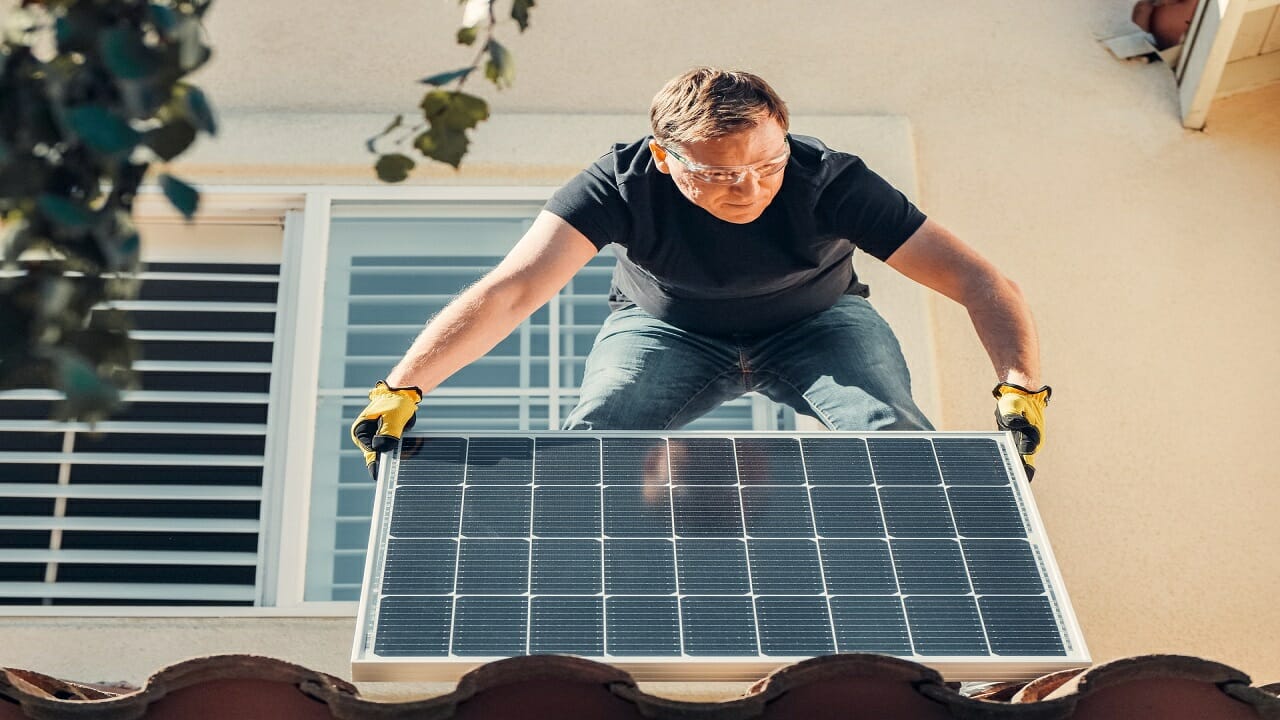

Australian Researchers Develop New Self-Regenerating Solar Panel That Works Solely With Sunlight, Promising to Transform the Aerospace Renewable Energy Market.
A team of researchers at the University of Sydney, in Australia, has developed a next-generation self-healing solar panel that could change its use in space operations. The new renewable energy technology utilizes what researchers call a “miracle material” known as perovskite.
New Solar Panel Will Make It Feasible to Send New Satellites Into Space
Previously, perovskite was used to develop standard silicon solar cells with higher efficiency for renewable energy generation. As such, its promise is twofold, especially if it indeed has self-healing capabilities.
The team detailed new solar panels in a study published in Advanced Energy Materials. This material has long been acclaimed for its special qualities, although it is important to highlight that no commercially available item using it heavily has been made available.
-
World’s Largest Engie Solar Plant in Brazil Highlights Billion-Dollar Energy Waste Issue: Company Considers Batteries and Bitcoin Mining to Avoid Wasting Production

-
Air Products Cancels $2.9 Billion Clean Hydrogen Megaproject in Louisiana, Shuts Down Arizona Unit, Highlighting High Costs of U.S. Energy Transition
-
Over 60 Tractors Take to the Streets in Lopera as Solar Parks Compete with Olive Groves, Affecting 13,000 to 100,000 Trees According to Conflicting Reports

-
Green Hydrogen Projects in Northeastern Brazil Stalled for 18 Months Awaiting Government Decree, Delaying Billions in Investments


That said, the ability to produce a new self-healing solar panel is something exciting and intriguing, especially since more satellites are certainly going to be sent into space in the coming years.
The capacity to reduce the amount of radiation damage that satellites must endure would be of utmost importance for spacecraft production, which can continue for much longer in low Earth orbit before needing to be retired, as repairing objects like satellites is perilous and challenging.
The degradation caused by radiation in space could be reversed using a thermal treatment on perovskite solar cells in the vacuum of space. However, at the moment, the only tests likely to be conducted are miniature tests performed using a microscale probe that simulates the proton radiation exposure that solar cells typically endure.
Understand How the New Perovskite-Based Solar Panel Works
As mentioned above, in lab conditions designed to simulate the effects of proton radiation for decades or even hundreds of years, researchers tested ultra-thin solar cell substrates suitable for use in satellites, marking the first time materials with such properties have been tested in this way.
The tests found that the hole transport material (HTM) in the perovskite solar panel was critical for how much damage it could withstand and how well it could heal itself to continue generating renewable energy.
The HTM facilitates the movement of holes in the cells, allowing them to remain separated and renewable energy to be produced. Two particular types of HTM and one type of dopant, a modifying substance applied to the HTMs, have proven to be the best at resisting proton radiation damage. Carefully configured, the HTM could also enable the self-healing of the new solar panel and restore it back up to 100% of its efficiency.
Healing Is Accomplished Through the Annealing Process or Heat Application in a Vacuum
The healing of the solar panel is carried out through an annealing process or heat application in a vacuum that could be powered by sunlight. In theory, solar radiation could repair these solar cells, just as it could power them.
Bringing this project to fruition will require much more research; however, this study shows that it is possible to one day have spacecraft powered by solar panels that can self-repair. Considering the high costs of going to space, this could make a significant difference.
According to nanoscientist Anita Ho-Baillie from the University of Sydney, the hope is that the insights generated by this work will assist future efforts in developing lightweight, low-cost solar cells for future space applications.