Portuguese
  Spanish


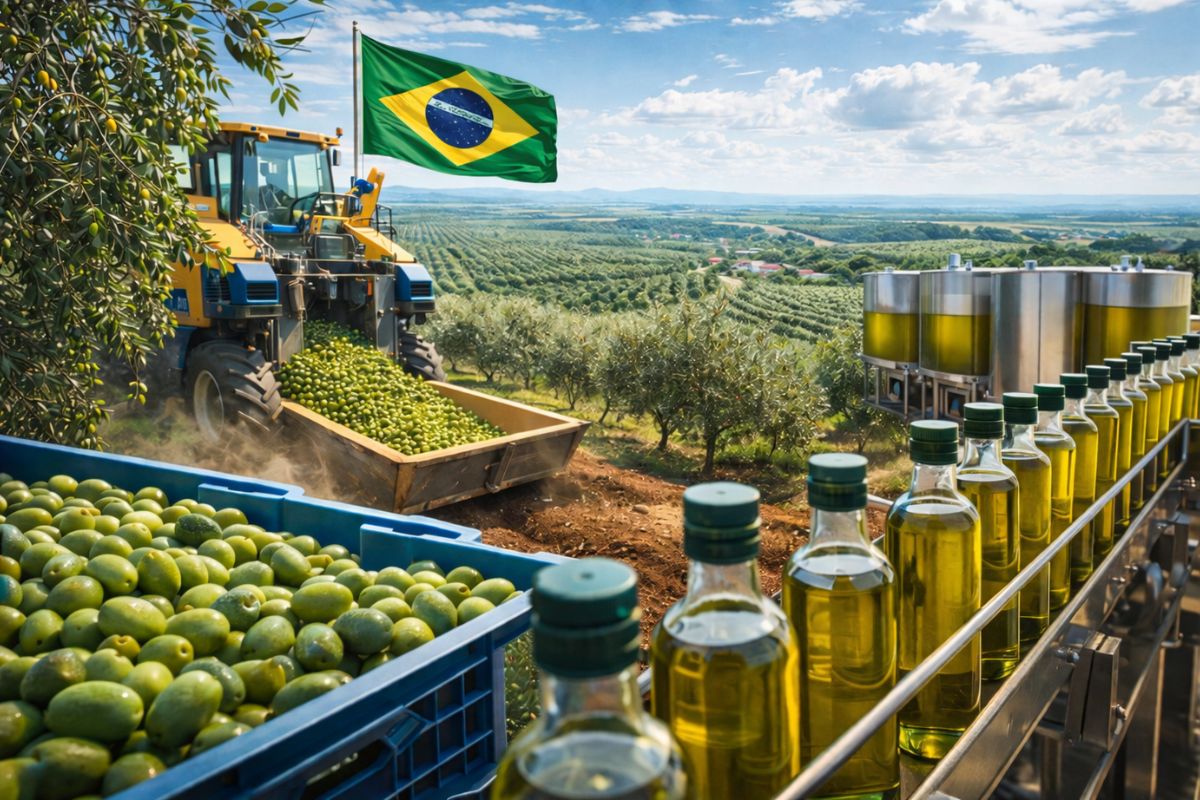


With olives being harvested in more than 110 municipalities, Rio Grande do Sul expects 1 million liters in the 2026 harvest and wants to put Brazilian olive oil on the country’s table.
The olive orchards of Rio Grande do Sul have entered the harvesting phase and, this time, the mood in the field is one of relief. After two very bad years, the 2026 harvest arrives with a sense of turnaround, with producers celebrating productivity and fruit quality.
The forecast for 2026 points to 1 million liters of olive oil in the state. And the impact goes beyond the number: this large harvest gives the sector the breath it needs and, at the same time, increases an old hope of those who produce here, which is to see Brazilian olive oil become a real choice in the domestic market. Because it’s not enough to harvest well; it also has to sell well.
Why the 2026 olive harvest has become a topic in RS

Throughout Rio Grande do Sul, more than 110 municipalities cultivate olives, and according to the State Department of Agriculture, there are over 6,000 hectares planted. The state’s weight is significant: about 75% of Brazilian olive oil originates from gaucho orchards.
-
Producer receives news and had to cull almost the entire herd, bounced back with the help of compensation, and is now producing 450 liters of milk per day in SC.

-
Quail Eggs Reveal a “Secret Code” on Their Shells Explaining Unique Patterns and Colors

-
Rare Tropical Fruit Canistel, with Egg Yolk Color and Caramel Flavor, Gains Interest from Researchers and Small Producers in Brazil
-
Brazilian Farmers Develop Wheeled Metal Lever to Ease Cassava Harvesting Without Heavy Machinery


What makes 2026 stand out is precisely the feeling of recovery. The sector talks about a super harvest after a sequence that tightened the producers. And when the harvest comes in strong, it changes the mood, the planning, and even the appetite to invest.
The numbers that show the recent roller coaster

The data presents a sequence that clearly shows why the 2026 harvest is being treated as a turning point:
2023: 580,228 liters
2024: 193,500 liters
2025: 190,300 liters
2026: forecast of 1 million liters
For those who live off olive trees and olive oil, this is not just statistics. It is the difference between spending the year counting coins and spending the year breathing more easily.
The weather that helped the olives “take” better
The climate appears as the main push in this harvest. The report points to a very cold winter in the previous year, spring with optimal temperatures, and well-distributed rainfall. This helped with flowering and fruit setting.
In other words, it was that kind of sequence that the producer knows how to recognize: when the weather helps at the right time, the crop responds.
A portrait of the work: harvest by months and industry almost non-stop
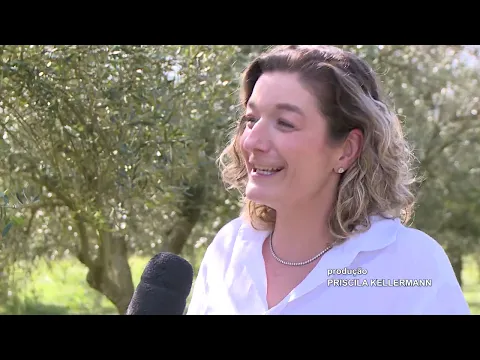

In the orchard of Lagar Há, in Cachoeira do Sul, the base describes 28,000 olive trees, of eight varieties, planted over 170 hectares. Planting began in 2014 and the first harvest was collected in 2020.
The harvest lasts about three months, from February to April, and involves machinery and labor that can reach up to 30 workers. The forecast mentioned is to harvest 400 tons of olives, which would result in 40,000 liters of olive oil.
On the industrial side, the work is described as almost non-stop. The fruits are separated from leaves and impurities, sanitized, and go through automated processes until they become the final product. When the harvest is large, the machinery runs without a break.
Quality, trophies, and the barrier that still needs to be broken
The base mentions testing, experiments, and the approval of specialists before the olive oil goes for sale, as well as national and international trophies that prove quality.
Even so, the biggest challenge is still cultural and market-related. The mentioned statement points out that Brazilian olive oil needs to be more recognized and consumed by Brazilians themselves, and that the best way to break resistance is to taste, compare, and feel the difference. There is even the idea of a “mutt complex,” as if what is made here is always inferior.
And there is a fact that puts everything in perspective: even a super harvest of 1 million liters does not reach 1% of the olive oil that Brazil consumes. In other words, there is room to grow, but it depends on the consumer to ask for, choose, and repeat the purchase.
And now, speaking as someone in the market and not just looking from afar: have you given a chance to olive oil made with olives from RS, or do you still stick to imported out of habit and trust?