






 Portuguese
  Spanish


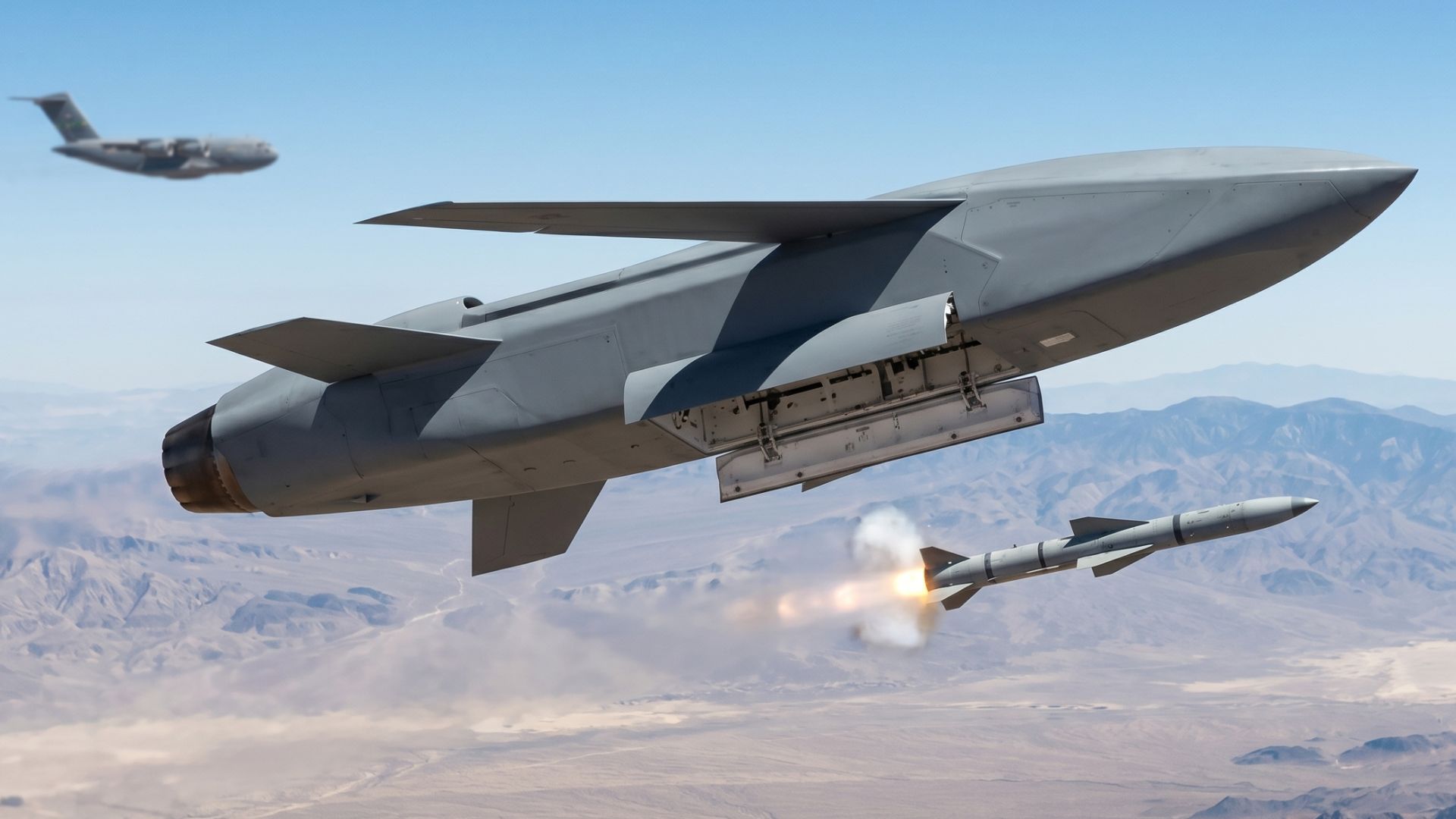

The X-68A LongShot from DARPA is an experimental drone launched by larger aircraft that aims to extend the range of aerial missions without exposing pilots to the most dangerous areas.
In February 2026, the United States Defense Advanced Research Projects Agency (DARPA) announced that the LongShot project officially received the designation X-68A, joining the select group of experimental aircraft known as “X-planes”. The news drew attention because the vehicle was not designed as a conventional fighter nor as a traditional missile. Its proposal is different: to be launched by another aircraft, fly ahead of the formation, and significantly extend the range of aerial operations.
The concept is considered one of the most unusual in modern military aviation. Instead of bringing pilots closer to the most dangerous areas, the idea is to first send an unmanned vehicle capable of operating ahead of the main force. According to DARPA, the program seeks to demonstrate an air-launched unmanned aerial vehicle capable of employing existing air-to-air weapons and increasing the engagement range of the aircraft that carry it.
The X-68A LongShot is not a conventional fighter nor a traditional missile
At first glance, the LongShot resembles a cruise missile. Its elongated shape, compact wings, and aerodynamic configuration make many people confuse it with a conventional weapon. However, the proposal is completely different.
-
China Unveils Laser Weapon Capable of Instantly Neutralizing Military Drones, Marking a Significant Advancement in Air Defense Technology

-
U.S. Navy’s Ticonderoga-class Cruiser Becomes a 9,800-Ton Missile Fortress with Advanced Aegis System Capable of Tracking Hundreds of Targets

-
France’s Charles de Gaulle: The Sole Nuclear-Powered Aircraft Carrier Outside the US, Weighing 42,500 Tons and Equipped with Two Atomic Reactors

-
The military spaceplane that almost took the Cold War into orbit: Boeing X-20 Dyna-Soar was designed to re-enter above Mach 20, fly for up to 40 hours, land like a plane, and transform Titan rockets into a gateway to a new era of orbital warfare.



The X-68A was designed to be a reusable or recoverable unmanned aerial vehicle in test versions, capable of being carried by larger aircraft and released in flight to operate independently. After launch, it continues the mission alone, functioning as an advanced extension of the mother aircraft.


According to DARPA, the central goal of the program is to change the way the range of aerial operations is constructed, allowing manned platforms to remain further away from the highest-risk regions.
The project was born to solve a problem that became increasingly difficult for modern fighters
In recent decades, radars, sensors, and air defense systems have become increasingly sophisticated.
This means that bringing manned aircraft closer to the most contested areas has become increasingly risky. The LongShot emerges as an attempt to increase the distance between pilots and the most dangerous zones.
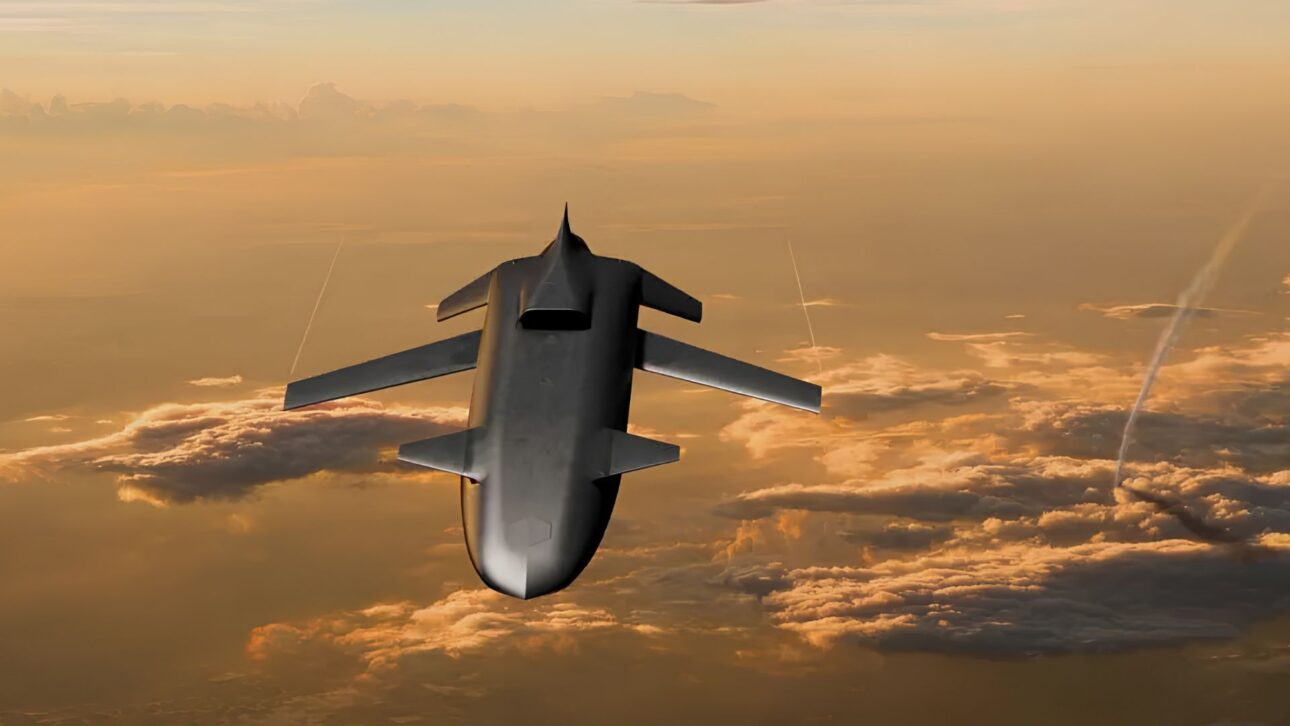
Instead of sending the fighter first, the proposal is to launch an unmanned vehicle ahead of the formation. This concept can extend the range of operations without requiring the manned aircraft to advance so much towards threats.
For this reason, many analysts consider the LongShot an attempt to create a new layer between the pilot and the combat environment.
DARPA has already completed important tests before the first flight
Although the public has not yet seen the X-68A flying, the program has advanced significantly. In February 2026, DARPA reported that the LongShot completed a series of important technical milestones, including full-scale wind tunnel tests and evaluations of onboard recovery and release systems.
These tests are crucial because the vehicle needs to perform an extremely complex transition: detach from another aircraft, safely separate, and begin autonomous flight without compromising the stability of the assembly.
According to the agency, these results brought the program closer to the flight test phase.
The first flight tests are expected to use one of the most well-known aircraft in military history
The plans released by DARPA and General Atomics indicate that the initial tests should involve the launch of the X-68A from a F-15 fighter.
The test campaign aims to demonstrate the safe separation of the vehicle, its stability after launch, and its ability to meet the objectives defined for the program. The use of the F-15 is not by chance.
The aircraft has high load capacity and a long history as a test platform for experimental aviation technologies in the United States.
The LongShot was designed to operate with various types of aircraft
One of the most interesting aspects of the program is its flexibility. General Atomics states that the concept was designed to be independent of a single platform, allowing future integration with different types of aircraft. This includes fighters, bombers, and even transport aircraft.
This feature greatly expands the possibilities for employing the system.

In theory, different aircraft could carry the LongShot and use it as a range extension, without the need to develop a specific version for each platform.
The project made history by receiving the designation X-68A
The “X” nomenclature has a special meaning in United States aviation. It is reserved for experimental aircraft that test concepts considered innovative or disruptive. Historical models like the X-1, which broke the sound barrier, and the X-15, which reached hypersonic speeds, are part of this tradition.
By officially receiving the designation X-68A, the LongShot became part of this lineage of highly relevant technological experimental programs.
For General Atomics, this is only the second X-plane in the company’s history.
The X-68A shows how drones are taking on roles that previously belonged only to manned fighters
The LongShot has not yet entered operation and remains an experimental program. Even so, the project already reveals an important trend in modern aviation: the gradual transfer of riskier tasks to unmanned vehicles.
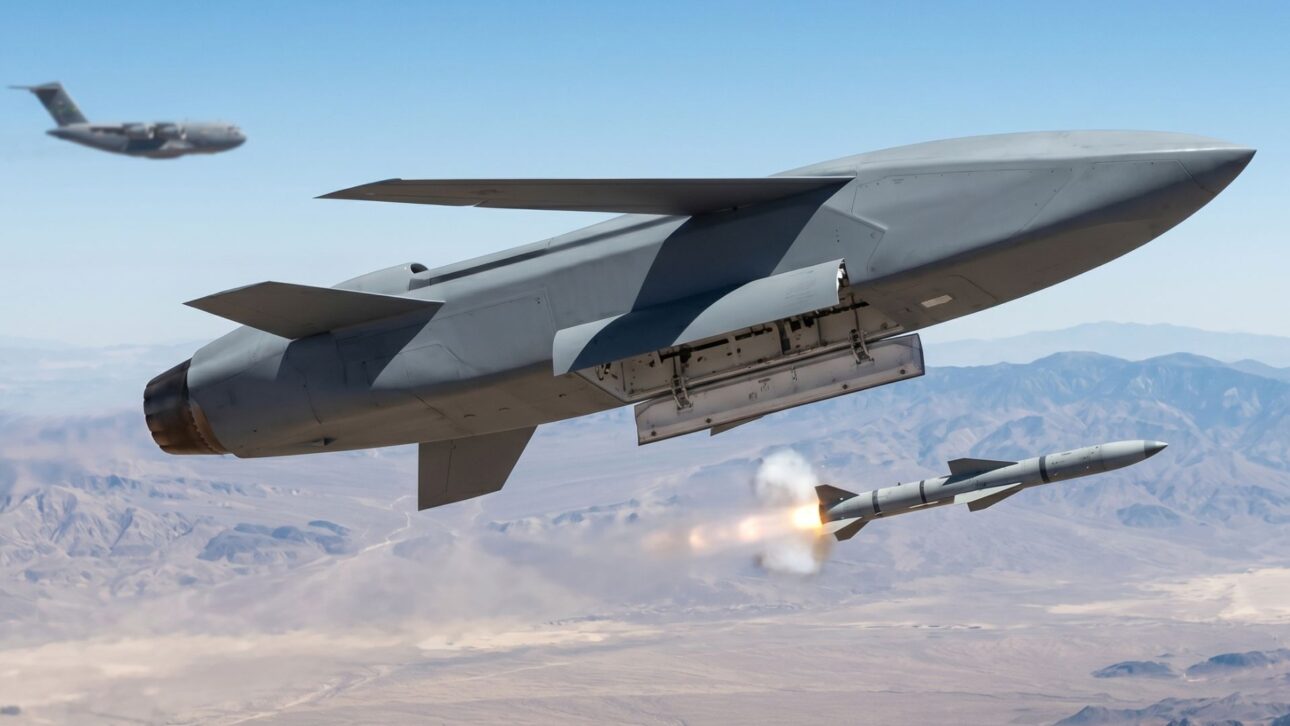
Instead of completely replacing pilots, the X-68A was designed to work alongside them, functioning as an advanced extension of manned aircraft.
If the tests planned for the coming years confirm the expected performance, the LongShot could become one of the most influential experiments of the new generation of unmanned aircraft, helping to redefine how planes and drones cooperate in future missions.


