





 Portuguese
  English
  Spanish
  4 min of reading
  0 comments


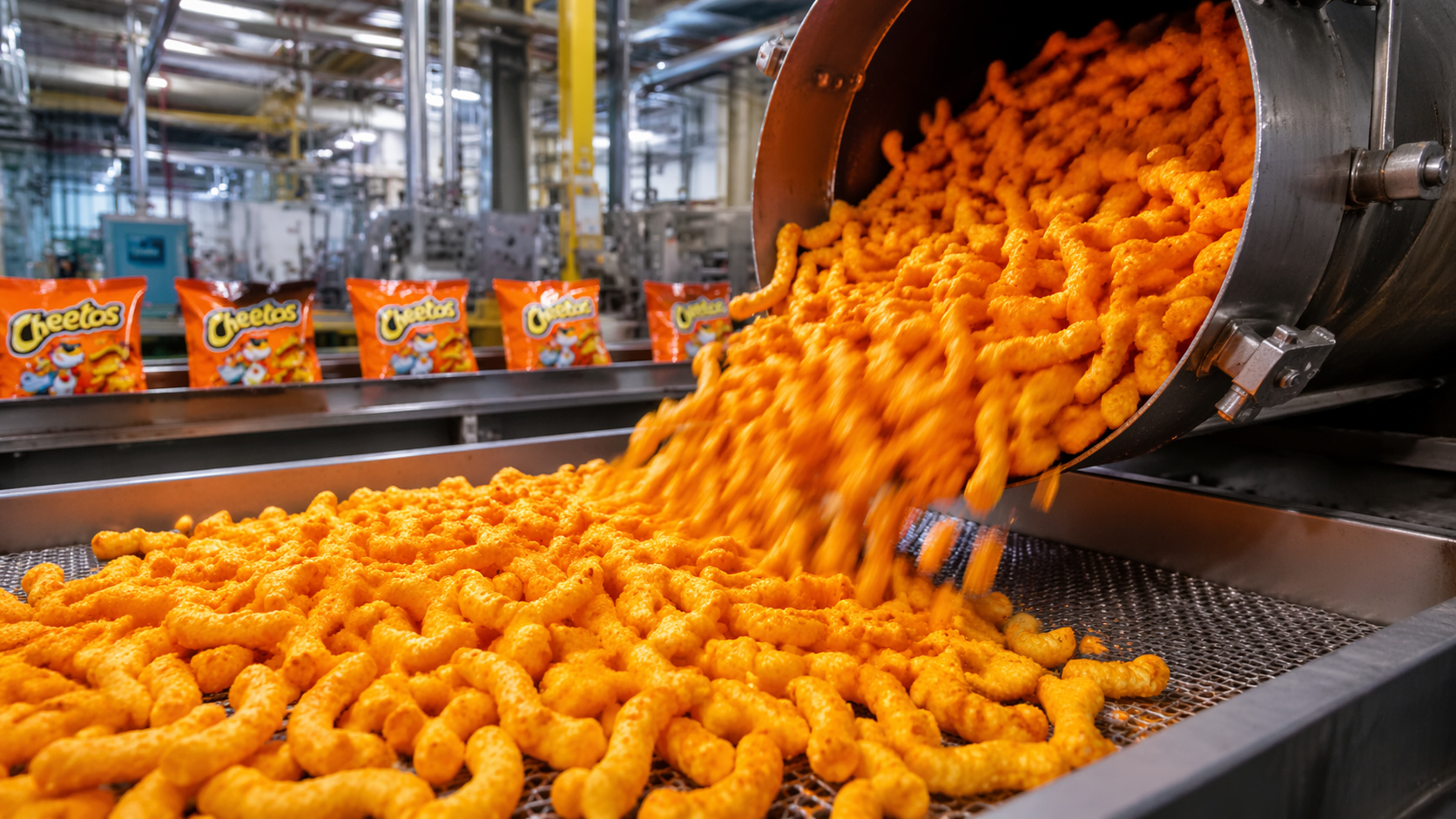
Understand how the manufacturing of Cheetos works and why the industrial process guarantees crunchiness, flavor, and large-scale production
The industrial process of Cheetos draws attention for its speed and the technology involved, capable of producing thousands of units per minute. The snack is one of the most consumed in the world and drives a gigantic production based on processed corn and modern extrusion techniques.
The manufacturing involves several stages, from corn harvesting to packaging with special gas for preservation. The result is a light, crunchy product with a distinctive flavor that reaches millions of consumers daily.
Production of Cheetos moves millions of tons and billions of packages per year
The production of Cheetos reaches impressive numbers on a global scale. Up to 6 million tons of the snack are consumed per year, showing the size of the global demand.
-
Almost no ship sails directly between South America and Australia, and the reason is a combination of the vast distance, winds that circle the planet nonstop, and the absence of ports along the way, leaving the South Pacific as a water desert.

-
More than 85 million homes in China heat water for free with vacuum glass tubes invented at a Chinese university, a cheap technology with no moving parts that faces certification rules and codes in the United States, making installation too expensive.
-
In a boat just 1.19 meters long, smaller than many kayaks, Briton Andrew Bedwell wants to cross nearly 3,000 kilometers of the North Atlantic alone and spend more than two months without being able to lie down or stand up, all to break a record and honor cancer victims.
-
While most dealerships in Brazil take days to deliver cars, in Germany two 48-meter glass towers hold 800 vehicles and release each model via automatic elevators in a few seconds.





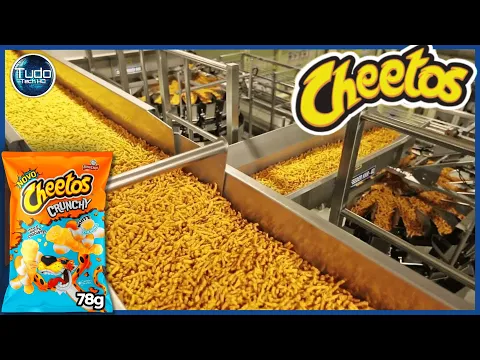

The daily manufacturing reaches about 4 million packages, with a production of approximately 18 tons per hour. This represents almost 1.5 billion packages per year, a volume that requires continuous operation of the factories.
The information was released by Tudotec HD, a technology and industry channel on YouTube, which detailed the functioning of the production lines and the numbers involved.
Corn is the base of the snack and goes through rigorous selection
Everything starts in the field with the harvesting of corn, which needs to have specific characteristics. The ideal grain has high starch content and low moisture, usually below 15 percent.
After harvesting, the grains go through cleaning and separation processes. They are then transformed into two types of raw materials: fine cornmeal and coarser grits, which ensure the correct texture.
This stage is fundamental, as the quality of the flour directly influences the expansion of the dough and the final result of the product.
Extrusion transforms the dough into a light and crunchy snack
The mixture of corn flour, water, and other ingredients goes to the extruder, one of the most important machines in the process. In this equipment, the dough is subjected to high pressure and temperature.
When the dough exits through the molds, a rapid expansion occurs. This phenomenon creates the aerated structure responsible for the lightness and crunchiness of Cheetos.

A rotating blade cuts the pieces to the right size, ensuring a standardized shape. Then, the still moist snacks go to the oven.
Industrial oven and cooling ensure ideal texture
The baking process is quick and efficient. The snacks pass through a high-temperature oven for about 5 seconds, enough time to eliminate internal moisture.
This stage intensifies the crunchiness and gives the product its characteristic texture. Soon after, the Cheetos go through cooling conveyors that gradually reduce the temperature.
This control prevents the product from breaking and prepares the snacks for the next phase, which is the application of flavor.
Cheese seasoning and oil create the distinctive flavor
The classic flavor comes from a powder composed of dehydrated cheddar cheese, whey, salt, and flavorings. This seasoning is applied in a rotating drum.
Before that, a thin layer of vegetable oil is added to help with adhesion. The movement of the drum ensures that the seasoning spreads evenly.
Tudotec HD, a technology and industry channel on YouTube, showed that this process is also responsible for the effect known as orange fingers, a common characteristic when consuming the product.
Packaging with nitrogen increases the product shelf life
After they are ready, the snacks go to automated packaging. The system weighs each portion accurately and forms the packages.
Before sealing, a small amount of nitrogen is inserted inside the packaging. This gas reduces contact with oxygen, preventing the oxidation of the oil.
Additionally, nitrogen helps protect the snacks from breaking during transport, maintaining quality until they reach the consumer.

Quality control ensures safety and standardization
Throughout the production, there are constant inspections to maintain the product standard. Sensors check the weight and sealing of the packages.
X-ray equipment and metal detectors identify possible impurities, ensuring food safety. This control occurs from the arrival of the corn to the final product.
The combination of technology and monitoring ensures that Cheetos always maintains the same flavor and texture.
The industrial process of Cheetos shows how technology allows for large-scale food production without losing quality. From the corn to the packaging, each stage is planned to ensure crunchiness and flavor.
The continuous and automated production meets a huge global demand, keeping the product present in supermarkets in various countries.
Did you enjoy understanding how Cheetos are made? Leave your comment and share this content with others who are also curious about the behind-the-scenes of the food industry.









Be the first to react!