






 Portuguese
  Spanish


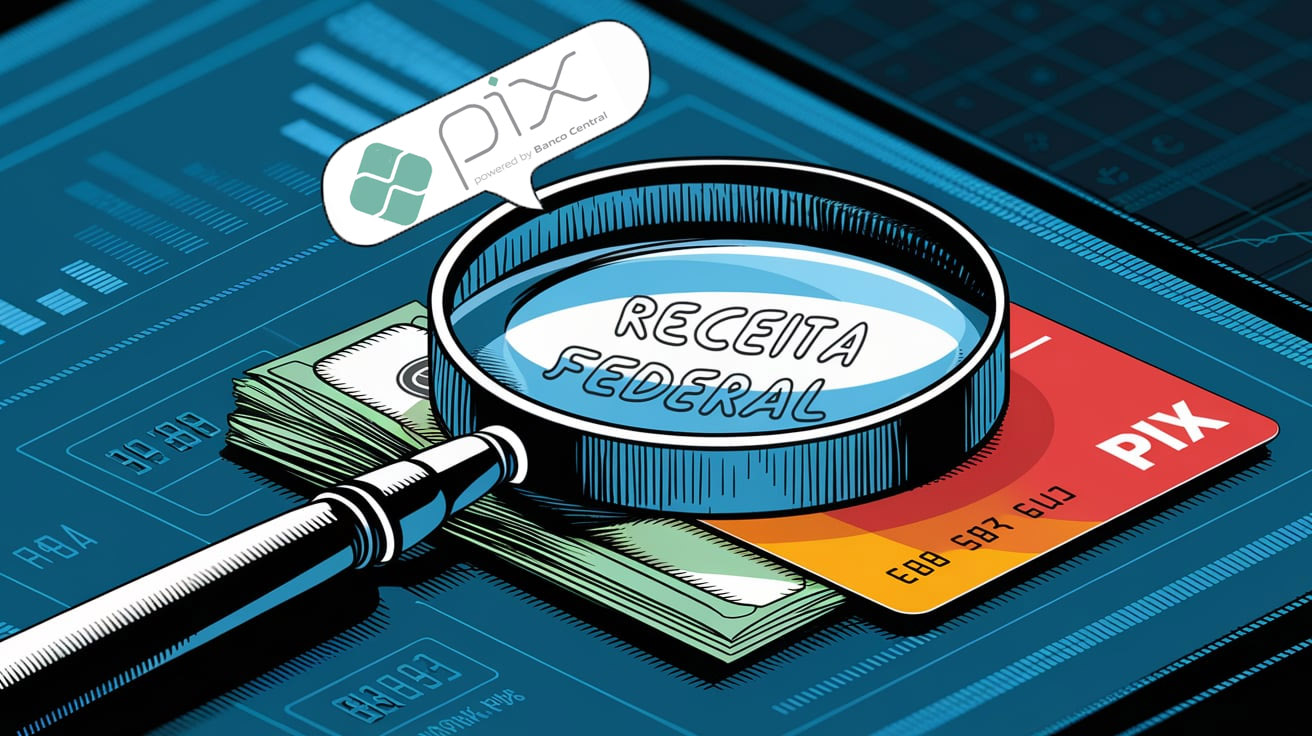
The Federal Revenue Goes Beyond The Expected! Financial Transactions Via PIX And Credit Card Are In The Sights Of The Tax Authority. With New Rules In Effect, Financial Data Will Be Monitored To Combat Fraud. Find Out What This Means For Your Finances And How To Prepare For The New Scenario.
Did you know that even your transactions on PIX and credit card can be closely monitored?
The Federal Revenue, known for its strictness in combating tax evasion, has taken a step forward and implemented a new rule that promises to revolutionize the way we monitor our finances.
The big change could directly impact the daily lives of millions of Brazilians. But what exactly is at stake? Keep reading to understand how this news can affect your relationship with money.
-
Chinese Farmer Builds 5-Ton Homemade Submarine Over a Decade, Capable of Diving 8 Meters with Two Passengers

-
Brazilian Woman Transforms Ambulance into Solar-Powered Mobile Home for Remote Work and Travel Adventures

-
Belo Horizonte Becomes First Brazilian City to Fund Housing, Utilities for 100 Homeless Families with $900,000 Initiative

-
Oil Company Robots Discover 3,300-Year-Old Canaanite Shipwreck in the Mediterranean, Proving Ancient Mariners Navigated Open Seas by Stars Long Before Historians Thought





What Changes With The New Rule Of The Federal Revenue?
The new guideline, valid since January 1, 2024, was established by the Normative Instruction 2.219/2024 from the Federal Revenue.
With it, the government expands financial monitoring through the electronic system e-Financeira, part of the Public Digital Bookkeeping System (Sped).
Previously, banks and credit cooperatives were already required to send detailed information about financial operations.
Now, this requirement extends to new institutions, including credit card operators and electronic payment institutions.
The main objective, according to the Federal Revenue, is to collect more data and have greater control over financial movements to combat fraud in income tax declarations.
What Data Will Be Monitored?
Among the main types of information collected are:
- Balances in checking accounts;
- Financial transactions, such as withdrawals and investments;
- Income from savings and financial investments;
- Payments made via PIX and credit cards.
Additionally, data must be sent semi-annually by financial institutions, credit card operators, and electronic payment companies authorized by the Central Bank.
Among these companies are digital banks, payment apps, and even large retailers that offer financial services.
Who Will Be Impacted?
For individuals, monitoring applies to those who move more than R$ 5,000 per month. In the case of legal entities, the limit is R$ 15,000 per month.
This information will be sent to the Federal Revenue system on the following dates:
- August: information regarding the first half of the year;
- February: information from the second half of the previous year.
This means that, for example, data from transactions via PIX or credit cards made in 2024 will only reach the Federal Revenue in August 2025.
This periodicity ensures that all relevant transactions are properly recorded and analyzed.
Is The PIX Really Being Monitored?
The PIX, popular for its speed and absence of fees for transfers between individuals, is one of the main targets of this monitoring. According to experts, the tool has been widely used by both citizens and companies, making it essential in the monitoring process.
For the Federal Revenue, the use of PIX goes beyond simple bank transfers. It is a powerful source of data that can help identify discrepancies in tax declarations and tax fraud.
What Do Experts Say?
According to experts in tax law and financial technology, the new rule raises concerns about privacy, but it is also seen as a necessary measure to combat tax fraud.
“The stricter control of financial transactions is a global trend. Brazil is following a path that has already been adopted by several countries, such as the United States, where the tax authority has detailed access to banking data”, explains economist Rodrigo Mendes.
However, critics warn of the risk of excesses and the need to protect personal information.
“It is crucial that this data is used exclusively for tax purposes, without infringing on citizens’ rights to privacy”, says lawyer Ana Paula Castro.
What Does This Mean For You?
If you are moving significant amounts per month, whether as an individual or a legal entity, it is important to double-check your care when declaring your income.
The use of PIX or credit card for operations that exceed the limits set by the Federal Revenue may attract the attention of the tax authority, especially if there are discrepancies between what you declare and what you are moving.
Stay alert to your transactions and keep your records organized. If in doubt, seek an accountant or financial specialist to ensure that your declaration complies with the law.







-

2 people reacted to this.