Portuguese
  Spanish


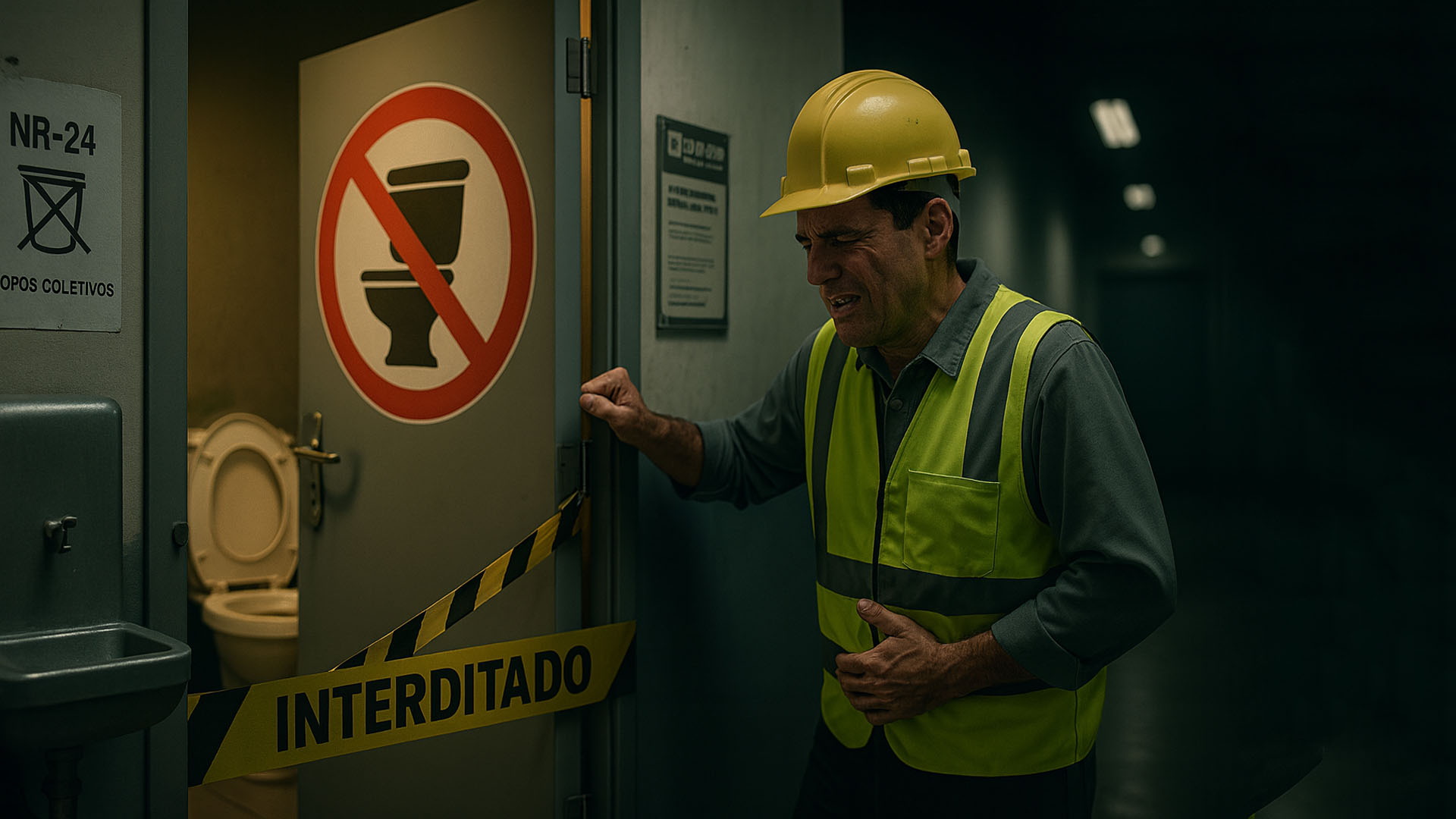


Brazilian Law Requires Sanitary Installations and Drinking Water at Work. Prohibiting or Limiting Bathroom Breaks Can Result in Compensation.
Working without a restroom is not allowed. Labor legislation establishes minimum sanitary conditions for any workplace and provides specific solutions for construction sites and service fronts on public roads. The goal is to safeguard the health, hygiene, and dignity of the worker.
The Regulatory Norms NR-24 and NR-18 detail the quantity, distance, and characteristics of the installations, as well as the provision of drinking water. In practice, this means having a restroom close to the work station, a clean structure, and the ability to take breaks at any time for physiological needs.
When the company limits restroom use or does not provide facilities, this conduct can qualify as illicit behaviour and cause moral damage. Labor Courts have recognized this protection, with nuances depending on the specific case.
-
Are Companies Required to Release Employees During Brazil’s World Cup Matches? Understanding Workers’ Rights

-
Brazilian Family’s Homeschooling Success Sparks International Debate: Daughters Read 30 Books Annually and Speak Multiple Languages

-
Piauí Governor Enacts Law Requiring State Contractors to Reserve Jobs for Former Inmates with Minimum Wage and Verification Before Payment
-
Providing Your Tax ID at Supermarkets: A Routine Step That Can Unlock Discounts and Rewards but Also Reveals Your Shopping Habits




Next, what the law states, how it works in construction and outdoor services, when employer control violates rights, and what reporting channels are available at MTE and MPT.
What NR-24 Requires About Restrooms at Work


The NR-24 mandates that every establishment must have sanitary installations with a toilet and washbasin. The general rule is 1 set for every 20 workers, separated by gender. There must be urinals in the male facilities according to the stipulated ratio, washable floors and walls, ventilation, running water, and adequate sewage. Drinking water is mandatory, with a drinking fountain or equivalent solution and no communal cups. It is a right to interrupt work to use the restroom.
The annex of NR-24 for outdoor work specifies one restroom for every 20 workers, allows for chemical toilets with flushing or waste isolation, ventilation, and daily sanitation, as well as fresh drinking water in insulated containers and a protected location for meals. The use must be free for the worker.
Additionally, NR-17 (Ergonomics) is explicit: it must be ensured that workers can exit their post for physiological needs, regardless of regular breaks; and in telemarketing, the operator may leave at any time without penalty to evaluation or pay. Restricting this violates the regulation.
Construction Sites and Service Fronts: What NR-18 Requires
NR-18 (Construction) requires living areas with sanitary installations, changing rooms, and meal areas. On construction sites, the ratio is 1 sanitary set for every 20 workers and 1 shower for every 10, with a maximum distance of 150 m to the restroom. It is mandatory to provide filtered and fresh drinking water, with a drinking fountain for every 25 workers and a maximum distance of 100 m from the station; if not possible, provide hermetically sealed containers.
At work fronts, chemical toilets that meet ventilation requirements, flushing mechanisms or waste isolation, washing supplies, and banning communal towels, along with daily sanitation of the modules can be used. The regulation also allows for partnerships with nearby establishments, provided they guarantee transportation and hygiene conditions.
For machines and equipment with fixed operators, NR-18 mandates restrooms to be within 50 m of the operator’s post. The message is clear: construction without regular restrooms does not comply with the regulation.
Can They Prohibit Me From Using the Restroom? What Do the Courts Say
The rule is clear: no. The TST has already recognized moral damage when the company timed restroom use or required prior authorization, understanding that this practice undermines dignity and personal rights. There have been decisions with penalties, such as call center cases, for restricting time and access.
There are, however, nuances: the 4th Panel of the TST decided on 03/14/2025 that rotating restroom use in a production line, with substitution of the post, does not generate moral damage by itself. This understanding does not legitimize prohibition but allows for organization to ensure the post does not remain empty, as long as it is without humiliation or punishment. The TST has also planned for 2025 an incident to standardize the thesis on bathroom break controls.
In regional courts, there are common penalties for limiting trips, imposing maximum time (e.g., 5 minutes) or associating restroom use with deductions and goals. The line separating production management and abuse lies in dignity and the purpose of the control.
No Restroom or Drinking Water? How to Report and Seek Your Rights
The first step is to document evidence: photos of the location, times of restroom or water shortages, internal communications, and witness names. Contact your union and if no solution is found, file a complaint.
You can report to the Ministry of Labor and Employment through the official Labor Complaint channel (Fala.BR), or through the Alô Trabalho 158 Central. The MTE provides assistance from Monday to Saturday, from 7 AM to 10 PM (Brasilia time). The online complaint preserves confidentiality of data.
You can also report to the Public Ministry of Labor through the “Report” service, choosing your state’s unit. Cases of restroom restrictions and inadequate sanitary conditions are analyzed as risks to health and can result in inspections and adjustment terms.
Have you ever worked in a place without a restroom or with time control for using the restroom? Do you think rotation in a production line is a legitimate organization or violates dignity? Share your story in the comments and let us know what your company does to comply with the NRs.