






 Portuguese
  Spanish
  3 min of reading
  0 comments


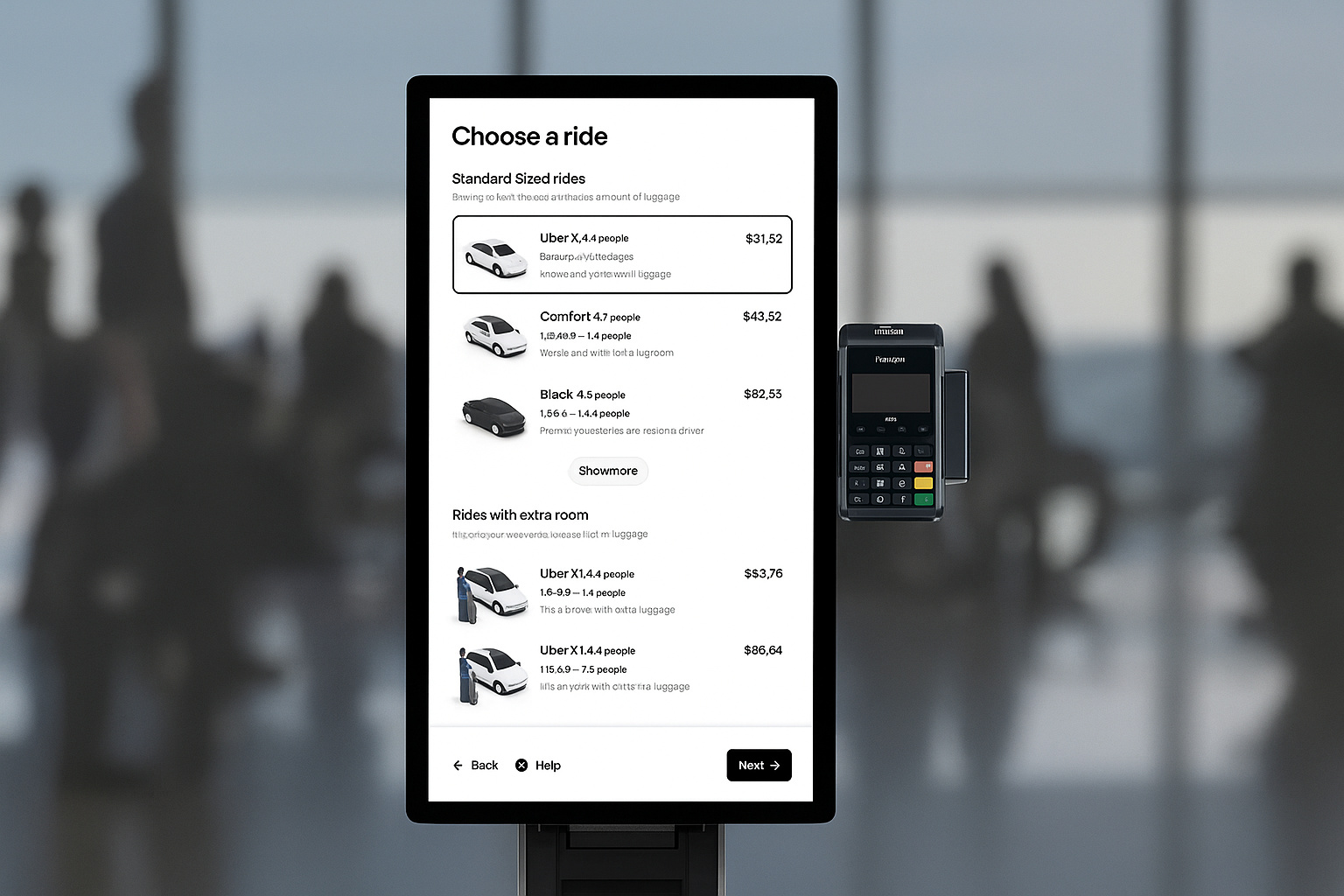
New Solution From Uber Allows In-Person Ride Requests With On-Site Payment and Integrates the Company’s Strategy to Facilitate Travel in Tourist Settings
A practical tech initiative was announced by Uber, drawing attention from the urban mobility sector.
The company confirmed that it will start providing physical kiosks to request rides without using the app, which changes the way to access the service at strategic locations.
The proposal aims to serve users without internet, without a local SIM card, or without an active account, a common situation among international tourists.
With this, Uber seeks to remove digital barriers and expand the platform’s reach at high-traffic points.
According to the company, the process is straightforward.
The passenger enters the destination, chooses the ride category, and makes the payment on the kiosk’s own device, without relying on the app.
-
Why can the crane operator only obey the correct signalman on the construction site: among dozens of workers, a hand raised by the wrong person can confuse the maneuver and turn a load of tons into an immediate risk.

-
What changes with the new public transportation rules that can reduce pressure on fares and pave the way for zero fare in Brazil?
-
Argentina confirms Belgian giant to lead strategic Paraná River waterway and promises to reduce logistical costs on one of South America’s most important routes
-
MBRF surprises the logistics sector by demonstrating how Artificial Intelligence can directly influence deliveries throughout Brazil by reorganizing distribution routes in seconds, optimizing fleet usage, reducing logistics costs, and speeding up product arrivals even in the face of unforeseen road incidents.


Kiosks Begin to Operate in Strategic Airports and Hotels
The installation of Uber kiosks will initially occur at international airports, hotels, and ports.
However, the company has not yet released the complete list of locations included in this first phase.
As a starting point, Uber confirmed that the first unit will be installed in terminal C of LaGuardia Airport in New York, still in 2025.
Additionally, the company stated that new units will be implemented in the following months, according to tourist demand.
This move strengthens Uber’s presence in environments where immediate access to transportation is essential.
Thus, the company prioritizes locations with high traffic of foreign visitors.
Ride Experience Occurs Without App
During the request, the kiosk prints a receipt with all the details of the ride.
In this way, the passenger keeps a physical record of the requested ride.
Furthermore, ride updates are sent via SMS to the number provided at the time of the request.
This way, even without the app installed, the user receives basic information about the trip.
It is also possible to track the ride via the cellphone’s browser, as explained by Uber.
Still, this option depends on some level of internet connection.
Focus on Tourists and Large International Events
In an interview with Bloomberg, a spokesperson for Uber stated that the project represents a great opportunity in the United States.
This is because the country will host major international events, such as the World Cup, in the coming years.
On the official Uber blog, the company explained that the kiosks were designed for “international visitors arriving without a local SIM card”.
Additionally, the service caters to individuals who prefer an in-person experience.
Operational Model Can Still Evolve
At this initial moment, Uber will be responsible for the ownership and maintenance of the kiosks.
However, the company already admits that the operational model may change.
According to the company, hotels, airports, or ports may charge fees or rent for the installation of the equipment.
Thus, the commercial format remains under evaluation.
Strategy to Expand User Base Occurs in Parallel to Price Criticism
Uber has been adapting its services to cover more usage profiles.
In this context, the company launched a simplified interface for seniors, fixed-price packages, and integrated ride requests into the iFood app.
Meanwhile, current customers are expressing dissatisfaction with prices from both Uber and its competitor 99.
According to reports, ride prices are above normal during the year-end.
In light of this scenario, the introduction of physical kiosks serves as another step for Uber to facilitate access to urban transportation, especially in tourist areas, but will this strategy be sufficient to win back users sensitive to prices?








-

1 person reacted to this.