Portuguese
  Spanish


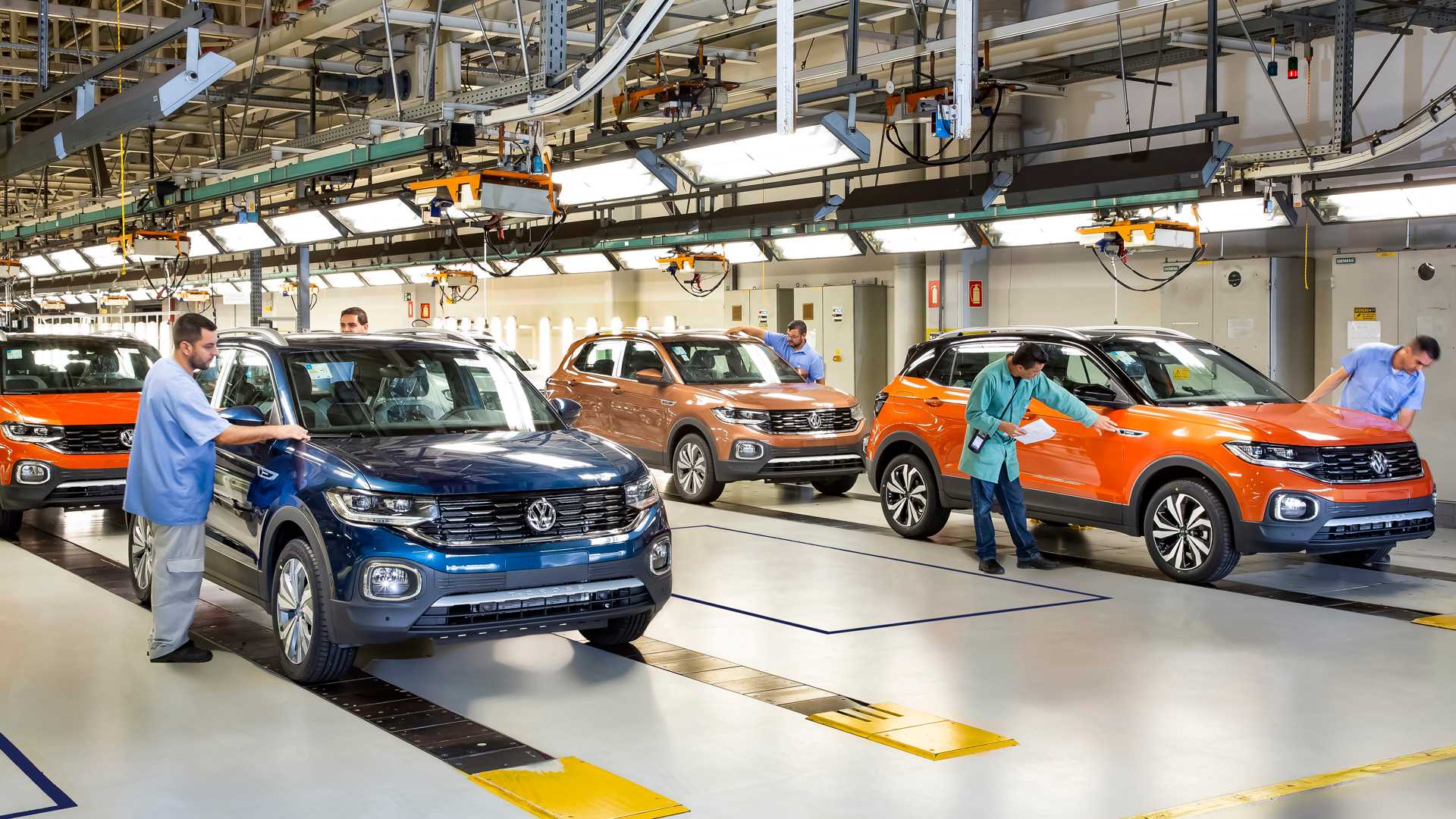

This Is The Sixth Time That The Volkswagen Plant In Taubaté, In The State Of São Paulo, That Produces The Gol And Voyage Models, Announces Paralysis This Year
Today, Monday (09/27), Volkswagen started a new period of collective vacation for 800 employees of the Taubaté plant in the interior of São Paulo. According to the Metalworkers’ Union, the stoppage is due to a lack of parts and will last for 10 days. This is the sixth time that the plant that produces the Gol and Voyage models announces stoppages this year. Read This News Too: New Collective Vacations Announced By Renault At Its Plant In São José Dos Pinhais, In The State Of Paraná
- World Leader In Aluminum Cans For Beverages Invests US$ 65.8 Million In Plant And Will Generate Many Job Openings In Pará
- Eletrobras Signs Contract With BNDES And Will Invest R$ 3 Billion For Energy Generation Through Renewable Projects In The Amazon
- Global Leader In Digital Transformation And Recognized As One Of The Best Companies To Work For, Opens 270 Home Office And Hybrid Job Positions Throughout Brazil
- Johnson & Johnson Is Hiring Candidates Without Experience For Its Internship And Trainee Program
- Mining Company Atlantic Nickel, Owner Of One Of The Largest Open-Pit Sulfide Nickel Mines In The World, Could Be Sold For US$ 1 Billion
The Lack Of Semiconductors Continues To Affect The Volkswagen Plant
The reason given by the company is the lack of parts, mainly semiconductors, which have been in short supply since the beginning of the pandemic, disrupting vehicle production. The union reported that the measure will apply to a group of 800 employees, equivalent to one production shift. The expected date for employees to return to the Taubaté plant in the interior of São Paulo is October 7.
Currently, the Taubaté plant produces the Gol and Voyage cars but is in the process of installing an MQB platform, which will allow the plant to produce other vehicle models. According to the union, this is the sixth time this year that Volkswagen has put employees on collective vacation. The most recent period was between August and September, when 800 workers were affected by the measure, also due to a lack of parts.
-
81-Meter Bridge Made from Over 7 Tons of Recycled Plastic Connects Isolated Communities in Panama Canal Basin, Allowing Safe Passage for Over 300 Residents

-
Australia’s First Two-Story 3D-Printed House Built in 18 Hours, 22% Cheaper Than Traditional Methods, Uses Concrete That Hardens in 3 Minutes
-
Architect Converts 1955 Grain Silo into 31m² Home with Full Amenities, Including Kitchen, Bathroom, Curved Living Room, and Loft Bedroom

-
Egypt Partners with China to Build 2 GW Wind Turbine Factory and 2,000 MW Wind Farm in Gulf of Suez, Aiming to Export Across Africa



Volkswagen Seeks To Mitigate The Effects
Volkswagen informed G1 that the lack of semiconductors has impacted the industry, and the automaker is seeking to minimize the effects on its production. See the note below:
“The shortage of semiconductor capacity has led to several supply bottlenecks in many industries globally. This has also created problems in supplying the automotive industry around the world during the year 2021. The result is adaptations across the industry in vehicle production, which also affects the brands of the Volkswagen Group. In recent months, the Volkswagen America Latina team has been working intensively in partnership with the headquarters and suppliers to minimize the effects of the semiconductor shortage on production in its factories in the region. However, the current scenario does not show progress towards a definitive solution aimed at normalizing chip supply.”
Check This News Too: GM Will Resume Second Shift At Factory In São Paulo And Rio Grande Do Sul For Production Of Tracker And Onix
General Motors will resume normal vehicle production at its plant in São Caetano do Sul, São Paulo, on Monday, September 27, and in Gravataí, Rio Grande do Sul, on October 4, with the return of the second work shift at both units. With this, the company hopes to recover at least part of the approximately 200,000 vehicles it stopped producing during the period when the units were closed due to a lack of semiconductors.
In March of this year, GM had halted its production in factories in Brazil due to the semiconductor crisis, as the Onix models have more than double these components compared to competitors in the same category.
Santiago Chamorro, president of GM South America, says this is a very important moment for employees, unions, suppliers, dealers, and consumers. The company has high expectations that with the resumption of production at its factories in Brazil after the semiconductor crisis, the automaker will return to the positive pace it had at the beginning of the year.