Portuguese
  Spanish


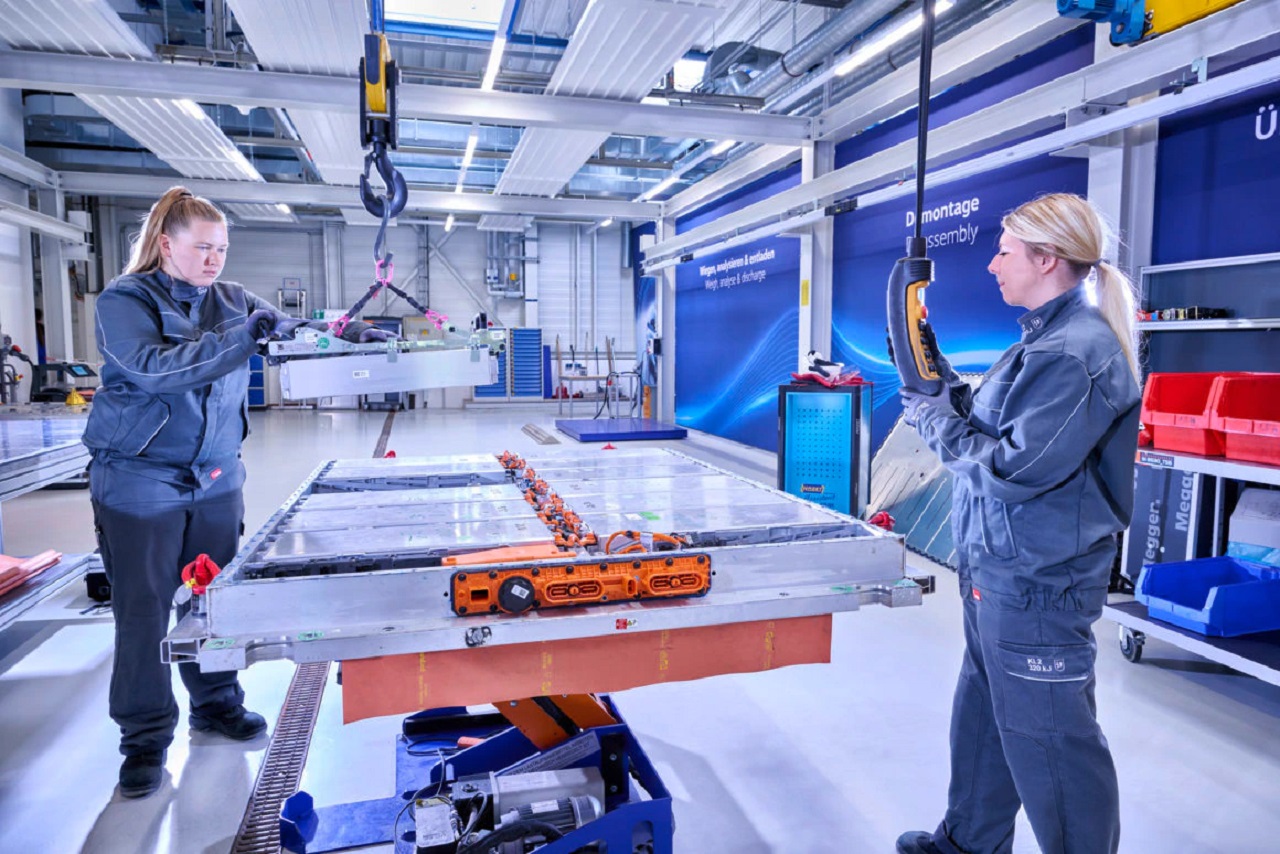

Volkswagen Is Starting The Construction Of Its First Giga Factory. The Facility Will Be Located In Germany And Will Develop Batteries For Electric Cars, Creating Over 20,000 Jobs.
The Volkswagen is already building its first giga factory for electric car batteries, located in Salzgitter, Germany. The facility will feature massive investments of over 20 billion euros by the early next decade and promises to create around 20,000 jobs in Europe. Like Tesla and other automakers, including General Motors, Volkswagen refers to its new venture as a Gigafactory, due to its size equivalent to 30 football fields.
VW Giga Factory Aims To Start Battery Production In 2025
Managed by PowerCo, the facility will have a capacity of 40 GWh per year and aims to supply batteries for about 500,000 electric cars. Thus, the new company will be responsible for managing international operations and will also focus on developing cell technology.
It is important to highlight that production is scheduled to start in mid-2025, and moreover, PowerCo will also be in charge of the entire battery value chain for electric cars and the supply of equipment for Volkswagen’s factories. Therefore, the objective is that, in the future, systems for energy grid storage, for example, will be developed at the giga factory.
-
Kia K4 Launches in Portugal with 7-Year Warranty, Targets Volkswagen Golf with 1.0 Turbo Engine, Unavailable in Brazil

-
Uber Women Expands Across Brazil: Female Riders Can Now Choose Women Drivers, Schedule Rides, and Set Automatic Preferences

-
Brazil Plans to Launch Ethanol-Fueled Hybrid Cars in 2026 as an Alternative to Fully Electric Vehicles

-
Hyundai HB20S 2026 Surpasses Onix with Turbo Engine, Fuel Efficiency of 15.2 km/l, and Over 750 km Range, Leading Compact Sedan Sales in Brazil with 5,205 Units Sold.


According to reports, projects for three more factories have already been developed, with the next one being in Valencia, Spain. However, in addition to Europe, the brand is also studying the establishment of other facilities in North America.
VW’s Electric Car Battery Giga Factory Could Produce Up To 240 GWh
As a significant step in Volkswagen’s mobility strategy, the group has shown that it plans to work with unified prismatic battery cells, which, according to VW, are products that feature a new chemistry, flexible and compatible with about 80% of the models. Thus, it will allow for a 50% reduction in total costs.
Based on this, the multinational’s plan is to operate six electric car battery cell factories by the start of the next decade, in addition to increasing the total volume of the giga factory from 40 GWh to 240 GWh. According to Volkswagen itself, some prototypes are already undergoing testing. So far, these models have shown high performance regarding range, safety, and charging time compared to other more conventional batteries.
Volkswagen Sets New Standards in Sustainability and Innovation
According to Volkswagen AG’s CEO, Herbert Diess, the battery cell business is one of the pillars of the company’s strategy called New Auto, which will make Volkswagen a leading supplier of sustainable and software-driven mobility.
Establishing its own giga factory for electric car battery cells is a megaproject in technical and economic terms. Although it is a long-term project, the German company claims it will set new standards for innovation and sustainability. This initiative will be an important step in competing with other battery manufacturers like BYD, which has surpassed Tesla.
This is because the German brand, in addition to having a strengthened portfolio in the market, generates increasing autonomy and extra systems for its models, not to mention the investments in the development of supplies and batteries.
To continue its growth, Volkswagen has already stated that there will be standardization not only in equipment and structures but also in products, services, and processes.