Portuguese
  Spanish


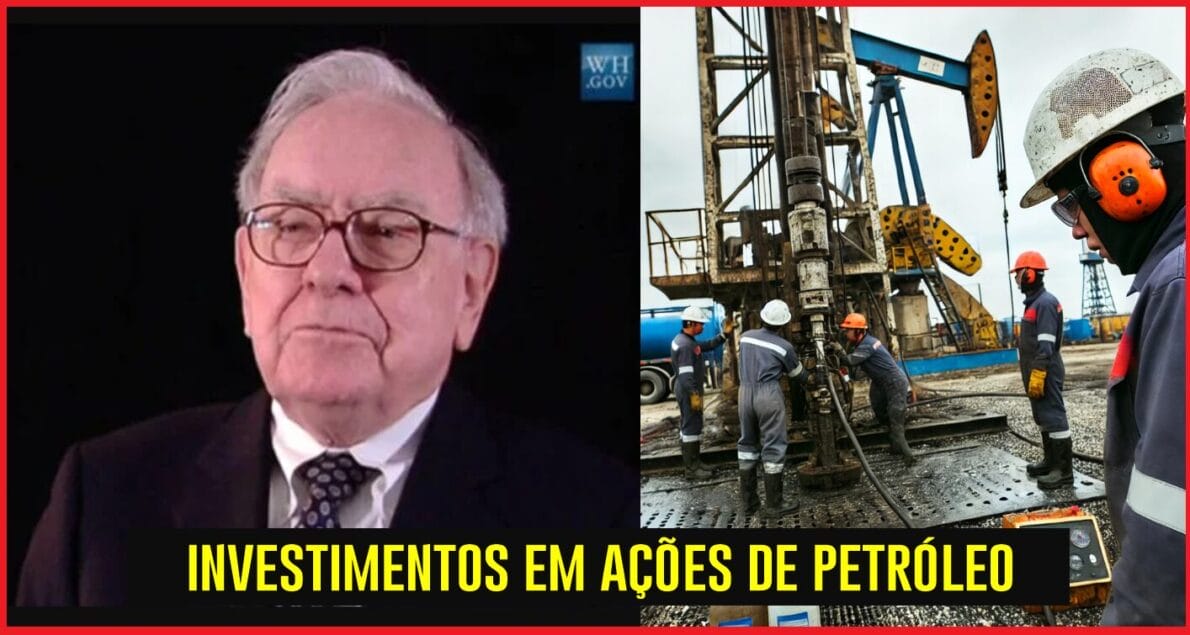

Warren Buffett Sells Part of His Apple Shares and Is Buying Oil Shares He Considers Valuable. Discover the Magnificent Choices of the Billionaire and What This Change May Mean for the Market!
According to Yahoo Finance, Warren Buffett, one of the most renowned investors in history, has finally decided to surprise everyone. After years reaping the rewards of his massive investment in Apple shares, Warren Buffett has decided to significantly reduce his stake in the company through his holding company Berkshire Hathaway.
According to records submitted to the U.S. Securities and Exchange Commission (SEC), he sold approximately half of his Apple shares, generating around US$ 80 billion in cash.
The tech giant was one of the biggest winners in Berkshire’s portfolio, but why did Buffett decide to sell now? The answer lies in his next big bet: oil stocks, specifically Occidental Petroleum (OXY).
-
Brazilian Steel Giant Partners with USP to Develop 40% Stronger Rebar for World’s Tallest Residential Building in Brazil’s Senna Tower

-
Oil Prices Drop to $72 as 20 Million Barrels Pass Through Strait of Hormuz in 24 Hours, Easing Supply Fears but Regional Tensions Keep Market on Edge

-
Brazil’s Ministry of Justice Investigates CazéTV for Betting Ads During World Cup Broadcasts

-
Brazilian Retail Giant Americanas Faces $10 Billion Asset Freeze Amid Investigation into Hidden Debts


The Staggering Appreciation of Apple
Apple has undoubtedly been a tremendous asset for Buffett and his investors. With the launch of the iPhone, which revolutionized mobile technology, the company’s shares have provided spectacular returns over the last few decades.
In the last ten years, the total return of Apple shares has reached an incredible 1,000%. However, the landscape has changed recently, and Warren Buffett’s decision to sell his shares is closely tied to the company’s current valuation.
The tech giant is facing challenges in maintaining revenue growth. The smartphone market is saturated, and iPhone upgrades no longer attract as many consumers as before.
In recent years, the company’s revenue has remained virtually stable, as fewer people feel the need to frequently upgrade their devices.
Additionally, the company is experiencing an economic slowdown in China, a key market, and has encountered difficulties in innovating with new products, such as the Apple Vision Pro, which so far has not met expectations.

Another concern is the advancing competition, especially in areas like artificial intelligence, where Apple has fallen behind compared to Alphabet, the parent company of Google.
This stagnation in sales growth contrasts with the expansion of the company’s earnings multiple. Currently, Apple is trading at a price-to-earnings (P/E) ratio close to 35, which is considered quite high for a company that is not growing significantly.
Buffett, known for his rigorous approach to evaluating investments, sees this high valuation as a sign that future returns may not be so attractive, leading him to reduce his stake in the company.
The New Bet: Occidental Petroleum

In the second quarter of 2024, while selling his Apple shares, Buffett turned his attention to Occidental Petroleum, one of the largest oil producers in the United States.
Currently, Berkshire Hathaway holds an impressive 27.25% stake in Occidental, making it the company’s largest shareholder.
The main reason for this strategic shift is the attractive valuation of Occidental Petroleum. The oil and gas sector has been overlooked by many investors, who have been focused on large technology companies.
As a result, Occidental’s shares are trading at a P/E ratio of only 12.6, a third of Apple’s P/E ratio. Additionally, Occidental has the advantage of producing most of its oil within the United States, which reduces geopolitical risks associated with operations in foreign countries.
Another important point is that by investing in Occidental, Buffett is diversifying Berkshire’s portfolio and protecting the company against the volatility of oil prices.
If oil prices rise, Occidental will benefit, but other Berkshire businesses, like its railroad subsidiary, may suffer from rising fuel costs.
This strategy allows Berkshire to profit regardless of the direction of oil prices, making it a strategic and defensive position.
Furthermore, Occidental’s valuation looks even more attractive given the current price of crude oil, which is trading at US$ 68 per barrel, well below the peaks of US$ 100 or more in 2022.
If oil prices start to rise again, Occidental’s profits will increase proportionately, representing a significant appreciation opportunity.
A Lesson in Investing About the Risk-Free Rate
By selling Apple shares and buying Occidental Petroleum shares, Buffett also offers a valuable lesson about the risk-free rate and how it can influence investment decisions.
Currently, Berkshire Hathaway has about US$ 300 billion in cash, primarily invested in short-term U.S. Treasury bills that yield approximately 5% per year. These bills are considered the risk-free rate, as they offer a guaranteed return with virtually no risk.
Comparing the earnings yield of a stock with the risk-free rate is an effective way to assess its value. The earnings yield is the inverse of the P/E ratio and indicates how much return you are getting based on the company’s earnings.
In the case of Apple, with a P/E ratio of 35, the earnings yield is only 2.9%, while Treasury bills offer 5%. For Warren
Buffett, it makes more sense to hold government bonds than Apple shares under these conditions.
On the other hand, the earnings yield of Occidental Petroleum is 7.9%, much higher than Apple’s and the Treasury bills.
Although the earnings yield is not the only factor to consider, this comparison certainly influenced Warren Buffett’s decision to reallocate his capital to an oil stock that offers a combination of potential appreciation and attractive income.