Portuguese
  Spanish


During the requalification of the pedestrian streets of the Historic Triangle, teams found tram tracks from the old Light, foundations, stone ditches, and traces linked to cemeteries in the Center of SP. The work remains monitored by archaeologists, with a promise of musealization and maintenance of the official deadlines of the City Hall for the first semester.
The tram tracks found during works on the pedestrian streets in the Center of SP revealed part of a city buried under layers of concrete, landfill, and urban renovations. The discovery occurred in the requalification fronts of the Historic Triangle, where the old Light reappeared as an urban vestige, and was detailed in a report published by Diário do Comércio on February 4, 2026.
The work involves teams from the City Hall, archaeologists linked to historical heritage, and workers who have been working on the renovation since January 2023. Besides the old Light tracks from the mid-1900s, the excavations revealed preserved foundations, drainage structures, possible traces associated with old cemeteries, and sections that may be exposed to the public in the Center of SP.
Works in the Center of SP found more than old flooring
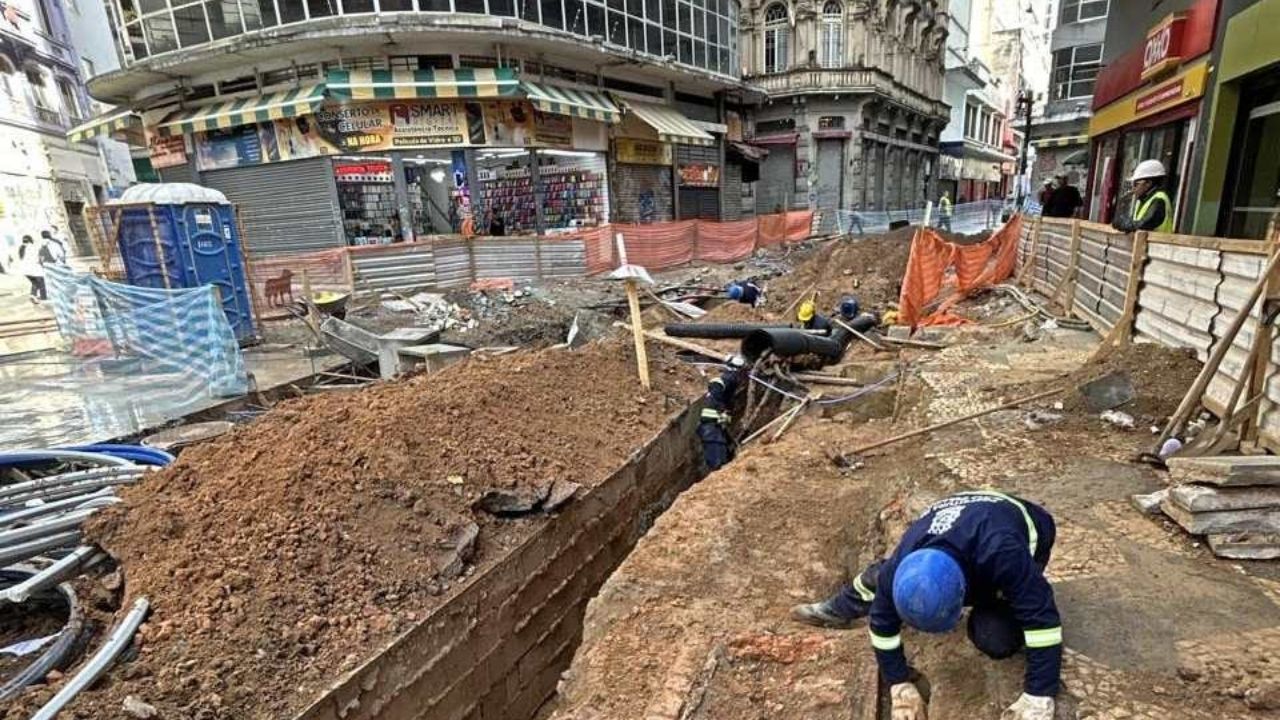
The renovation of the pedestrian streets in the Center of SP began as an urban requalification project, but ended up opening a window to the city’s past. In the so-called Historic Triangle, the removal of soil layers revealed ancient structures that were hidden beneath the daily movement of pedestrians, merchants, and historic buildings.
-
Father Lives with 3 Children on a 15-Meter Off-Grid Houseboat, Reduces Living Costs to £500 a Month, and Filters Canal Water with a £300 System He Built

-
In 1961, Hollywood held a unique audition with 152 black cats to cast the perfect feline for the horror film The Black Cat.

-
Brazilian Truck Driver in the U.S. Earns $11,200 Commission on Heavy Haul, Highlights High Income Potential and Demands of the Job

-
Teen without prom date invites pet cat to dance, goes viral with tuxedo and pink dress photoshoot



What seemed to be just a flooring project turned into an excavation closely monitored by archaeologists. In some areas, isolated objects could be collected without completely stopping the machines. In others, the findings required localized suspension for technical analysis, expansion of the excavated area, and archaeological rescue.
Light’s Tram Tracks Reappear Under the Concrete
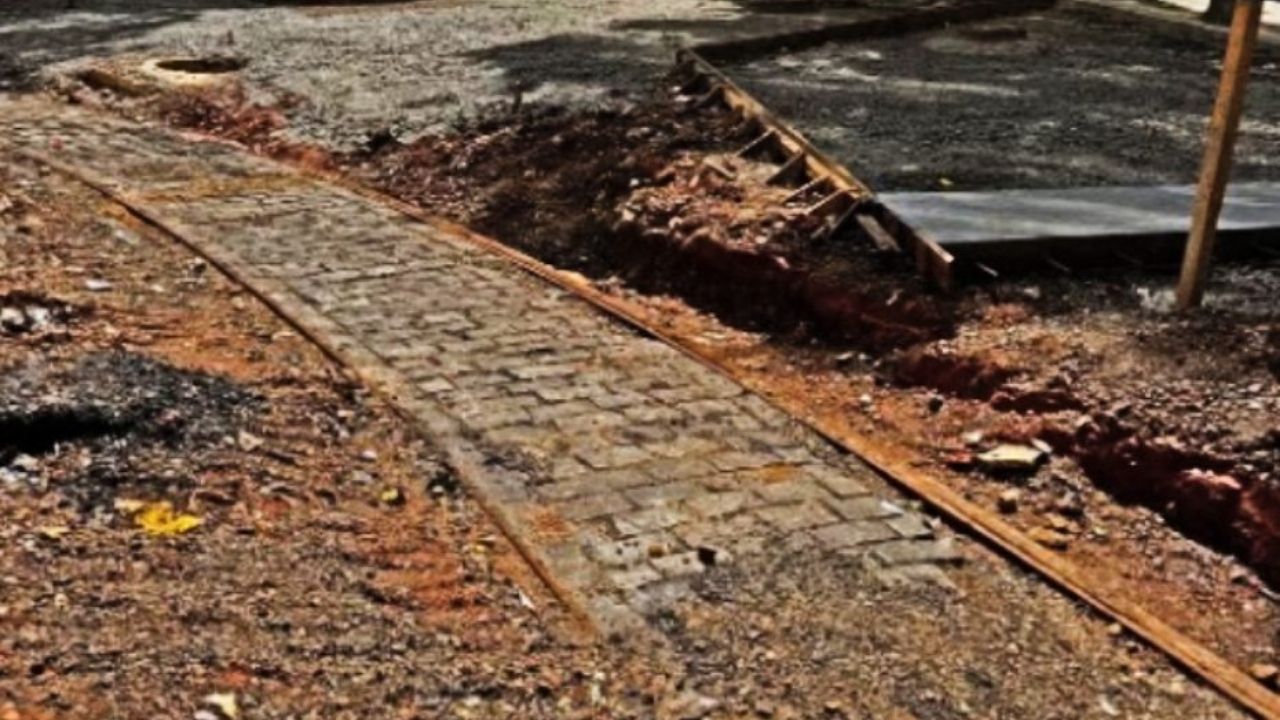
Among the most symbolic discoveries are the tram tracks of the old Light, dating back to the mid-1900s. According to the report, they were identified in the region of Praça Manoel da Nóbrega and extend through sections such as José Bonifácio Street, XV de Novembro Street, and Ladeira General Carneiro.
These tram tracks are not simply expected to be covered again. The forecast is that part of them will be musealized, meaning they will be kept visible so the public can observe the historical layout. The proposal includes signage and a landscaping project, transforming the find into a permanent element of the urban landscape.
Archaeology Changed the Routine of the Work on the Walkways
The presence of archaeologists altered the dynamics of the work fronts. According to the information released, three areas required total stoppage for archaeological rescue: the Piratininga Site, on Senador Paulo Egídio Street; the Piratininga 2 Site, on Quintino Bocaiúva Street; and the Palacete Carvalho Site, on Direita Street.
In these locations, teams found ancient foundations preserved under layers of landfill. When a find of this type appears, the work no longer follows just the pace of engineering. It is necessary to delimit the area, assess the extent of the material, and meet the requirements of heritage bodies before releasing the section.
Antônio Prado Square May Reveal New Remains
Antônio Prado Square is pointed out as one of the next areas with high archaeological potential. The location is close to the building where B3 currently operates and corresponds to a region that was once part of the old Largo do Rosário, a space linked to the Church of Our Lady of the Rosary of Black Men.
The old chapel remained in the region for about 300 years until it was demolished and moved to Largo do Paissandu during the reurbanization process at the beginning of the 20th century. Since there was also a cemetery around the church, archaeologists expect that new excavations may reveal sensitive traces of São Paulo’s history.
Schedule Remains Pressured by Commerce, Pedestrians, and Heritage
The management of the schedule has become one of the most delicate points of the work. On one side, there is the need to preserve old structures, such as the tram tracks, foundations, and stone ditches. On the other, merchants and pedestrians face blockages, interventions, and access changes in one of the busiest areas of the capital.
According to the report, the City Hall stated that the deadline for delivering the walkways remained set for the first half of 2026. The strategy mentioned was to work with smaller fronts, especially in commercial regions, to reduce impacts and release access as quickly as possible without abandoning archaeological monitoring.
Underground structures reveal another layer of the city
In addition to the tram tracks, teams also identified elements such as English windows and stone ditches. English windows were used for basement ventilation in old buildings, while the ditches show plumbing systems prior to the use of modern pipes.
These structures help reveal how São Paulo functioned before major urban transformations. Each fragment found beneath the promenade shows that the Center is not just a commercial and financial space, but also a physical archive of the city. The intention mentioned by the Department of Historical Heritage is to form a route of archaeological sites.
Tram past reappears as SP discusses new LRT
The discovery of the tram tracks occurs at a symbolic moment, as the City Hall also plans to implement a new LRT in the central region, called Bonde São Paulo. The coincidence brings together two different moments of urban mobility: the old Light system and the current attempt to resume low-emission transport in the Center.
For the experts interviewed in the report, this connection between past and future allows for reflection on how the city moves, expands, and erases part of its own memory. The old trams, now seen as heritage, once represented a relevant urban mode of transport and were less polluting compared to fossil fuel-based alternatives.
Renovation changes flooring, installs infrastructure, and alters the landscape
The requalification of the promenades is not limited to archaeological preservation. The project also includes replacing the flooring, installing technical ditches, new lighting, and urban furniture. In some sections, the traditional Portuguese mosaic has been replaced by concrete slabs in shades of gray.
According to the City Hall, the change aims to prioritize functionality and accessibility. The same standardization is expected to be extended to other areas, such as Praça da República. Even so, the presence of the tram tracks and other vestiges should prevent the intervention from being seen merely as a pavement replacement.
Now, the question is how São Paulo should deal with these discoveries: preserve more visible sections, speed up the works to reduce disruptions, or transform the Center into an open-air historical route? Do you think the findings should be exposed to the public, or is it more important to quickly complete the renovation of the sidewalks? Leave your opinion in the comments.