Portuguese
  Spanish


A USP researcher transformed the bicycle into a microstation: adapted a low-cost sensor on cyclists’ handlebars to measure the air pollution each one breathes while cycling through São Paulo. The result shows that the route and time change the dose of poison inhaled on the journey.
Those who cycle in a big city take deep breaths, and that’s not always good. With each pedal stroke near a busy avenue, the cyclist draws into their lungs an invisible mixture of gases and particles from traffic. To measure exactly how much of this enters the body, a USP researcher had a simple idea: attach a sensor to the bicycle itself.
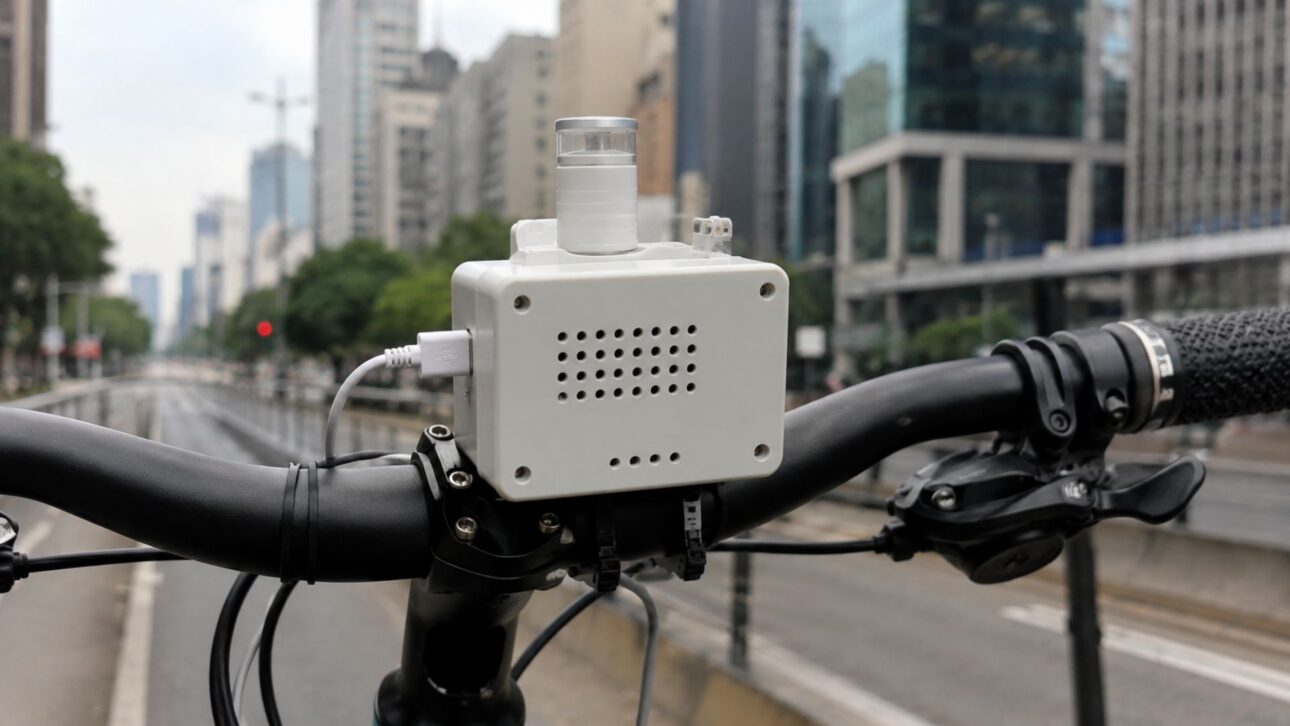
According to the Jornal da USP, doctoral student Erick Frederico Kill Aguiar, from the Faculty of Medicine, created a prototype with a low-cost sensor fixed on the handlebars. The device measures carbon monoxide and suspended particles while the cyclist rides, cross-referencing this data with each person’s breathing and heart rate. The study used a pilot group of 15 cyclists on routes in São Paulo.
How the low-cost sensor becomes a microstation on the handlebars
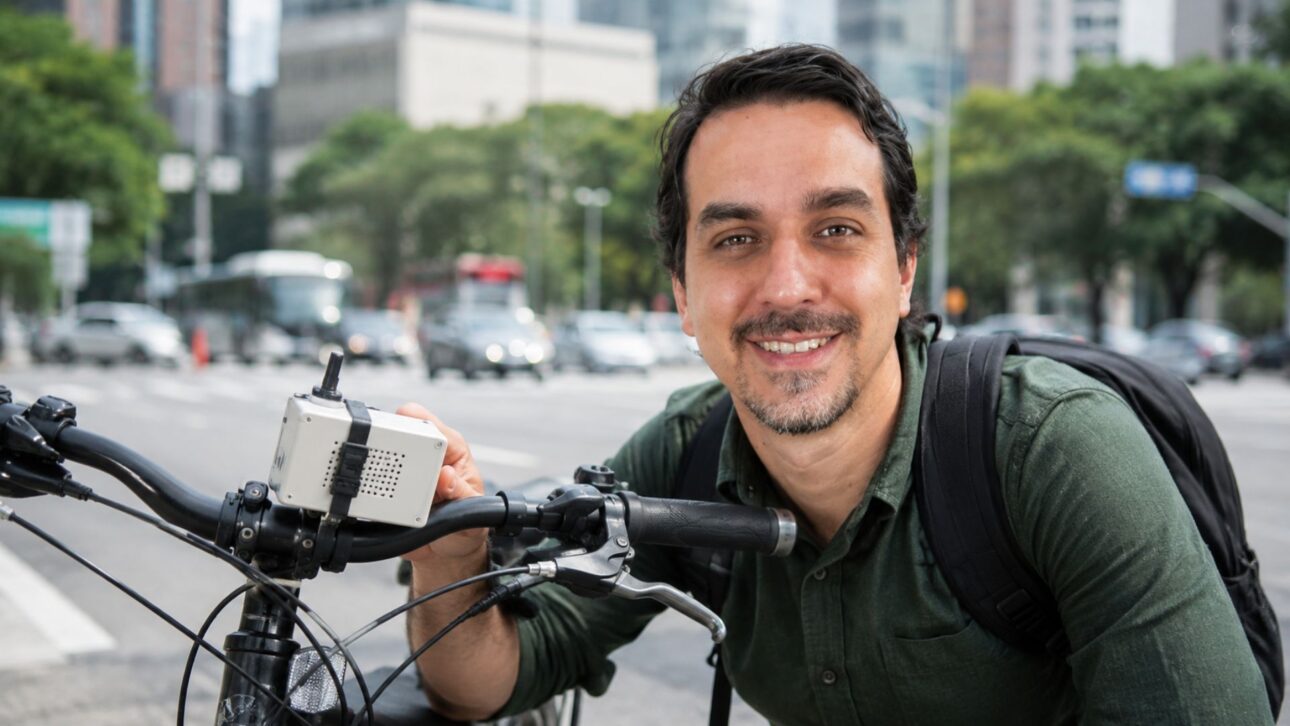
Official air quality stations are large, expensive, and remain stationary at specific points in the city.
-
18 Iron Age gold coins discovered by a teacher using a metal detector in a Suffolk field sell for £33,200 at auction, exceeding estimates.

-
Chinese Farmer with No Formal Education Builds Over 60 Homemade Robots from Scrap Metal, Each Bearing His Surname
-
Telescope Set to Discover 100,000 New Planets Arrives at Launch Site, Ushering in a New Era of Astronomy

-
Humanoid Robots Transition from Demonstrations to Real Work in Factories


The low-cost sensor from the study, on the other hand, fits on the handlebars and travels with the cyclist wherever they go.
Thus, instead of measuring the air from a fixed point, the equipment measures the air that the person actually breathes on the journey.
The set detects carbon monoxide and fine particles, two of the pollutants most linked to traffic.
It’s like turning each bicycle into a small mobile air pollution monitoring station.
The cost reduction is what makes it possible to spread the measurement to many more people.
The 15 cyclists and what the study measured
The pilot was intentionally small, to validate the method.
There were 15 cyclists equipped with the low-cost sensor during their routes through the city.
The study crossed three factors: the time of effort, air quality, and the concentration of pollutants in each cyclist’s microenvironment.
Relating a person’s breathing with what the sensor captures allows estimating the actual load of pollutants inhaled.
More than a general number, the focus is on the dose that enters the body of the person cycling.
This allows comparing what each of the cyclists inhaled on different routes and at different times.
It’s the difference between knowing the city’s pollution and knowing the pollution of your ride.
The calibration with Cetesb and the 80% accuracy
A cheap sensor is only worthwhile if it’s reliable, and this was the key step.
To validate the device, the researcher left it for 17 days next to an official Cetesb station in the South-Central region of São Paulo.
Comparing the readings, the prototype reached about 80% accuracy compared to the agency’s professional equipment.
It’s not laboratory precision, but it’s enough to indicate trends and compare routes.
Cetesb is the state agency that officially monitors the air quality in São Paulo.
Getting close to this standard with a low-cost sensor is what gives credibility to the method.
Calibration is what separates a curious gadget from a serious research tool.
Why the route changes the air pollution you breathe
The amount of air pollution that the cyclist inhales is not the same everywhere or at all times.
Routes close to major avenues and busy intersections tend to expose the cyclist to much more pollutants.
Studies on the topic in São Paulo indicate higher concentrations in the morning and near heavy traffic.
Routes through quiet streets, parks, and wooded areas usually reduce the inhaled dose.
Choosing where and when to cycle can significantly change the air pollution entering the lungs.
It’s information that cyclists have never seen in numbers, only felt in their noses.
Air pollution and the health of cyclists
The topic matters because bicycles have an embedded paradox.
Cycling is good for the heart, but the effort increases the breathing rate and, with it, the intake of polluted air.
The deeper and faster a cyclist breathes, the more carbon monoxide and fine particles can reach the lungs.
Prolonged exposure to these pollutants is linked to effects on the cardiorespiratory system.
Therefore, measuring the real dose helps understand when the benefit of exercise outweighs the risk of bad air.
The idea is not to discourage cycling, but to help cyclists expose themselves to less air pollution.
Information, in this case, is also a form of health protection.
Personal data: choosing route, time, and duration of cycling
The most interesting potential is to turn science into individual choice.
With personalized data, the system can suggest the best routes and times for each person.
The tool can also indicate a cycling time limit according to the profile and health of the cyclist.
Someone with a respiratory problem, for example, benefits from avoiding avenues during peak hours.
Those seeking intense training can choose parks and early mornings away from dense traffic.
It’s air pollution ceasing to be an abstract city data point and becoming a recommendation at the individual cyclist level.
This type of guidance is only feasible when measurement becomes cheap and portable.
What the case of USP’s low-cost sensor shows
The research is a good example of ingenuity applied to a real problem in São Paulo.
It shows that it’s possible to measure the air pollution each cyclist breathes without relying solely on large fixed stations.
But it’s worth keeping your feet on the ground.
There were only 15 cyclists in a pilot study, so the results still do not represent the entire city.
The prototype was born in a doctoral thesis and has about 80% accuracy, meaning it does not replace official equipment.
And turning the invention into a route app for the public still requires development and investment.
Even so, few cases summarize so well how a low-cost sensor can democratize air pollution measurement.
From a device on the handlebar to a possible route guide, USP showed that the air on each street has a different story.
And you, do you know which streets you travel when cycling or walking through the city breathing deeply? Comment here if you would change your route to reduce the air pollution you breathe on your bike journey.