Portuguese
  Spanish


In 2025, Ivory Coast had a record cashew harvest and leads the global ‘superfood’ market. However, according to the NGO Mighty Earth, monoculture already occupies 1.6 million hectares, surrounds Comoé National Park, and encroaches on the forest, causing deforestation and families to trade food for nuts.
Cashew has never been worth so much. In 2025, Ivory Coast, the world’s largest producer of cashew nuts, harvested a record crop estimated at about 1.5 million tons, an increase of almost 60% over the previous year, consolidating the country as the leader in a billion-dollar market. But this ‘superfood’ boom has a hidden side, pointed out by a report from the environmental NGO Mighty Earth.
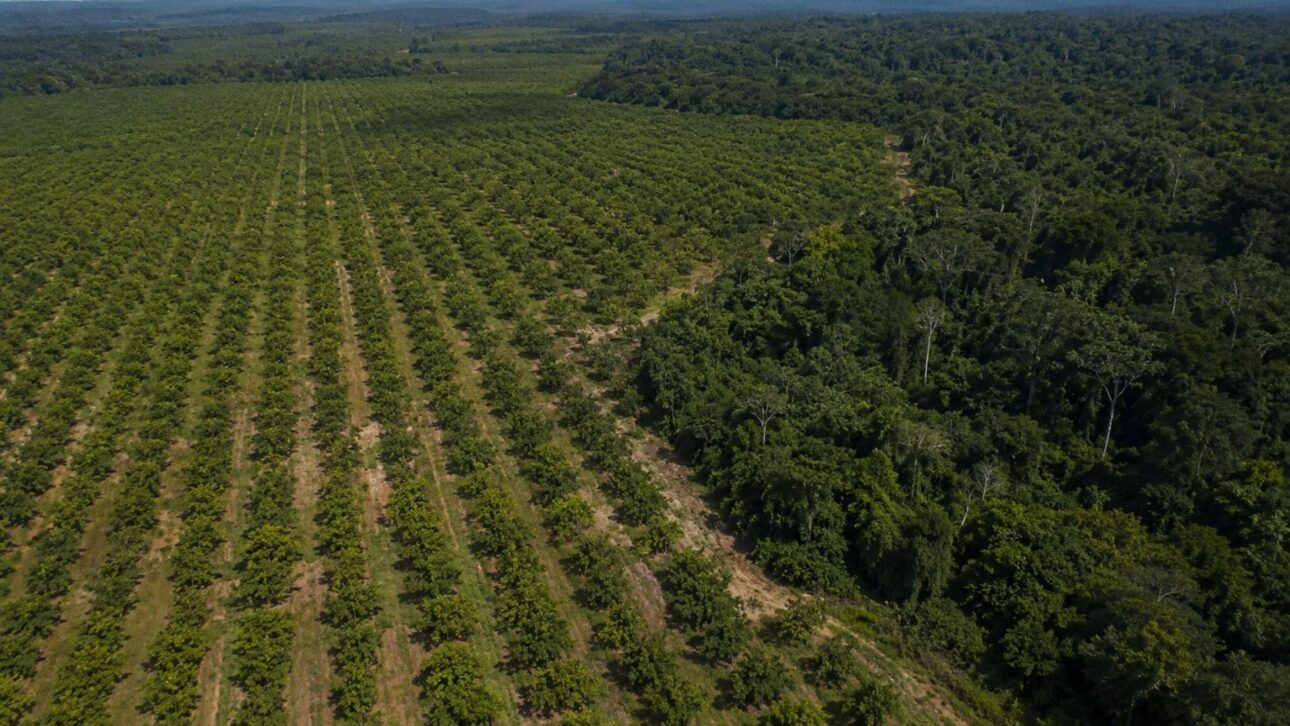
According to the survey, published in 2023, the expansion of cashew has turned into monoculture and comes at a high price. About 1.6 million hectares are already occupied by cashew trees in Ivory Coast, an area almost the size of the Hawaiian archipelago, which encroaches on the forest and surrounds Comoé National Park. In some regions, according to the NGO, deforestation has consumed up to a quarter of the primary forest between 2019 and 2023.
The record harvest of 2025 and the billion-dollar boom
The numbers from 2025 explain the euphoria. Ivory Coast projected a record harvest of about 1.5 million tons of cashew, a jump of approximately 59% compared to the previous year.
-
In Rural Brazil, José Sirval Operates a Water-Powered Mill Grinding 125 Kilograms of Corn Daily Using His Great-Grandfather’s Century-Old Monjolo

-
From Market Stall to Agribusiness: Patagonian Fruit Grower Owns 550 Hectares and Processes 18 Million Kilos of Pears and Apples Annually, Exporting Directly to Brazil
-
At 93, Brazilian Farmer Restores 56 Hectares of Forest and Revives Spring in the Amazon, Installs First Climate Tower in the Region
-
Brazilian Cheesemaker Wins European Award for Ant-Infused Cheese with Nutty Flavor Inspired by Indigenous Tradition


The country, which was a modest producer two decades ago, is now the world’s largest in cashew nuts, a position it has held since 2015 when it surpassed India.
The money follows the volume. Cashew kernel exports are expected to bring the country about 623 million dollars in 2025, and the sector already accounts for about 7% of Ivory Coast’s Gross Domestic Product.
Not surprisingly, cashew has become a strategic bet, with strong growth also in local nut processing.
Behind this is the world’s hunger for the product. Cashew has firmly entered the list of foods sold as healthy, and the global demand for the ‘superfood’ has turned the nut into a coveted commodity.
The more the appetite for cashew grows, the more land the Ivory Coast dedicates to cashew trees, and that’s where the problem begins.
Cashew as a ‘superfood’ that drives billions
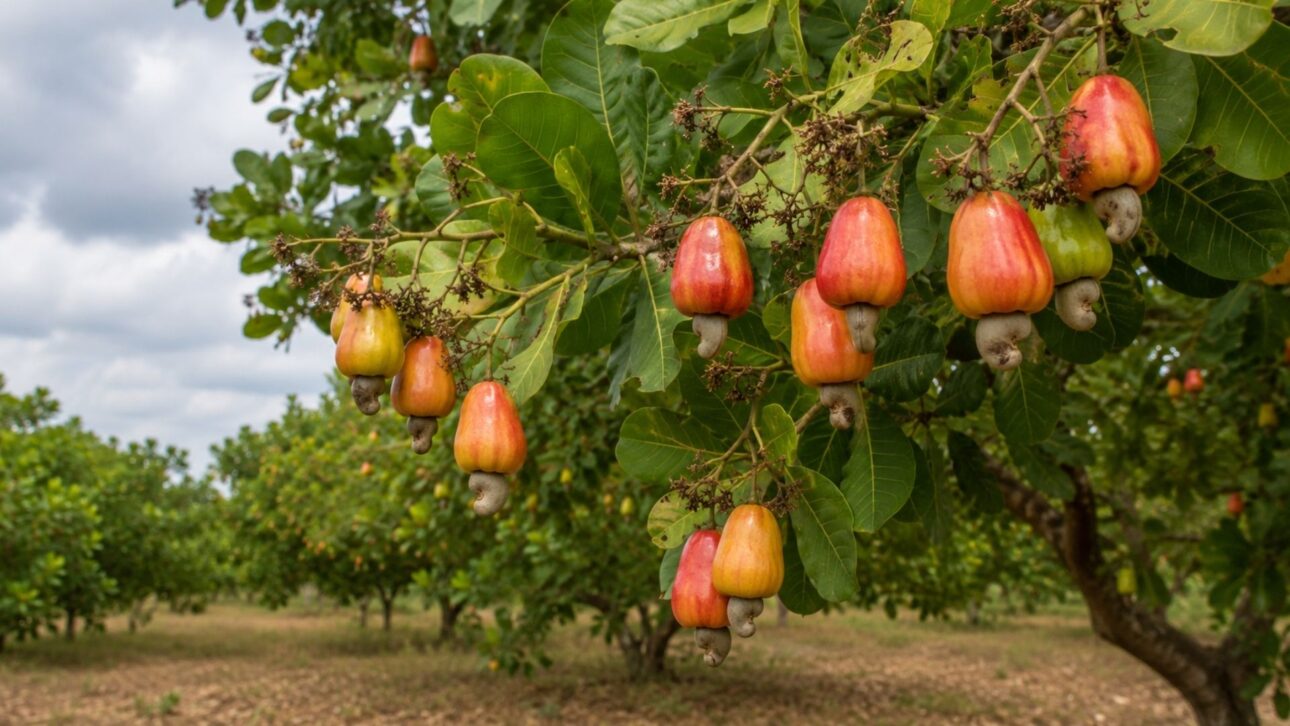
The healthy reputation boosted consumption. Rich in good fats and proteins, cashew began to be sold as a premium snack and diet ingredient, from plant-based milk to fitness snacks.
This ‘superfood’ image pushed global demand upwards and opened a billion-dollar market around the nut.
Production chased consumption. To meet orders from Europe, Asia, and the Americas, African countries like the Ivory Coast expanded their plantations at an accelerated pace, betting on cashew as a source of income and export. The result was a race for planted area that changed the face of the countryside.
The blind spot is the cost of this race. When expansion happens in a disorderly manner, the search for more nuts turns into monoculture, and the environmental and social costs rarely appear on the product’s packaging. It is this hidden side that Mighty Earth tried to shed light on.
1.6 million hectares of monoculture over the forest
The size of the plantation is impressive. According to Mighty Earth, about 1.6 million hectares of the Ivory Coast are already covered by cashew trees, an area comparable to the Hawaiian archipelago.
This advance largely took place over native vegetation, transforming forest into rows of a single crop.
Forest loss is the harshest data. According to the NGO, some producing regions lost up to 25% of primary forest between 2019 and 2023, as cashew monoculture gained space.
Where there was diverse forest, there is now a uniform carpet of cashew trees, with all the fragility that monoculture entails.
This model exacts an ecological price. Replacing forest with a single species impoverishes the soil, reduces biodiversity, and makes the environment more vulnerable to pests and climate. Deforestation linked to cashew, in this scenario, is not a small side effect, but rather the foundation on which the boom was built.
The Siege of Comoé National Park
The most symbolic case is that of a protected area. Comoé National Park, one of the most important natural reserves in West Africa and a World Heritage Site, is, according to Mighty Earth, surrounded to the east, south, and southwest by cashew plantations. The protected forest has become an island pressured by the surrounding monoculture.
What’s at stake goes beyond the trees. Comoé is home to endangered species, such as the critically endangered western chimpanzee, which depend on a continuous habitat to survive.
When the forest is surrounded by crops, this territory shrinks and fragments, threatening the life it harbors.
Encircling a park undermines its protection. Even if the central area remains officially preserved, deforestation around it isolates the reserve and hinders the movement of animals and seeds.
The advance of cashew on the edges of Comoé shows how monoculture can strangle even a forest protected by law.
When the Farm Becomes a Cashew Orchard: Families Trade Food for Nuts
There is also a cost on the plate. According to the report, in northern Ivory Coast, cashew trees quickly replaced traditional food crops, such as yam and cassava.
With less food farming, many families have come to rely on buying from the market what they once harvested, becoming hostage to the price of cashews.
The dependency took its toll in 2023. That year, an oversupply of cashews drove prices down, and those who had bet everything on the nut saw their income shrink overnight.
Without food crops as a safety net, some rural families were exposed to food insecurity.
It’s the reverse of the ‘superfood’ promise. Sold abroad as a healthy and valued item, cashews can mean less food on the table for those who cultivate it when it becomes a monoculture. This mismatch between export value and rural life is one of the central points of Mighty Earth’s warning.
The Dilemma and What It Has to Do with Brazil
The story is not just about villains and heroes. Cashew generates income, jobs, and important revenue for Ivory Coast, and part of the sector contests that the crop is the main cause of deforestation, attributing forest loss to various factors. The challenge is to make the crop grow without devouring the forest or food security.
The dilemma is of direct interest to Brazil. The country is a traditional producer of cashews, especially in the Northeast, and competes in the same global market where Ivory Coast has become a giant.
Understanding how the African boom deals with monoculture and deforestation helps Brazil avoid the same mistakes in its own agricultural expansion.
There is also the consumer side. A large portion of the cashew nuts that reach the shelves worldwide, including in products sold in Brazil, comes from this global cashew chain.
Knowing the origin and demanding responsible production is a way for the buyer to influence so that the ‘superfood’ doesn’t cost a forest like Comoé.
And you, did you know what’s behind the cashew?
The case of Ivory Coast shows both sides of the same product: a record cashew harvest in 2025 and a billion-dollar market on one side, and 1.6 million hectares of monoculture surrounding Comoé Park, deforestation over the forest, and families exchanging food for nuts on the other, according to Mighty Earth.
And you, did you imagine that the cashew nut sold as a ‘superfood’ could be linked to the deforestation of a forest in Africa? Share in the comments if you would start looking at the origin of what you consume and if you think Brazil should learn from this dilemma between monoculture and forest.