A century-old railway car, purchased for a low price and restored in the United States, became tourist accommodation in Idaho and began to attract attention for its combination of historical memory, adapted construction, and income from stays.
A 1909 railway car, found abandoned in Deary, in the U.S. state of Idaho, was restored by Isaac French’s family and converted into short-term accommodation.
The case began to appear in international reports for involving historical preservation, reuse of an old structure, and economic exploitation in the tourism sector.
The story does not correspond to a recent launch.
-
86-Year-Old Brazilian Man Starts Homemade Bread Business After Learning from TV Recipe

-
Drivers Struggle with Mud on Amazon Highway as Truck Skids and Blocks Road During Rainy Season
-
Former Brazilian street cleaner overcomes challenges to become a lawyer, now advocates for workers’ rights.
-
Retired Historian in Brazil Restores Over 100 Sewing Machines, Including One from 1875 New York Broadway




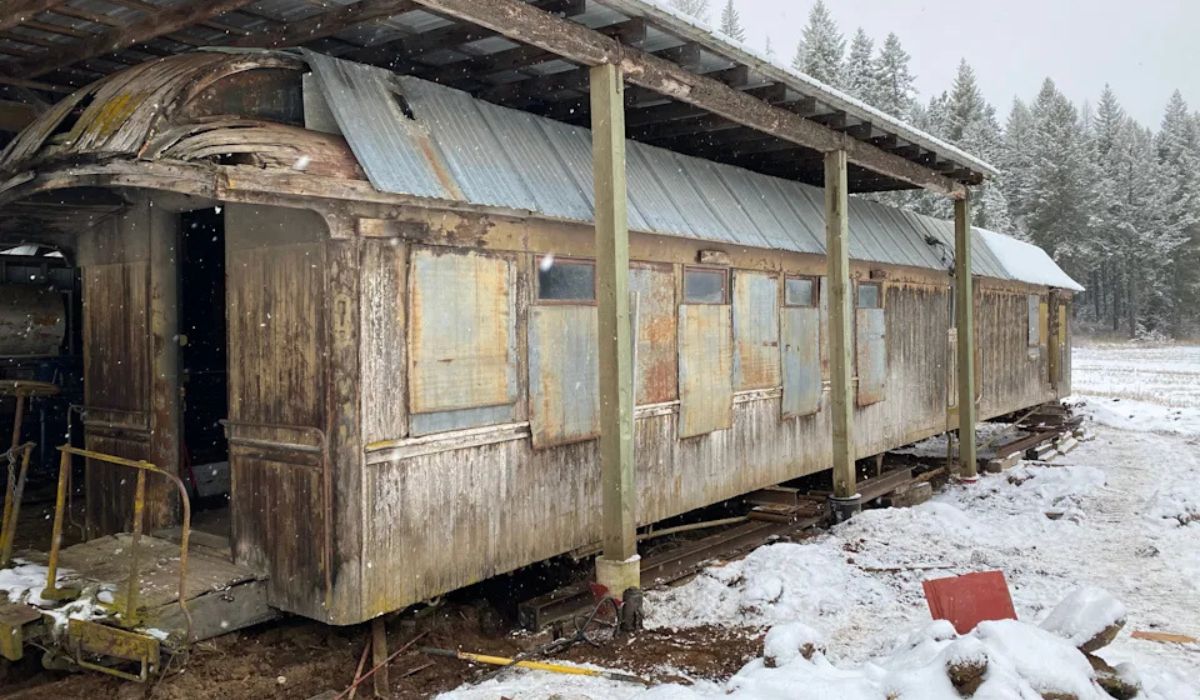
According to a report published by Business Insider, the car was located in December 2019, when Isaac French’s father was helping a neighbor remove snow from the roof of a barn.
The structure was deteriorated, with compromised wood, closed windows, and signs of disuse, but the family decided to assess the possibility of recovering the equipment.
1909 railway car became accommodation in Idaho
The equipment was not a complete train, but a car used for passengers, cargo, and mail.
The current accommodation listing states that the railway car ran on the Washington Idaho & Montana Railway from 1909 until around 1955 and was identified as number 306.
The piece had been purchased by the railway from the American Car and Foundry Co., a traditional manufacturer in the U.S. railway sector.
The family paid about US$ 3,000 for the car, according to information published by Business Insider and Realtor.com, which reproduced data from CNBC.
After the purchase, the most complex stage became transporting the 61-foot structure, equivalent to approximately 18.6 meters, which was in poor condition and without direct access to tracks.
The relocation required trucks, tractors, and about $10,000, according to the account attributed to French.
The cost of restoration exceeded the initial amount paid for the carriage.
Isaac French told Business Insider that the total investment reached $151,000, including the acquisition of the structure.
The family worked for about six months on the recovery, with participation from relatives who had experience in construction and renovations.
Renovation preserved original features of the carriage
The project was not limited to installing furniture in an old structure.
According to French’s account to Business Insider, the proposal was to preserve a significant part of the railway elements and adapt the space to the requirements of short-term accommodation.
This choice helped maintain the historical identification of the carriage within a commercial use.
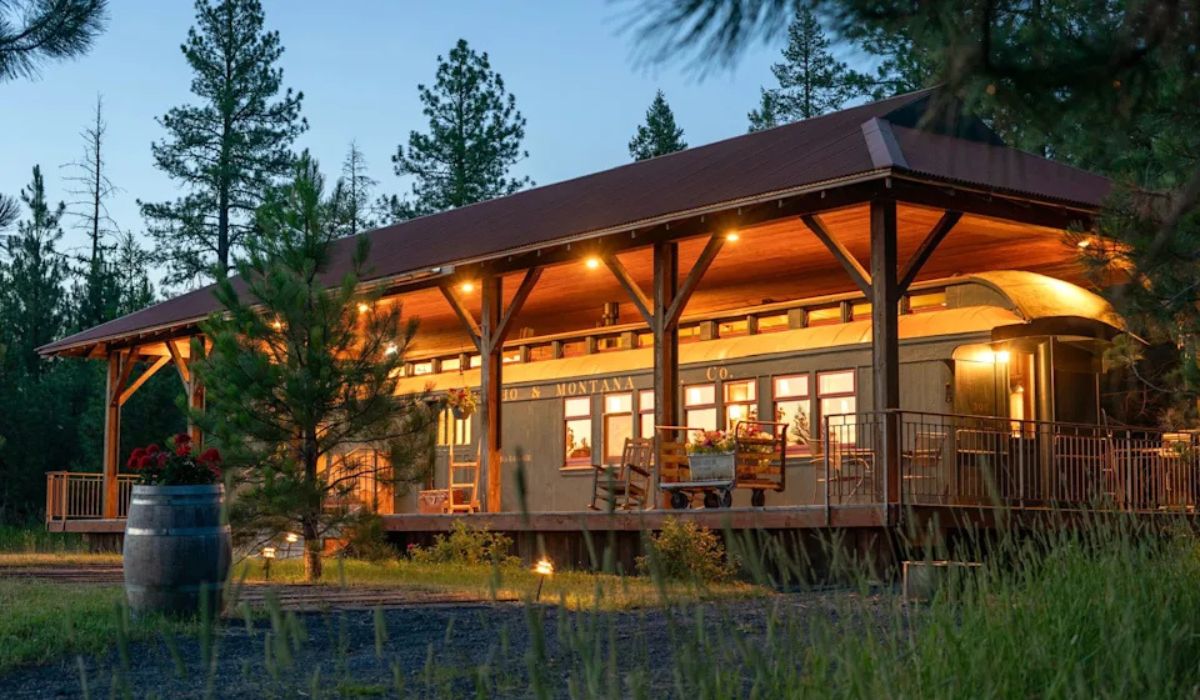
French reported that about 95% of the carriage was kept in original condition.
The work included sanding, recovering floors, internal panels, and windows, as well as restoring colors and visual elements associated with the railway car’s period of operation.
The ceiling received a tone inspired by old records, while the exterior had signs redone to recall the identity of car 306.
The adaptation also required infrastructure that was not part of the original configuration of the carriage.
The family installed electrical systems, air conditioning, bathroom, internal finishes, and a cover around the structure.
This cover was designed to reproduce features of an old railway platform, as described in reports about the project.
How the internal structure of the accommodation turned out
The internal division took advantage of the former function of the compartments.
The area used for mail was transformed into a bedroom; the cargo space now houses the entrance, support, and bathroom; while the area intended for passengers was adapted to accommodate a living room, kitchenette, and living area.
According to the accommodation’s listing on Airbnb, the space accommodates two people, with one bedroom, a king-size bed, and a bathroom.
The accommodation also offers a kitchen, Wi-Fi, workspace, mountain and valley views, sauna, and hot tub.
The outdoor area includes a covered porch around the wagon and integration with the rural landscape of Idaho.
In the listing, the hosts inform that the hot tub may not work between October and April, depending on usage conditions during the cold period.
The Airbnb listing describes the place as a stay in a restored 1909 wagon, surrounded by forests and wheat fields.
The platform also informs that guests have access to the entire wagon space and that the property is in a region with activity options such as fishing, hiking, and cycling.
Daily rate for the restored wagon can exceed R$ 1,600
The daily rate varies according to date, demand, and platform rules.
Reports published in 2024 indicated prices between US$ 325 and US$ 350 per night.
In approximate conversion, this range can be above R$ 1,600, not considering fees, taxes, exchange rate variations, and any changes made by the hosts.
The Airbnb page itself does not provide a fixed price for all dates without the visitor selecting the reservation period.
For this reason, any conversion to reais should be read only as an approximate reference, not as a mandatory final value for all guests.
The financial return was mentioned by Isaac French in an interview with Business Insider.
According to him, the accommodation achieved 90% occupancy in the first year and recouped the investment in 18 months.
Realtor.com also reported, based on data attributed to CNBC, that the family expected to earn US$ 105,000 in 2024 from wagon bookings.


Unique accommodation combines tourism, restoration, and economy
The transformation of the wagon fits into an accommodation model focused on the visitor’s experience.
Instead of offering just a conventional accommodation structure, the project uses railway history and architectural restoration as part of the service sold to tourists.
In this case, the construction functions as accommodation and a historical interest element.
The guest pays for the stay inside a restored railway piece, with preserved compartments, recovered visual details, and a narrative linked to transportation, architecture, and local memory.
The choice to maintain the identity of the wagon also influences how the property is commercially presented.
Instead of treating the structure merely as scrap or waste material, the family recovered the equipment for tourist use.
The result combines the reuse of an old piece, artisanal renovation, and operation on a short-term lodging platform.
This type of project often attracts attention because it transforms a deactivated structure into a usable space.
In the case of wagon 306, the circulation history, manufacturing date, and documented restoration became part of the property’s description on the platforms where the lodging appears.
Isaac French also began to treat the project as part of a broader local revitalization proposal.
In a text published on his website, he related the wagon, the old railway depot, and other restored properties to the concept of “placemaking,” a term used to describe initiatives for creating or recovering spaces with identity, social function, and economic activity.
Even with the initial price of $3,000, the case shows that the purchase represented only one stage of the investment.
Transportation, restoration, labor, modern installations, furniture, coverage, maintenance, and commercial operation were part of the total cost reported by French.
The experience of wagon 306 also demonstrates how old structures can receive new uses when there is technical feasibility, tourist demand, and available historical documentation.
In the case of Deary, the restoration allowed a century-old railway piece to function as lodging, maintaining part of its material memory and generating revenue through short-term bookings.