Portuguese
  Spanish


According to Scottish Construction Now and Construction Management, the Yell Sound tunnel in the Shetland Islands was estimated at around £402 million, would be 6.8 km long and pass 50 meters below the seabed, in a study by the local council to replace part of Scotland’s aging ferry network in the long term.
The underwater tunnel between the main island of Shetland and Yell could change the future of transportation in one of Scotland’s most isolated regions. The project, still under evaluation, was estimated at around £402 million and appears as an alternative to the old ferries connecting communities in the archipelago.
The information was presented in June 2026 within the Inter-Island Transport Connectivity Programme, conducted by the Shetland Islands Council. The study uses the Yell Sound crossing as a “test tunnel” to assess whether fixed connections could replace part of the inter-island ferry network.
Project would link Yell to the main island of Shetland
The analyzed plan foresees an underwater tunnel of 4.2 miles, about 6.8 km, between Mainland Shetland and Yell. The structure would pass approximately 50 meters below the seabed and would be a permanent link between communities currently dependent on ferries.
-
Giant 3,600-ton Crane Breaks Two World Records by Installing World’s Largest Single-Piece Forged and Welded Hydrogenation Reactor, Weighing 3,037 Tons, in Chinese Petrochemical Plant in Just Six Days

-
$80 Million Bridge in Brazil Cuts Travel Time from 30 Minutes to 1 Minute, but Audit Reveals Major Flaws
-
Man Builds Stone Bed with Granite Rocks and Hand-Sawn Cedar Beams, Home Extension Garners Over 437,000 Views on Bonus Bolts Channel

-
Brazilian Researcher Develops Color-Changing Roof Tile to Reduce Air Conditioning Use by Up to 15%




According to estimates presented to residents, the construction could take up to eight years. The number places the project among the major infrastructure decisions of insular Scotland, because it is not just a crossing: it is a change in the long-term mobility model.
Estimated cost exceeds £400 million
The latest modeling indicates a total investment of around £402 million for the Yell Sound link. Of this amount, the capital cost was estimated at £327 million, with an additional £50 million for risks and contingencies and £25 million in initial costs.
The figures were presented by Andy Sloan, executive vice president of COWI, a consultancy involved in the study alongside Stantec. According to him, the values are based on discussions with three international contractors experienced in tunnel construction.
Old ferries pressure budget and routine
The debate gained momentum because the ferry network between islands in Shetland faces rising costs, an aging fleet, and difficulty in hiring crews. The program was launched in 2024 to address these long-term pressures.
The average age of the vessels was reported as 32.5 years, while the operational costs of the ferry network are expected to reach £25 million in 2024/25. For the local council, maintaining the status quo is not a simple option when there is a risk of failures, capacity limitations, and daily reliance on crossings.
Study evaluates four islands with possible fixed links
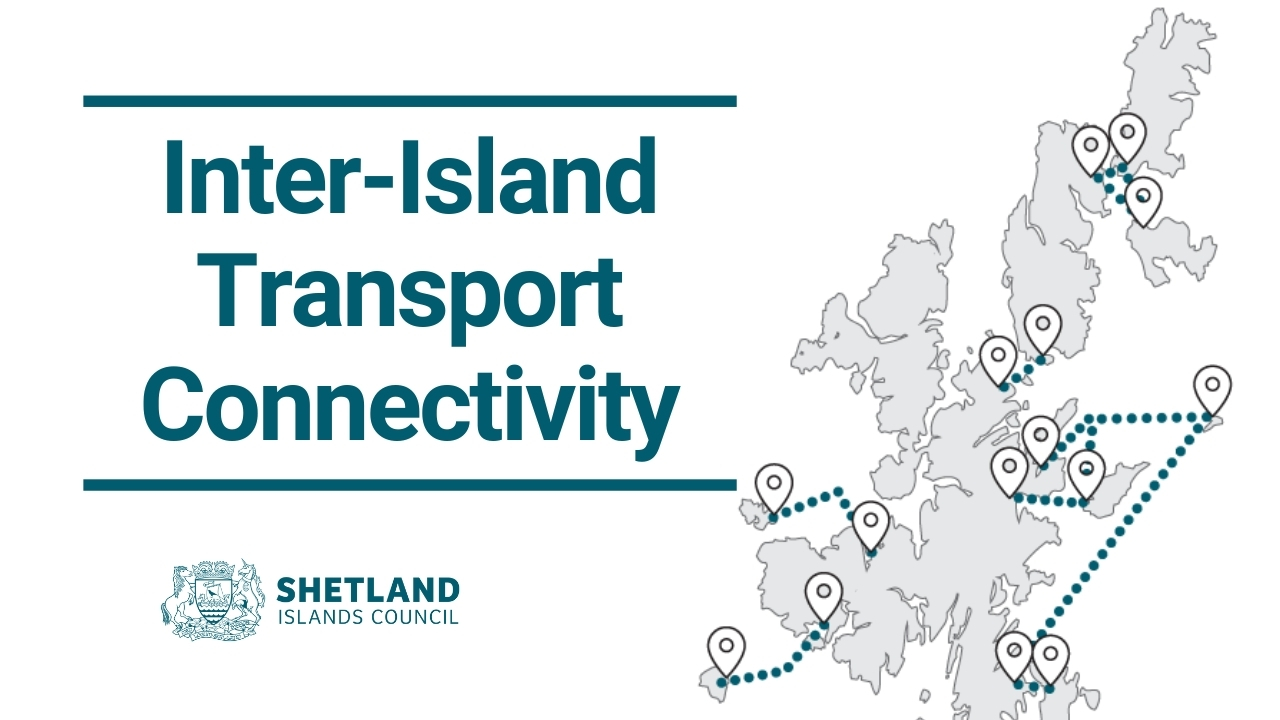
The connectivity program analyzes options for eight island communities. Among the alternatives are maintaining the current model, improving the ferry service, or studying fixed connections for four islands: Yell, Unst, Whalsay, and Bressay.
The case of Yell was chosen as a test because it allows for measuring cost, technical feasibility, future operation, and social impact. If the tunnel progresses, it could pave the way for a larger discussion on how Shetland intends to connect its islands in the coming decades.
Consultancies and contractors participated in the modeling
The study involves Stantec and COWI, with participation also cited from Mott MacDonald and ProVersa in developing the business case. The investigation sought contributions from three international contractors: LNS, BEMO Tunnelling, and Strabag.
The evaluation concluded that the Yell tunnel is technically buildable and financially investable. However, this does not mean automatic approval. The decision depends on political debate, cost analysis, comparison with ferries, and choosing the preferred options for each route.
Meeting on June 30 is not expected to end the debate
The Shetland Islands councilors are expected to discuss the outline business case on June 30, 2026. The agenda involves comparing the long-term cost of ferries with the construction and maintenance of underwater tunnels.
The report from Construction Management indicates that the meeting is not expected to produce an immediate “yes” or “no” decision for the tunnels. The meeting should serve to advance the selection of preferred alternatives and guide the next steps of the program.
Communities see promise against isolation
Council leader Emma Macdonald stated that fixed links like elevated roads, bridges, and tunnels can favor repopulation, economic growth, and reduction of the average age on the islands. Her statement reflects a recurring concern in remote regions: poor transportation can accelerate population decline.
She also highlighted that communities rely on old, unreliable ferries with high carbon emissions. In this context, the tunnel is not presented merely as an engineering work, but as an attempt to preserve access to services, jobs, and staying on the islands.
Model may operate with toll
The presented estimate foresees that the tunnel will operate with tolls to cover maintenance. This point is important because it shows that the debate does not end with the construction cost: future operation also needs to be paid for.
For residents, businesses, and authorities, the question is whether a fixed link would justify the investment over decades. The study compares ferry and tunnel scenarios over a 60-year horizon, precisely to assess whether the high initial cost can be balanced by future gains.
Scotland observes example from other regions
The advocacy for tunnels in Shetland is also inspired by experiences from places like Norway and the Faroe Islands, where underwater connections have helped reduce ferry dependency. This context appears in discussions on how island regions can maintain population, services, and local economy.
But the Scottish case has its own challenges. Building an underwater tunnel requires funding, technical capacity, political approval, and social acceptance. Even if considered viable by modeling, the project still needs to go through a long public decision-making stage.
Project may change more than just transportation
The Yell Sound tunnel places Shetland before a difficult choice: continue investing in aging ferries or bet on a fixed infrastructure with high initial cost. The decision involves mobility, economy, climate, public services, and the demographic future of the islands.
If it advances, the project could transform the routine of communities that currently depend on schedules, weather, and availability of vessels. But it also raises questions about funding, tolls, and public priorities.
Do you think isolated regions should replace old ferries with underwater tunnels, even with billion-dollar projects? Leave your opinion in the comments.