






 Portuguese
  Spanish
  3 min of reading


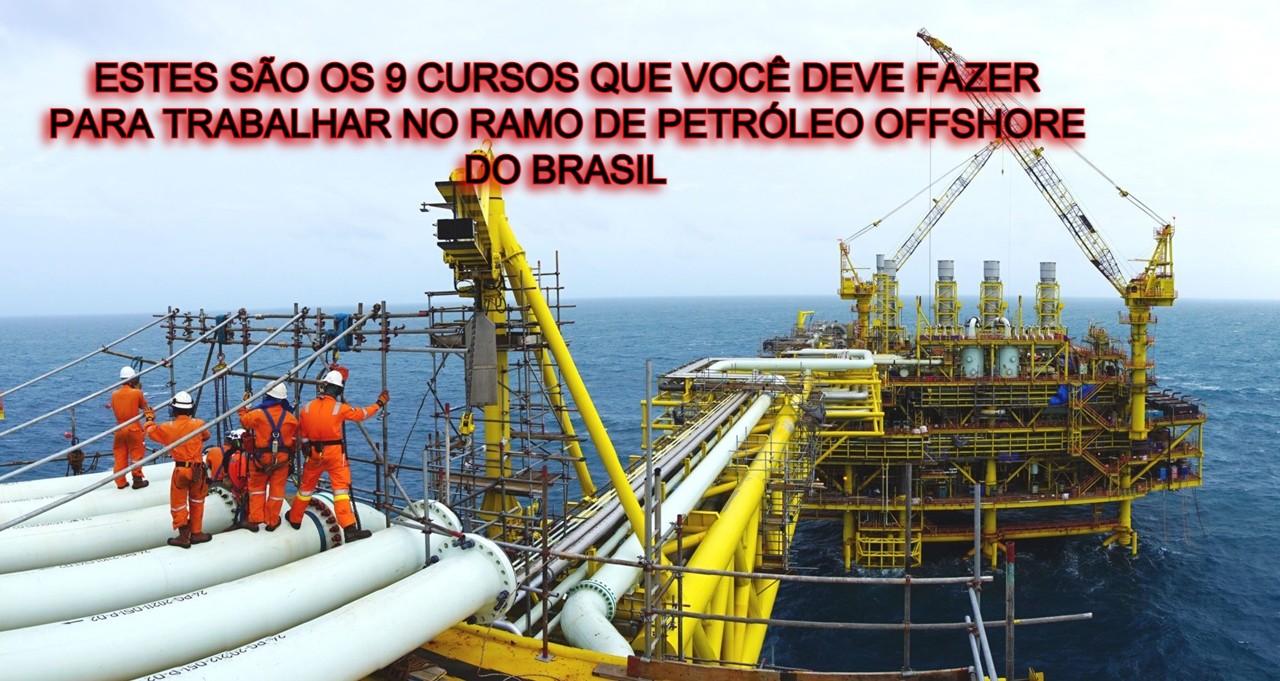
Regardless of Your Education Level, Some Qualification Courses Are Essential to Work on Offshore Units in Brazil
To compete for offshore job vacancies and board a drilling or oil production platform, it is necessary to complete some mandatory courses and others that are highly requested by maintenance companies. In another article, it is also important to know which are the 11 cities in Rio de Janeiro where these offshore companies are located.
— But shouldn’t companies cover these costs? Yes and no! The largest demander of oil services in Brazil, Petrobras, requires that workers from subcontractors have these courses; on the other hand, companies do not want to bear these additional costs. Since there is a lot of labor available in the market, they have the possibility to choose the best candidates that “cost them less” financially.
They only pay for courses if the maintenance contract is of very high value or if the professional is very specialized and scarce in the market. So let’s get to the list!
-
Petrobras is expected to complete the drilling of the Morpho well in the Foz do Amazonas in August 2026, the first well in the Equatorial Margin, an oil frontier that the ANP estimates at more than 30 billion barrels and could redraw the map of Brazil.

-
Oil returns to the center of concerns with tension between the US and Iran

-
IEA reduces forecast for global oil demand in 2026 after impacts of the Middle East crisis

-
Bank of Japan raises interest rates to 1%, reaching the highest level in over three decades



CBSP (Basic Safety Course for Platforms)
CBSP (Basic Safety Course for Platforms): is a mandatory course for everyone working on oil and gas platforms. The course aims to train workers in safety measures and accident prevention.
HUET (Helicopter Underwater Escape Training)
HUET (Helicopter Underwater Escape Training): is a course that trains individuals to evacuate a helicopter in case of an emergency at sea. The course teaches survival techniques in the event of a water landing.
T-HEUT (Tropical Helicopter Underwater Escape Training)
T-HEUT (Tropical Helicopter Underwater Escape Training) is a helicopter survival course in a tropical offshore environment. It teaches emergency evacuation techniques and survival in the event of a helicopter water landing in tropical conditions, including orientation, use of rescue equipment, and flotation techniques. T-HEUT is a supplementary course to HUET and is mandatory for workers on oil platforms in tropical areas.
CACI (Industrial Rope Access Course)
CACI (Industrial Rope Access Course): is a course that trains workers to work at heights using rope access techniques. The course aims to increase worker safety in maintenance and construction activities in elevated locations.
IRATA (International Rope Access Trade Association)
IRATA (International Rope Access Trade Association) is a rope access training course that prepares professionals for work at heights in various areas, such as industrial maintenance, construction, inspection, and rescue. The course includes training in rope access techniques, rescue, use of safety equipment, and teamwork. The IRATA certification is internationally recognized and is required by various companies operating in difficult-to-access areas at heights.
NR-35 (Work at Height)
NR-35 (Work at Height): is a regulatory standard that establishes requirements and protective measures for work at height. The NR-35 course enables workers to perform their activities at height safely.
NR-33 (Confined Space)
NR-33 (Confined Space): is a regulatory standard that establishes requirements and protective measures for work in confined spaces. The NR-33 course equips workers to identify and control risks in confined spaces.
NR-10 (Safety in Electrical Installations and Services)
NR-10 (Safety in Electrical Installations and Services): is a regulatory standard that establishes requirements and protective measures for work in electrical installations. The NR-10 course enables workers to perform their activities safely in electrical environments.
NR-13 (Boilers and Pressure Vessels)
NR-13 (Boilers and Pressure Vessels): is a regulatory standard that establishes requirements and protective measures for the operation and maintenance of boilers and pressure vessels. The NR-13 course equips workers to identify and control risks related to these equipment.
Well, if you think it might be a bit complicated at first to take these courses, there is an option to start your career in the offshore hospitality sector, check here for the correct procedure.







-

-

-

9 people reacted to this.